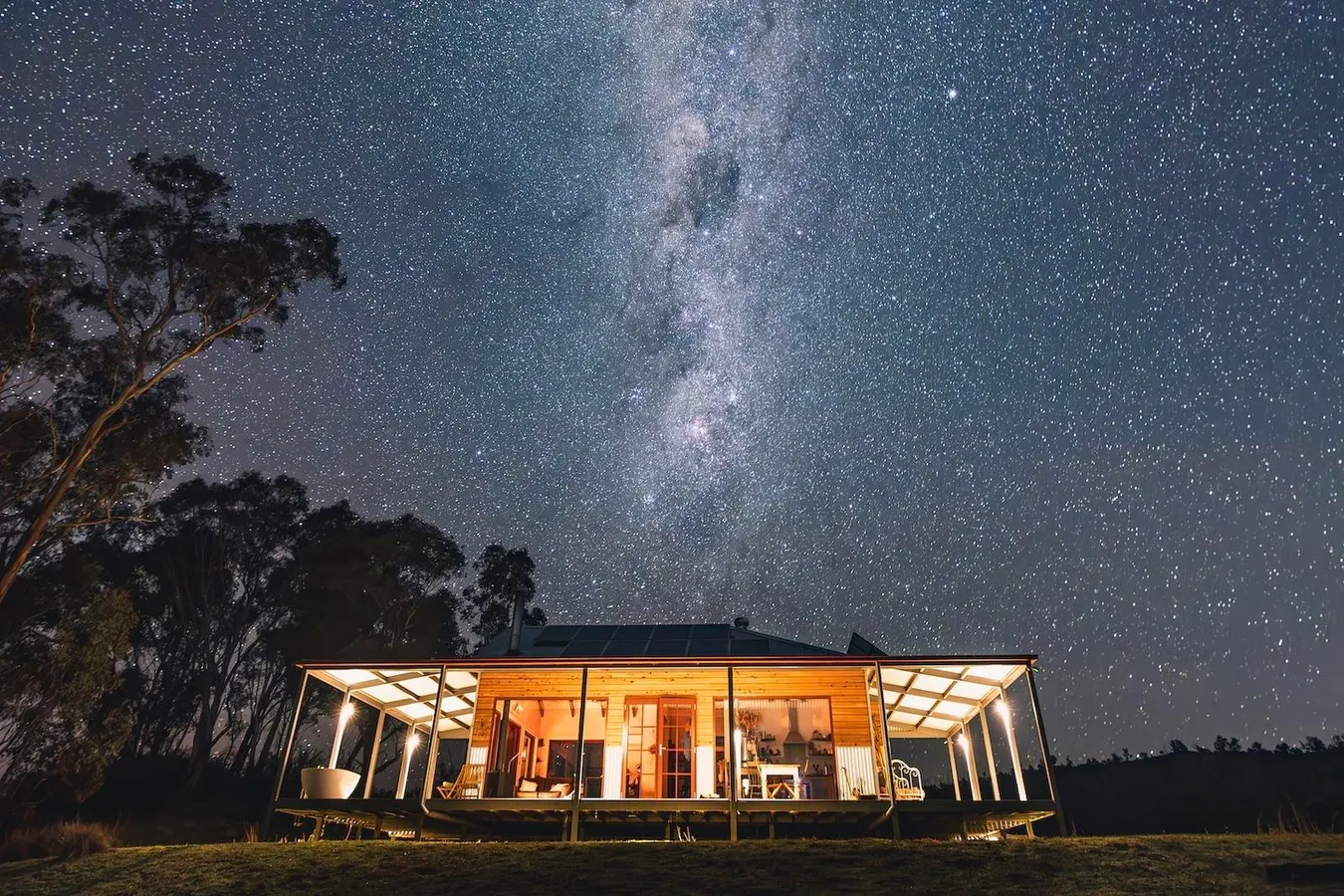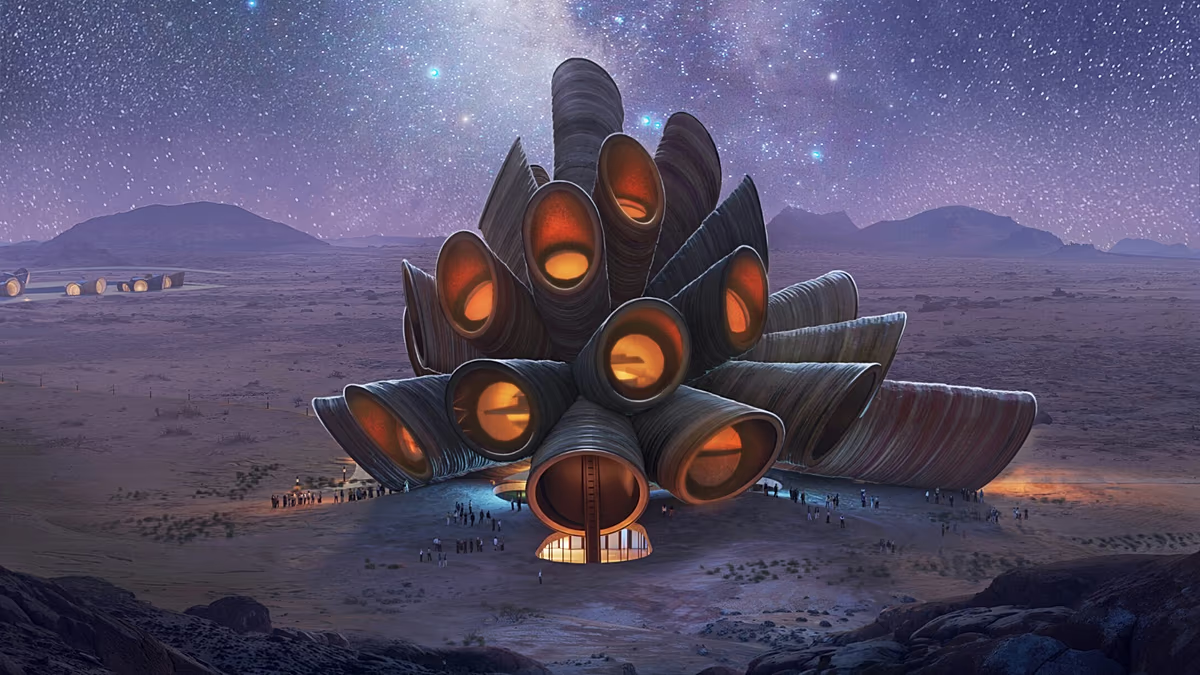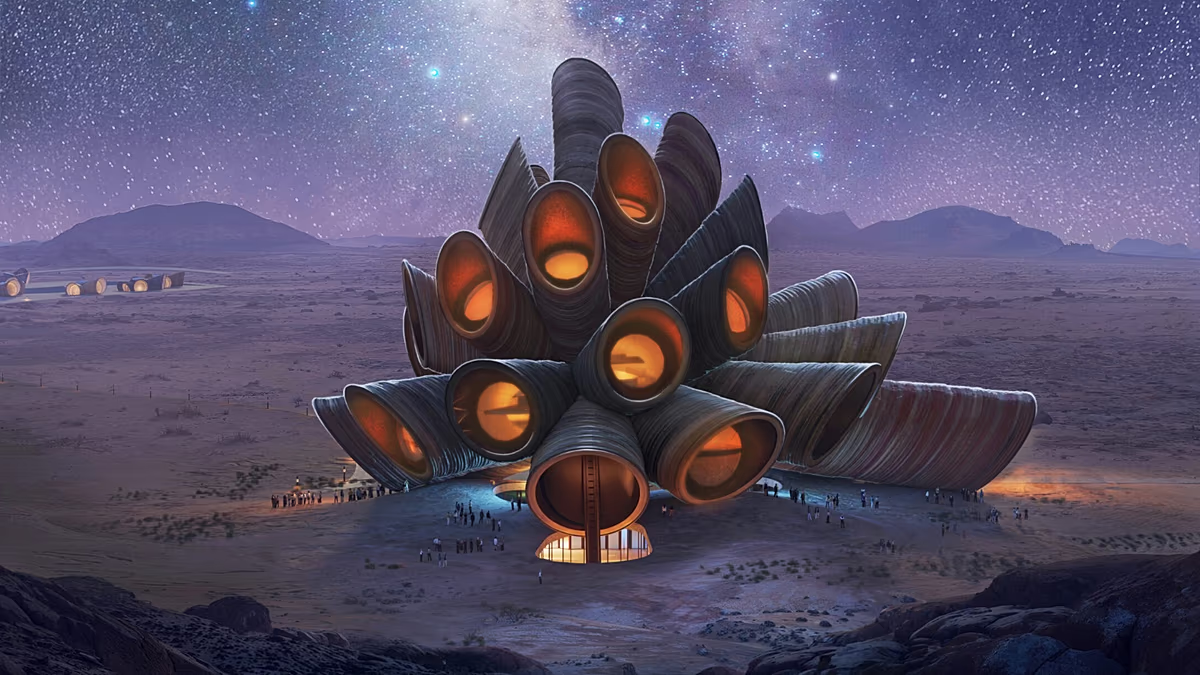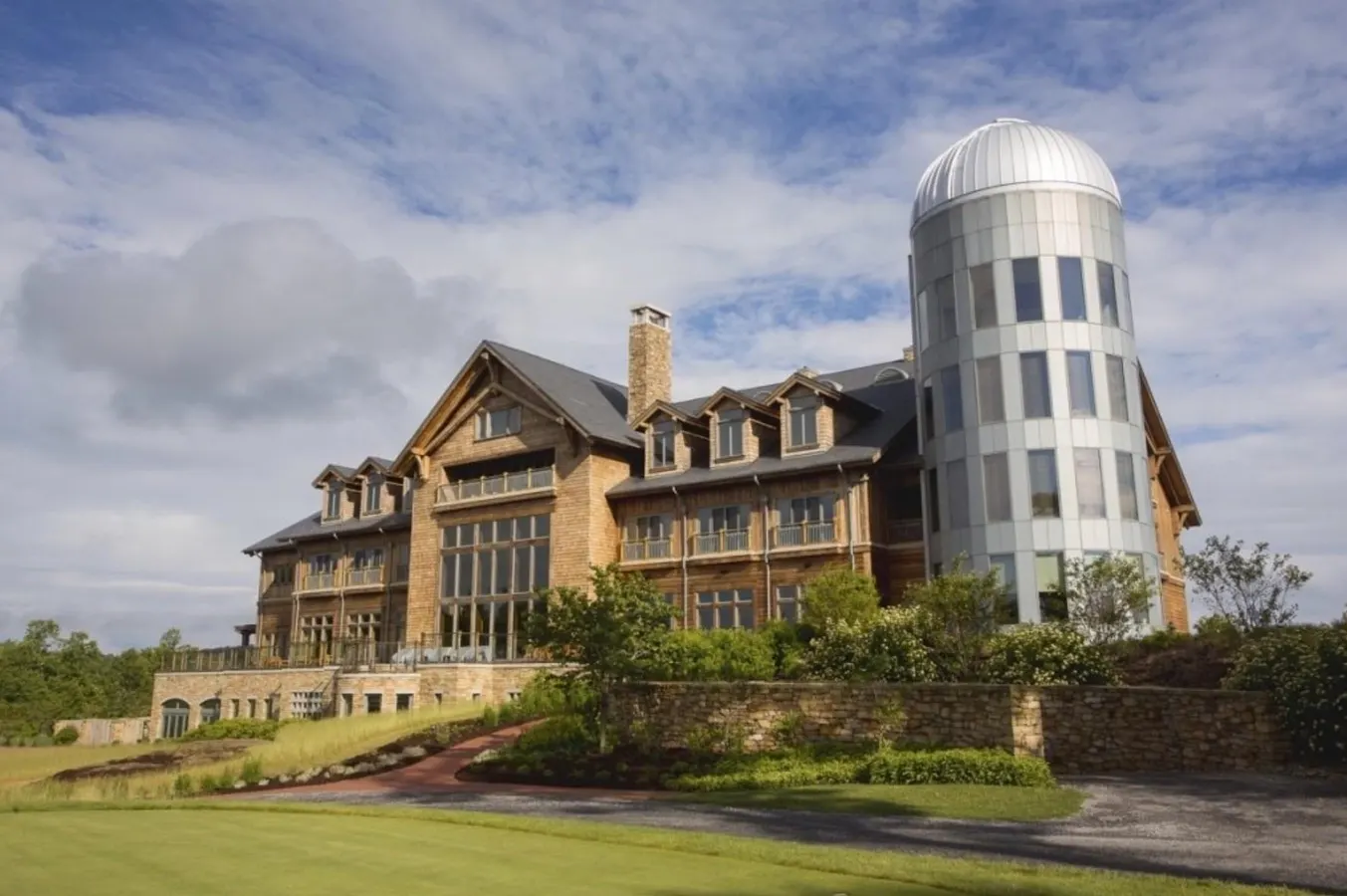
3100 Kulmhotel Gornergrat in Switzerland. This secluded hotel features its own planetarium3100 Kulmhotel Gornergrat Astrotourism has grown from a specialized interest into a broader travel trend. Not long ago, a telescope in a hotel room was just a decorative touch. Now, luxury hotels are bringing in resident astronomers, building private observatories, and adding glass ceilings above beds so guests can stargaze from under the covers. The night sky has become one of the most sought-after features in hospitality.Places like Chile’s Atacama Desert, southern Iceland, the Maldives, and New Zealand offer clear skies and little light pollution. For luxury hotels, this darkness is now a major draw. It helps them stand out, creates a stronger sense of place, and gives travelers a unique reason to visit.Compass Rose Lodge in Canada with private observatoryCompass Rose LodgeRecent travel data indicate a growing popularity of night-sky tourism. According to Booking.com’s 2025 travel predictions, 62% of travelers express interest in darker-sky destinations and “noctourism” experiences. DarkSky International has certified more than 200 Dark Sky Places across 22 countries, demonstrating heightened demand for destinations that protect and promote access to the night sky.Interest in astronomical events is increasing, as evidenced by NASA’s report that the total solar eclipse on August 12, 2026, will be visible from regions including Greenland, Iceland, Spain, Russia, and a small area of Portugal. An Expedia survey also identifies the Northern Lights as one of the world’s most sought-after bucket-list experiences. The top places in this movement offer much more than just a telescope. They weave astronomy into their resorts, activities, and often bring in visiting scientists and guest astronomers.“Many of today’s travelers have made a serious dent in their bucket lists. What they haven’t explored, though, is the world after dark,” Astrotourism expert and author Stephanie Vermillion tells me. “The night makes even the most familiar places feel brand new. So, I think nocturnal and astro-based tourism provides that excitement and newness so many of us seek with our adventures.”Primland ResortPrimland ResortChile Sets the StandardThe Atacama is famous for being one of the world’s top spots for stargazing. The dry air, high elevation, and remote setting make the night sky incredibly clear, where you feel like you are on a distant planet. That’s why ALMA, a leading radio observatory, was built on the plateau above San Pedro de Atacama. In this region, astronomy is not just a bonus; it’s the main reason people come.At Explora Atacama, the experience begins before you even look through a telescope. Guides help guests get comfortable under the Southern Hemisphere sky, which can feel confusing for anyone used to the northern sky. Guests use the lodge’s Meade 16-inch telescope to spot nebulae, dense clusters of stars, and the bright center of the Milky Way. For people who are used to city lights, it feels less like an activity and more like finally seeing something you’ve been missing.Tierra Atacama amphitheater for stargazingTierra AtacamaOther desert lodges have their own approach to stargazing. At Awasi Atacama, the experience feels more personal and deeply connected to history. The property overlooks the Licancabur volcano and features its own observatory within the ancient ruins of Tulor. “It’s a stargazer’s dream, the Atacama’s arid, high-altitude conditions make it arguably the best sky-watching spot in the world. I’ve never seen the Milky Way as bright as I did there,” says Vermillion.Tierra Atacama is on the edge of San Pedro de Atacama and offers guests an experience in the resorts natural amphitheater equipped with powerful telescopes, and cocktail bar to accompany the guided stargazing sessions.&Beyond Sossusvlei Desert Lodge stargazing&BeyondNamibia Builds It InAt &Beyond Sossusvlei Desert Lodge, the darkness is part of what makes the stay special. The lodge is tucked away in the NamibRand Nature Reserve, over 86 miles from the closest town, in a place with almost no light pollution. There is an observatory with a computerized Celestron CPC 1100 GPS telescope and visiting astronomers guide stargazing sessions when the sky is clear.The most impressive design feature at the resort is found in the villas. Each of the ten stone-and-glass suites has a skylight above the bed that can be opened, letting guests fall asleep and wake up under the Namibian sky. Hotel Rangá ObservatoryAndrew KlotzFrom Iceland to Switzerland, Europe Goes DeepFor years, Hotel Rangá in southern Iceland has made astronomy a core part of its identity. Its observatory has two powerful telescopes, and from September to April, resident astronomers host viewing sessions whenever the skies are clear. The hotel is well known for its middle of the night wake-up calls to see the Aurora, of which I actually participated in, and it was thrilling.In the Alps, 3100 Kulmhotel Gornergrat offers guests private access to Stellarium Gornergrat, a real research observatory rather than just a hotel attraction. Resident astronomer Timm-Emanuel Riesen leads the sessions. At 3,100 meters above sea level, with the Matterhorn in view and actual science taking place above, guests can feel like both luxury travelers and true explorers.The Dolomites in Italy are now a hotspot for stargazing. At Hotel Interski, guests can use the outdoor observatory right from their rooms, which makes the experience even more special. Further into the mountains, Carlo Magno Hotel Spa Resort has an observatory with a sliding roof and numerous telescopes, while Quellenhof Luxury Resort Passeier has a stunning Sky-Chalet with its own private astronomical observatory. In Northumberland, England, Battlesteads Hotel has an observatory with powerful telescopes and holds regular astronomy nights.Quellenhof Luxury Resort Passeier Sky ChaletQuellenhof Luxury Resort PasseierNorth America Takes It SeriouslyIn the United States, a majority of the population live in areas impacted by artificial light pollution. However, Astrotourism is increasing in popularity in desert areas where luxury resorts show off their dark skies as a key part of what they offer guests. These places are often more remote, and they've created custom far out experiences for travelers.Primland in Virginia, on the East Coast, has built a permanent observatory and made astronomy a central focus of its guest experience. Heading west, Sunriver Resort in Oregon has also built a permanent observatory. and in Wyoming, Four Seasons Resort Jackson Hole hosts evening sessions with professional astronomers, where guests use modern telescopes to see some of the darkest skies in the country.Skyview Hotel in Utah with glamping skylight domes for stargazing in bed.Skyview HotelUtah has 28 certified dark sky communities and parks, making it the place with the most skygazing options in North America. In Torrey, the Skyview Hotel is in a dark-sky community near Capitol Reef National Park. Guests get free astronomy audio guides, and the glamping domes let them watch the stars from bed. At Compass Rose Lodge in Huntsville, the HALO observatory offers guided night sessions where visitors can see planets and deep-sky objects.Further south, Amangiri and its tented Camp Sarika are in a remote canyon area where the Milky Way is incredibly clear. “I stayed here last year and the astronomer-led telescope night was something else—comets, star clusters, distant galaxies. Grown adults were genuinely losing their minds over what they were seeing. We had binoculars in the room too, so I was out on the private patio scanning the sky for hours,” says Vermillion.In Canada, Fairmont Jasper Park Lodge offers a unique way to enjoy the night sky with its 34-seat domed planetarium. This gives guests another chance to connect with the stars.Anantara Kihavah Maldives Villas over water observatory.AnantaraThe Maldives Adds DramaAt Anantara Kihavah Maldives Villas, SKY combines an overwater observatory with a cocktail bar. The resident “SKY Gurus” help guests explore equatorial constellations and use a telescope to spot planets and nebulae above the lagoon. Soneva Fushi also has its own observatory, and stargazing is a regular feature at all its Soneva resorts.Soneva Fushi observatorySonevaAsia And Oceania ExpandAstroport Sariska is one of India’s leading astronomy resorts. Near Delhi, Namaste Dwaar features the Aryabhatta Observatory and even has its own resident astronomer. In Thailand, guests at Anantara Layan Phuket Resort can enjoy stargazing while dining. In Japan, Miyako Resort Okushima Aqua Forest offers traditional hospitality along with a 50-centimeter telescope, a rare feature for a hotel.New Zealand stands out for immersive stargazing in the Southern Hemisphere. Mt. Cook Lakeside Retreat sits within the Aoraki Mackenzie International Dark Sky Reserve, the first certified reserve of its kind here. Māori cosmological traditions are part of the experience, alongside modern telescopes. In Australia, Dark Sky Eco Retreat in Coonabarabran offers a simpler experience, with its own observatory, very little light pollution, and a focus on the night sky.Resident astronomer and renowned scientist Timm-Emanuel Riesen takes hotel guests on a journey through time and space at 3100 Kulmhotel Gornergrat3100 Kulmhotel GornergratWhy Darkness Has Become a Luxury AssetThese places are linked by more than just good telescopes or skilled astronomers. Unlike most luxury features, you cannot build or install a dark sky. It relies on where you are, careful conservation, and restricting development. Value comes from what is left untouched, not from what is added.Vermillion says, “Stargazing can be science-focused, or it can be meditative, and I think many of us are seeking the latter because we want that escape from the day-to-day and news cycle, and few things can do that like a night beneath the stars.”Hotels are taking steps to protect the night sky, like getting dark-sky certification, using shielded lighting, and limiting development at night. These are the same actions scientists and conservationists have recommended for years. Now, both economic and environmental reasons back these efforts. The need is urgent. According to a National Park Service report, average night-sky brightness increased by 9.6% each year from 2011 to 2022. Today, artificial light has made the skies twice as bright as they were a decade ago, so we can see only about half as many stars.The best of these places still offer everything luxury travelers want: beautiful rooms, great service, and quiet surroundings. But what really sets them apart is something you cannot easily buy or sell. They give guests back something many did not know they were missing, a night sky truly worth seeing, in a world where it is slowly disappearing.MORE FROM FORBESForbesWhere To Go Next—Airbnb’s Under-The-Radar U.S. Destinations For 2026By Jim DobsonAstrotourism
The Rise Of Astrotourism: 25 Hotels Leading The Stargazing Trend
From the Atacama to the Maldives, luxury properties are turning darkness into their most coveted amenity, with permanent observatories, resident astronomers, and rooms built for the stars.
1,691 words~8 min read