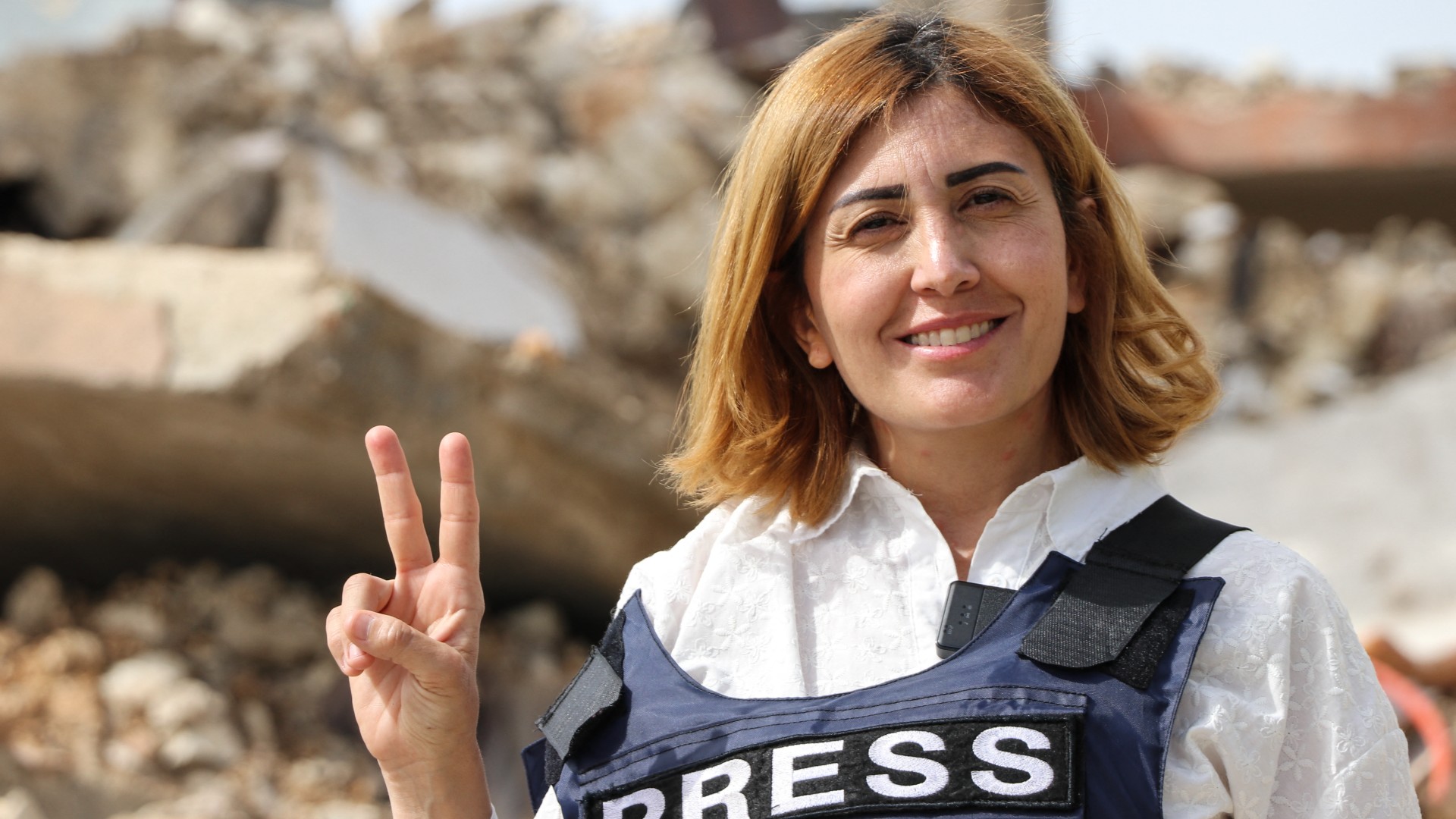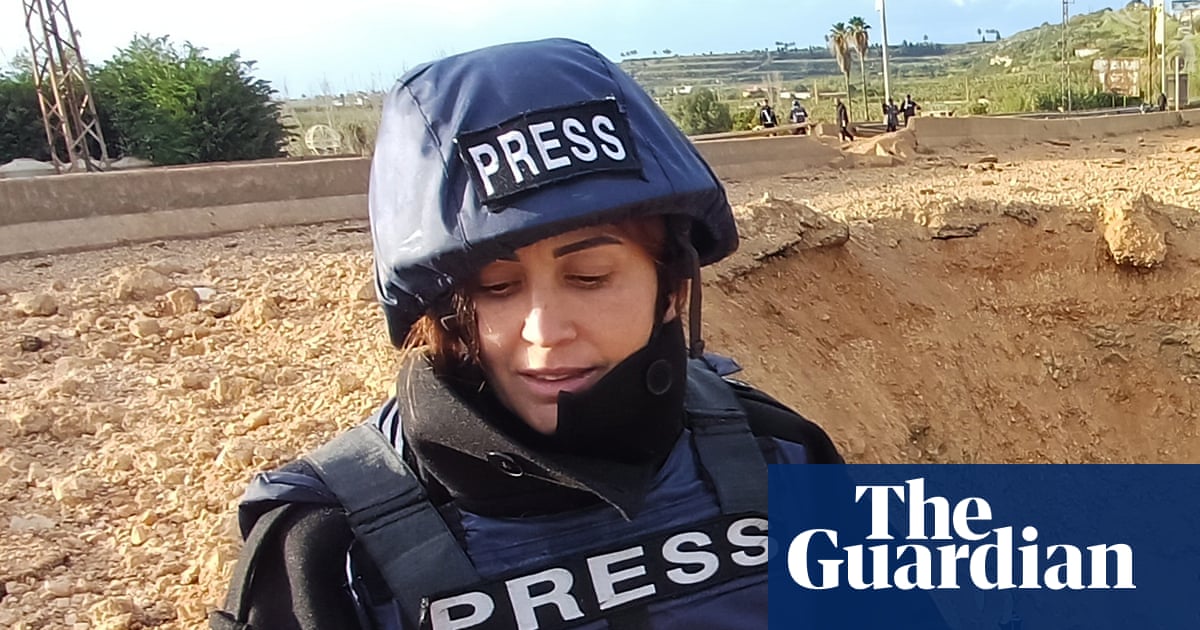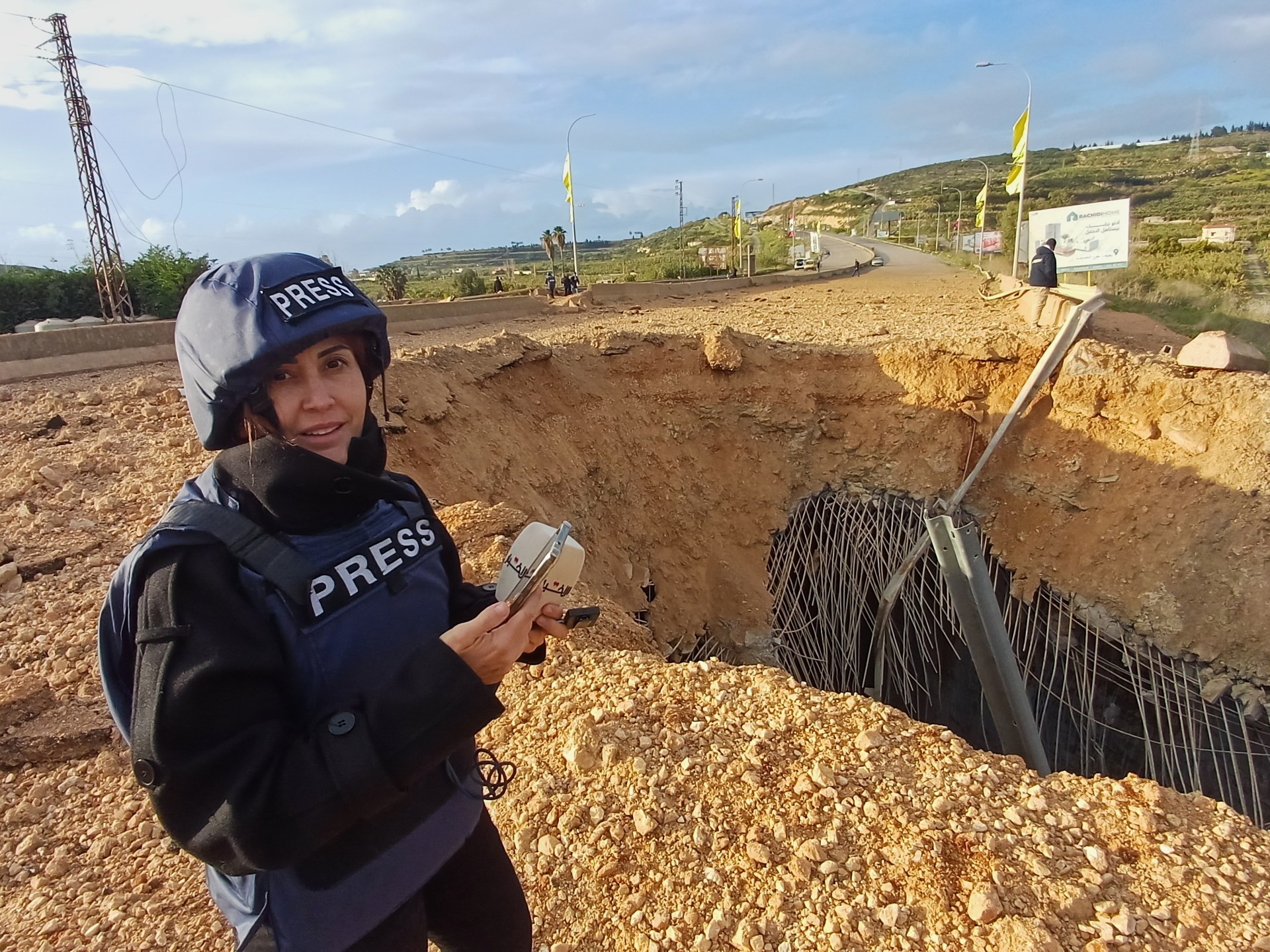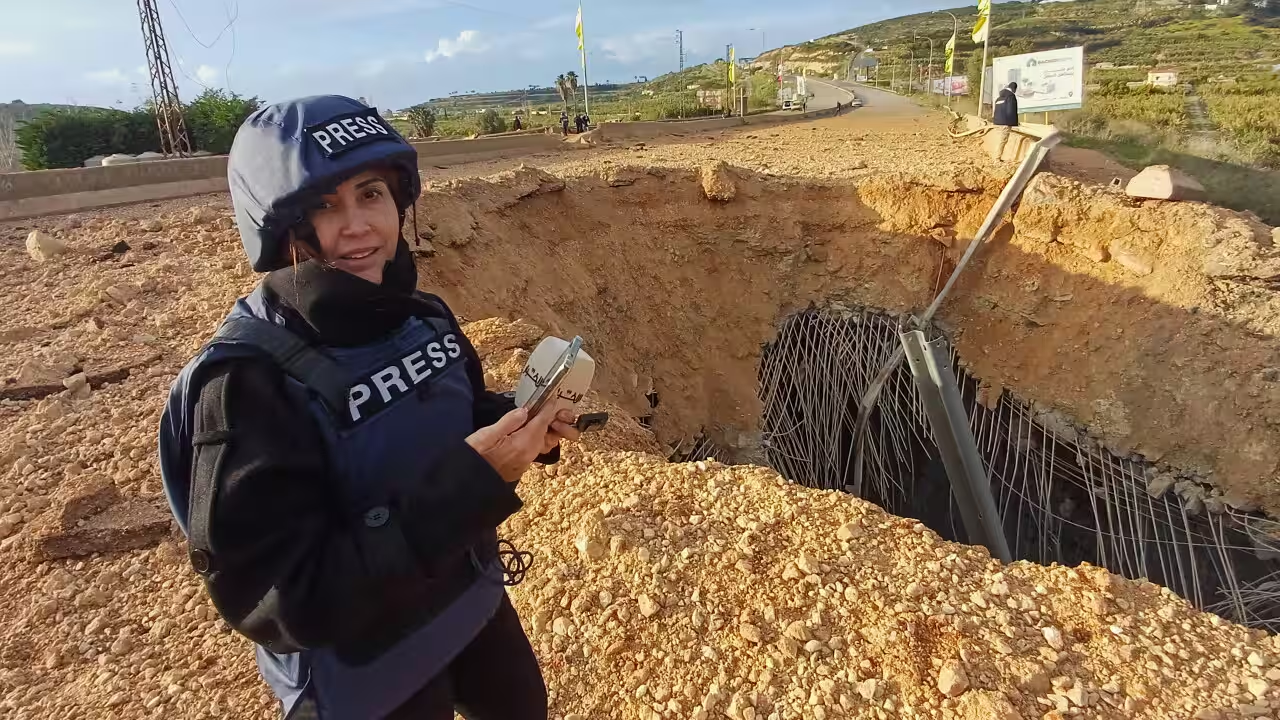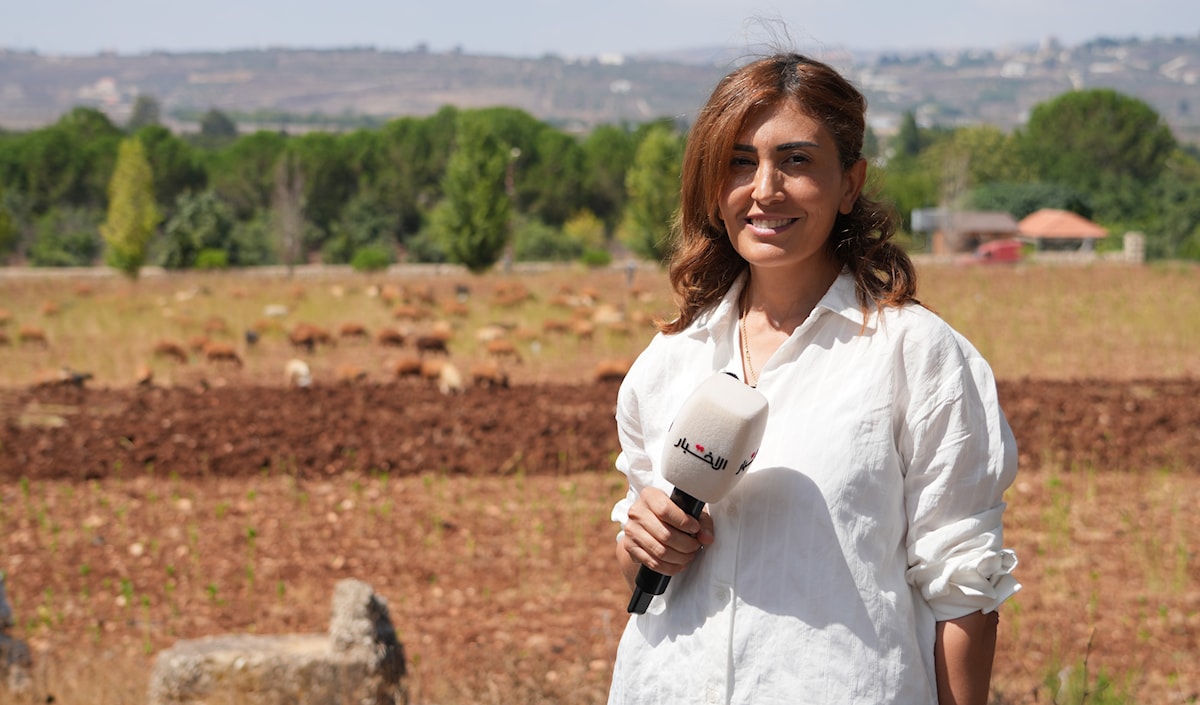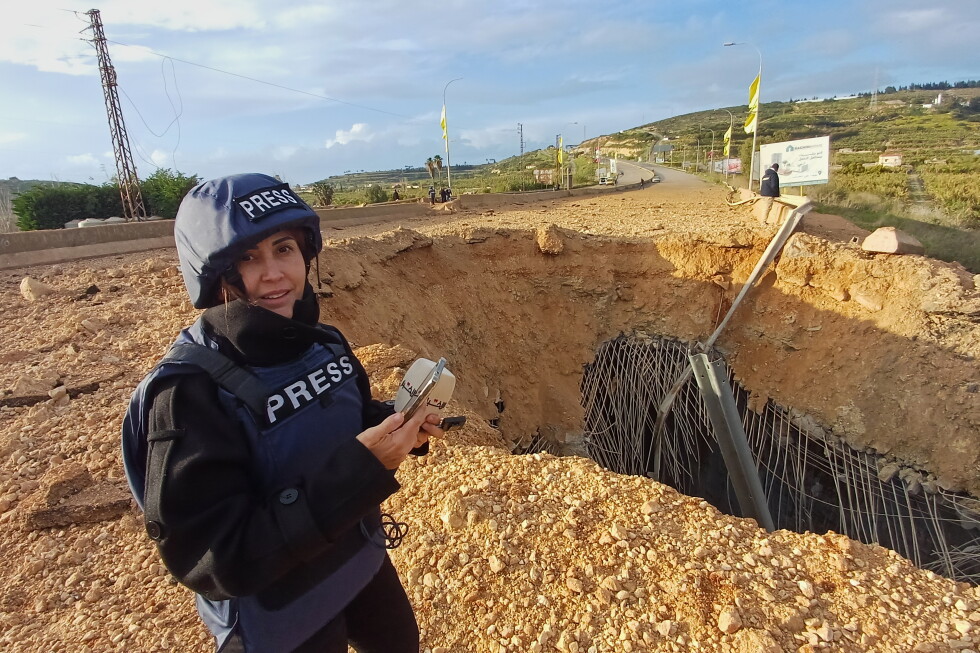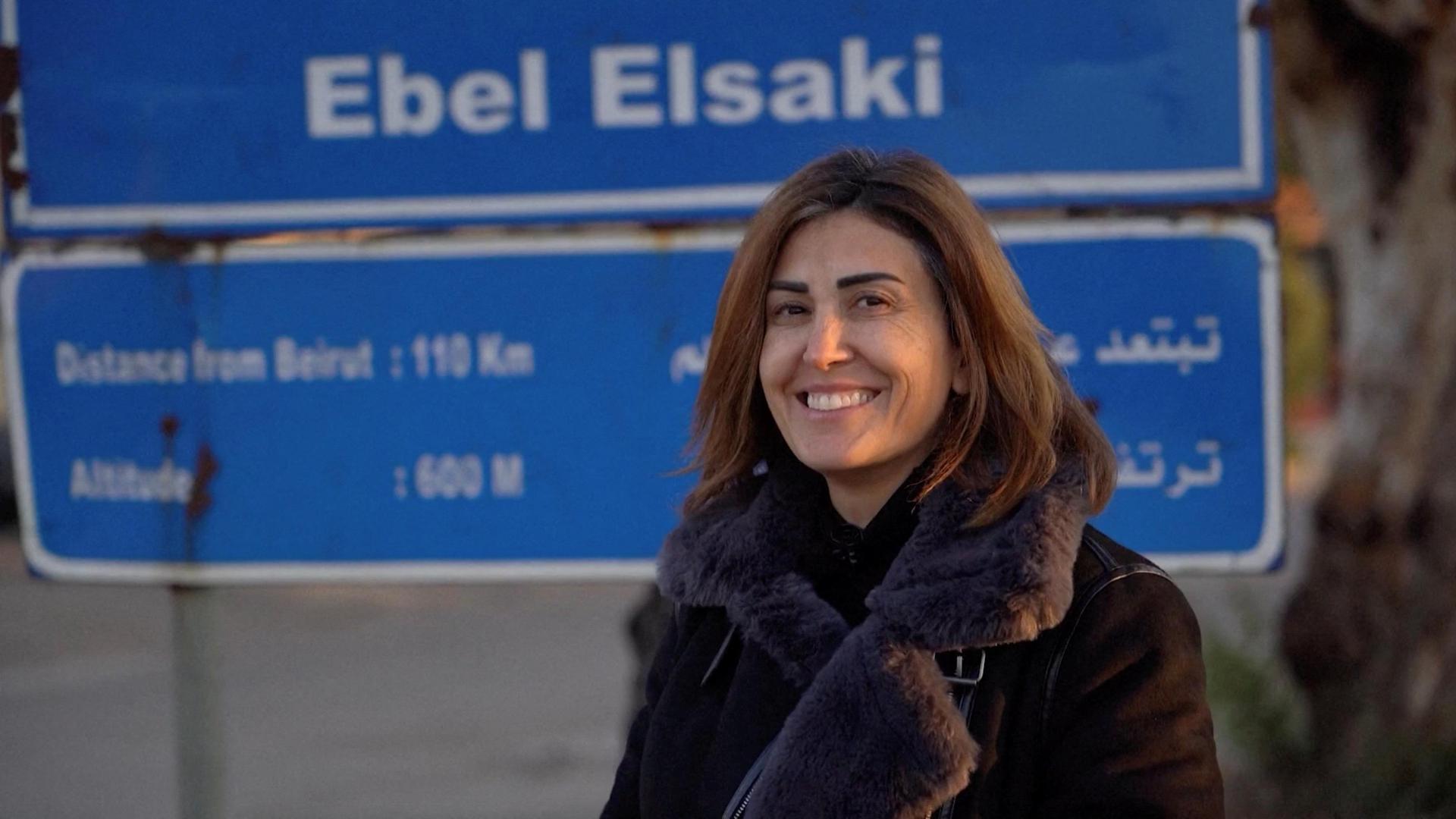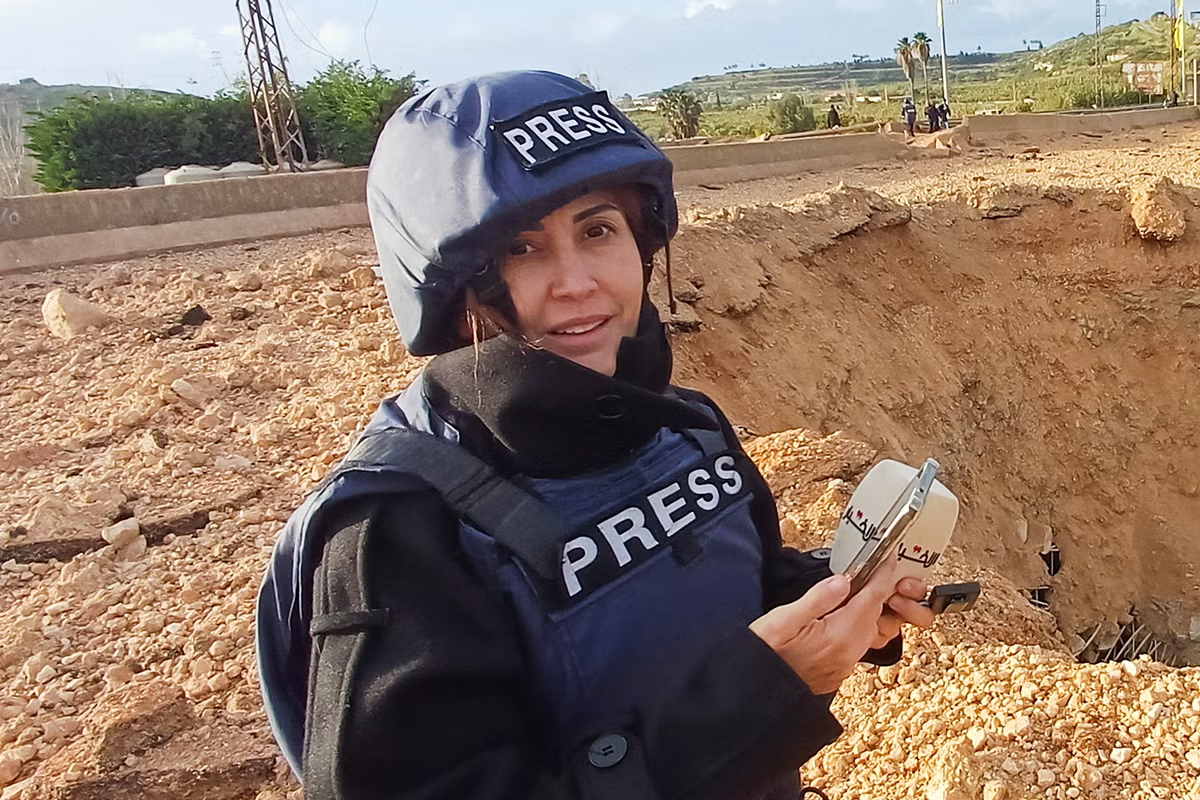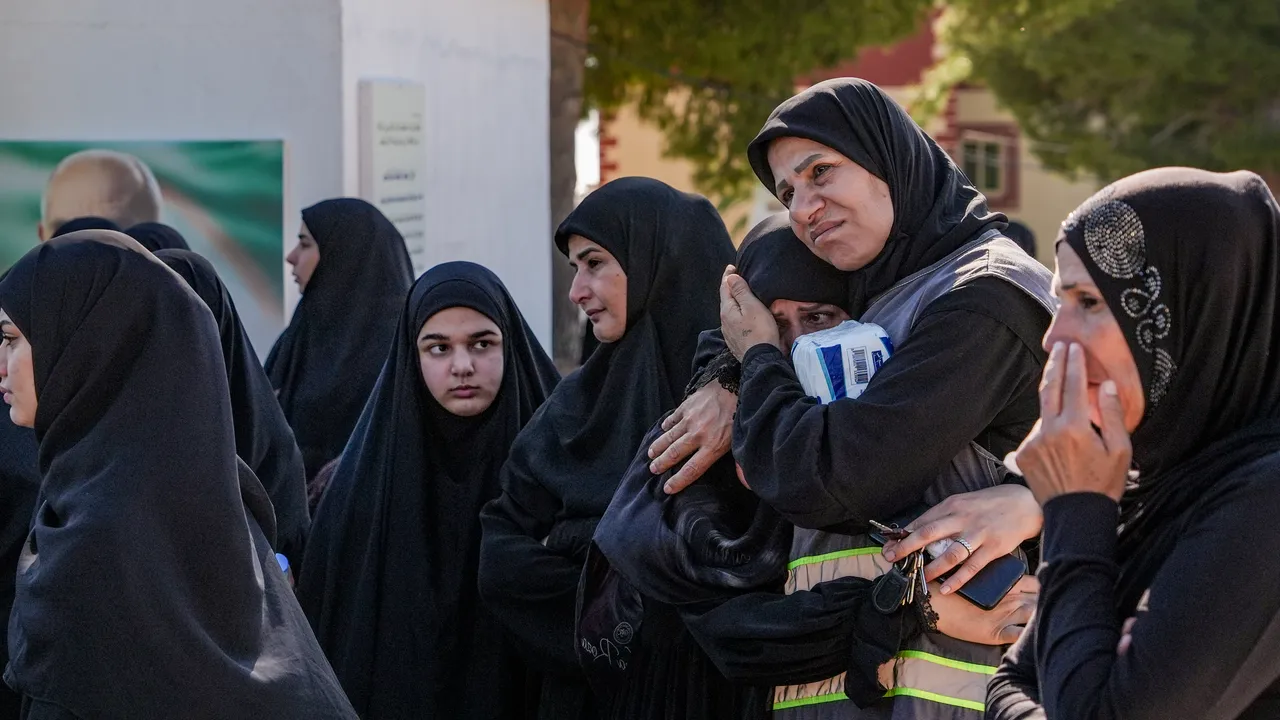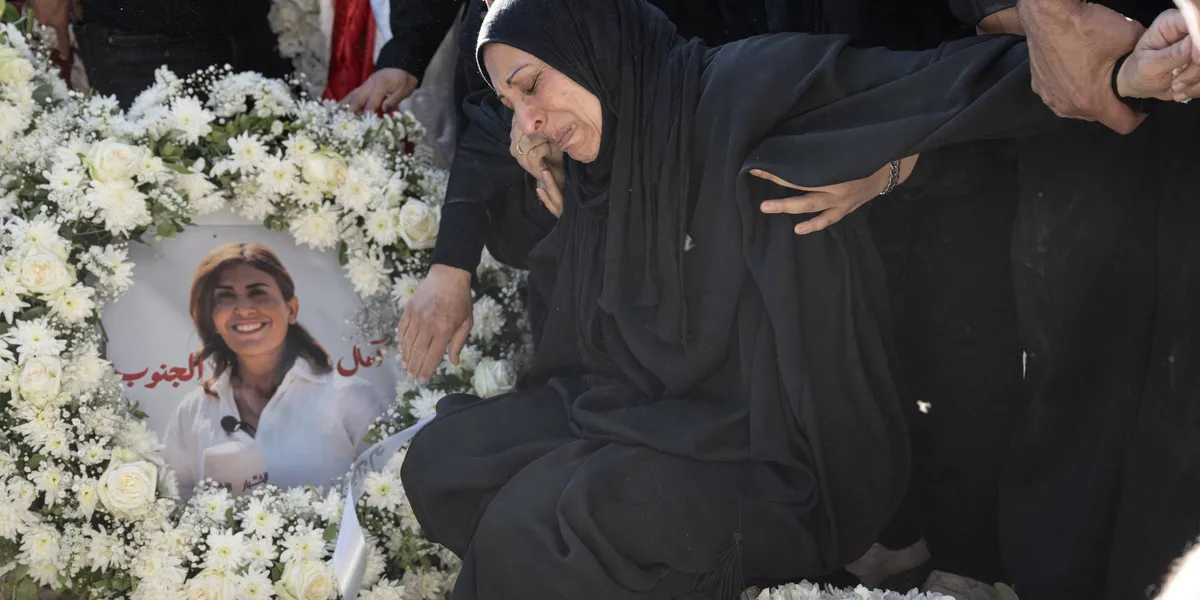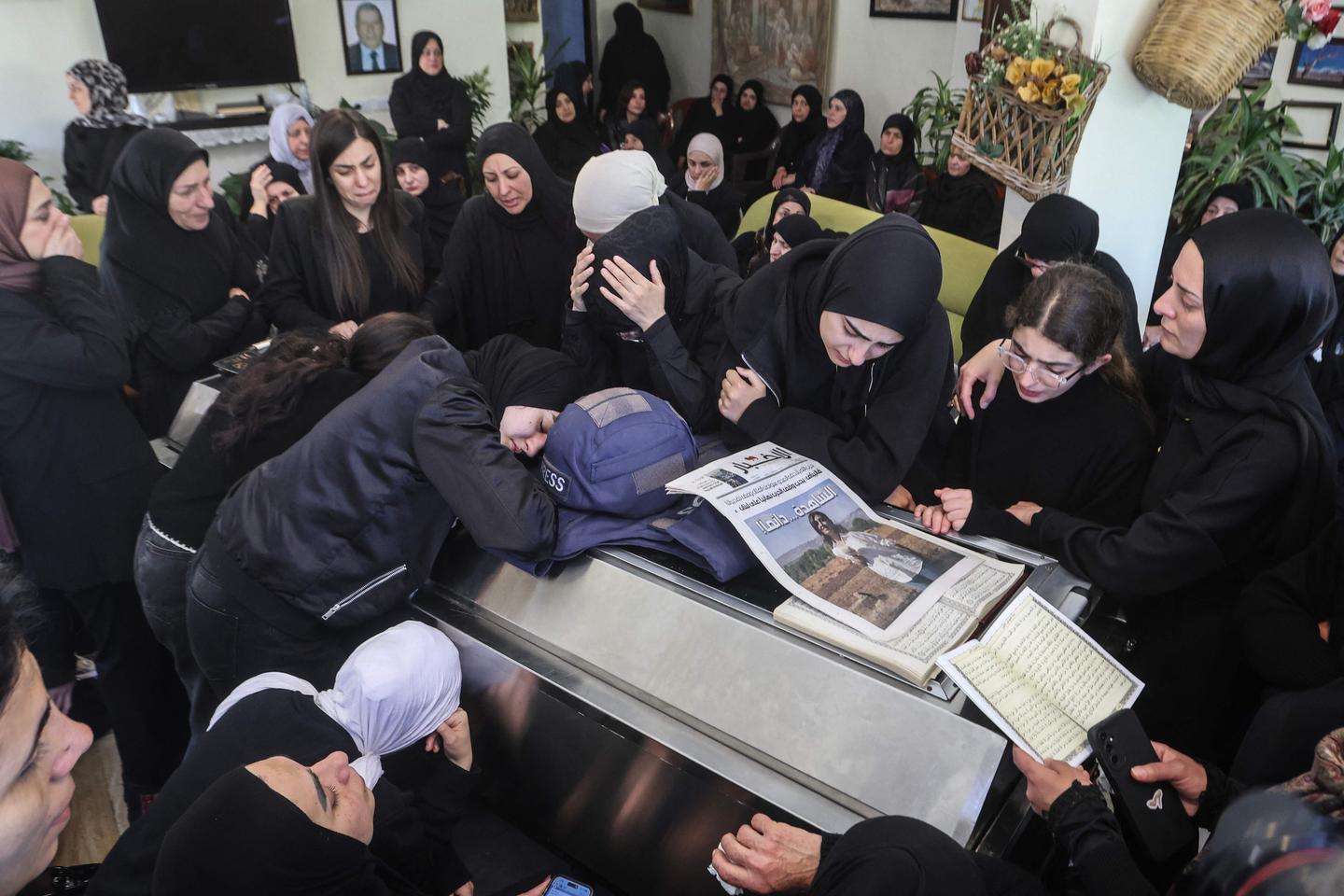
During the funeral of Amal Khalil, correspondent for the Lebanese daily newspaper "Al-Akhbar," who was killed in a suspected Israeli airstrike in southern Lebanon, her friends and relatives gathered around her coffin at her home in Baisariyah on April 23, 2026. MAHMOUD ZAYYAT/AFP
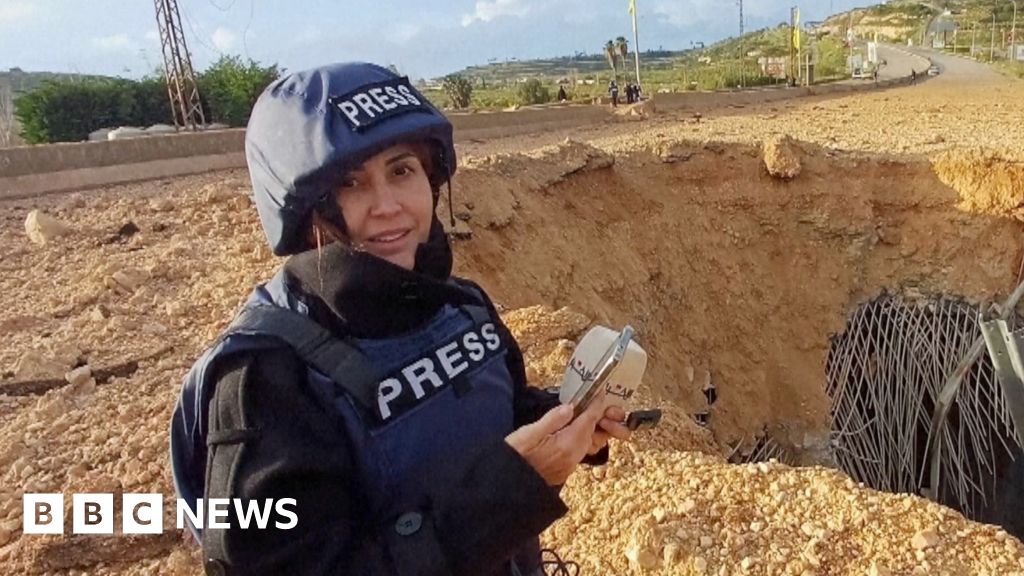
"My God! My God!" repeated an elderly man in anguish, smoothing the layer of earth over the grave of Amal Khalil at the entrance to the Baisariyah cemetery, a village in southern Lebanon. The field journalist, who was 42 years old, was killed by an Israeli strike on Wednesday, April 22. She had been reporting in Al-Tiri, in the south. Young people gathered around her grave, which was surrounded by wreaths of flowers, while a loudspeaker played a prayer. The funeral on Thursday drew a large crowd.
Except for the destruction of a handful of buildings, Baisariyah – perched on the heights and very close to the Mediterranean coast – was spared during the last Lebanon war, which pitted Israel against Hezbollah. The Shiite village, under the influence of the Amal party, led by the speaker of Parliament, Nabih Berri, served as a refuge for residents from surrounding areas. However, the period of truce, in effect since April 17, plunged its narrow streets into shock and mourning following the violent death of Khalil, a journalist for Al-Akhbar, a daily newspaper closely aligned with Hezbollah, founded in 2006 by a prominent figure of the Lebanese left. She had never left the south of the country during the war, where she wrote and filmed videos.