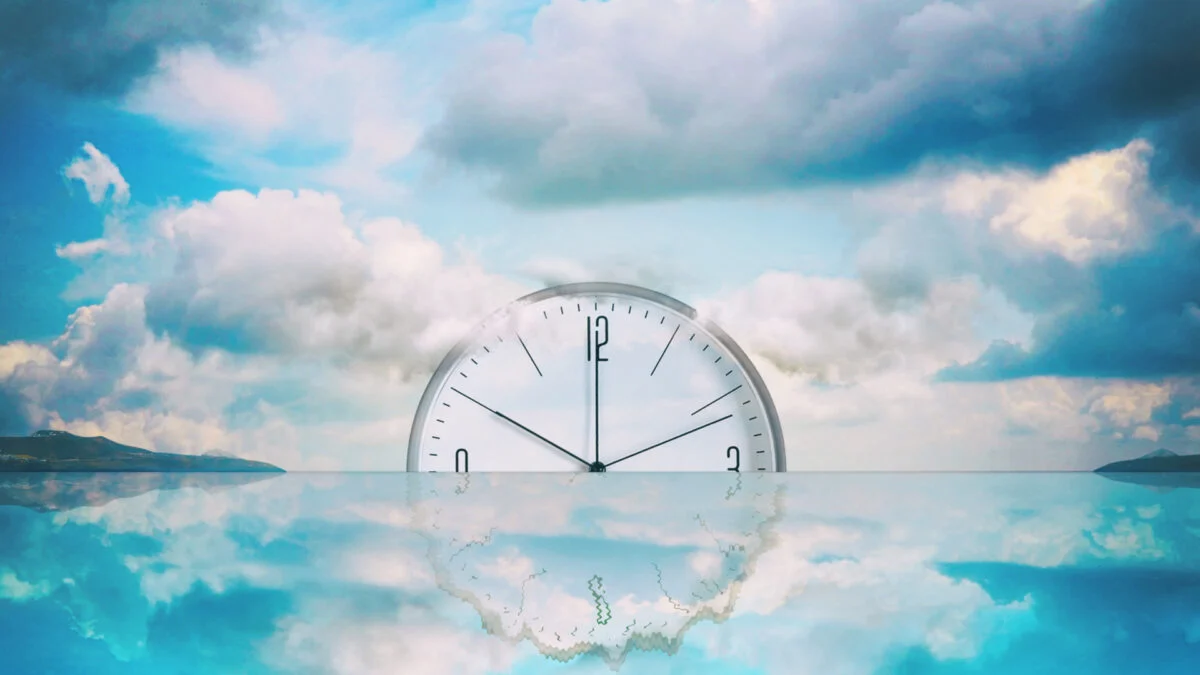
Cosmologists and physicists come up empty handed when they attempt to pin down time. So what, exactly, is it?
W
hen was the last time you raced against an unforgiving clock? Perhaps you skipped breakfast, broke a sweat, shelled out for a taxi or missed time with your family. Many of us have become slaves to time, with huge portions of our day spent chasing appointments and deadlines. But what is this thing we’re trying to beat?
We tend to imagine time as incessant and non-negotiable, ticking by somewhere out in the world, impossible to slow or stop. Yet an emerging scientific picture is that such “clock time” isn’t a standalone, physical phenomenon at all. It’s a mathematical tool or book-keeping device – useful for coordinating our interactions, but with no independent existence of its own. As with other key innovations, such as money, we can no longer get by without it. But I hope that debunking the myth of the clock can help us to focus on how life really progresses, and how much power we have to shape it.
The importance of being “on time” is one of the first things children learn, and we’re rarely out of reach of some form of clock. Yet time itself seems scarcer than ever. Psychologists have identified the rise of “time famine”, where the more efficient and productive we try to be – the more precisely we measure time, and the more we try to pack into our busy schedules – the less time we actually feel we have. This has a big impact on quality of life: studies show that people experiencing time famine are less likely to do things they enjoy, eat healthily, seek medical attention when they need it or help each other. We can become stuck chasing seconds in a vicious cycle of ever-decreasing time.