https://arab.news/rchzy
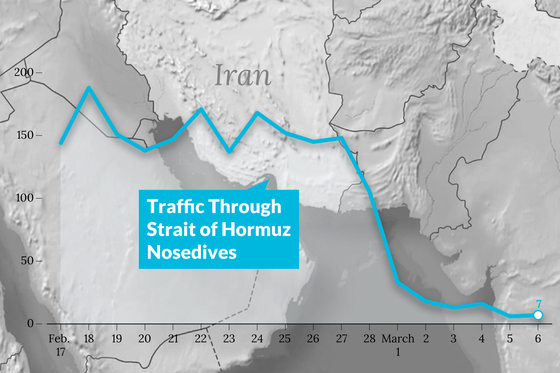
The joint US-Israeli air campaign against Iran is only a week old, yet the geopolitical consequences are already being felt. Fighting in the region has shown how vulnerable much-relied-upon trade and transit routes are to hostilities. Whether it is airspace closing, airports being unable to operate and evacuate civilians or shipping lanes being contested, this war could have an effect on the global economy.
At the same time, this conflict has also served as a useful reminder of the importance of diversifying trade and transit routes, especially the strategic value of the Trans-Caspian International Transport Route, commonly referred to as the Middle Corridor. Squashed between Russia and Iran, the Middle Corridor passes through the South Caucasus, across the Caspian Sea and into the heart of Central Asia. While this route has been used for centuries to connect markets, in recent years it has seen a revitalization in terms of investment and attention.
One only has to look at publicly available commercial flight tracking services to see the impact of the current conflict. A glance at the concentration of aircraft icons diverted away from their usual routes up and down the Gulf and instead rerouted through the South Caucasus and over the Caspian Sea illustrates how quickly global aviation patterns can change in response to instability. Airlines, insurers and shipping companies are making real-time calculations about risk. The result is a growing reliance on corridors that avoid the immediate zone of hostilities.