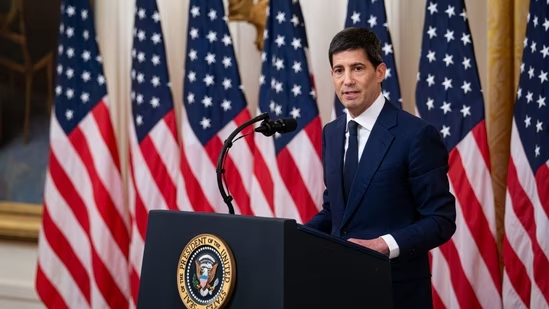
Fed nominee Kevin Warsh wants to change that: He believes the Fed should run a smaller balance sheet, reducing the distortions it causes in markets as a result. Therein lies the snag: A reduced balance sheet means fewer assets, and the Fed’s largest holding is government debt. In theory, if the Fed wants to hold fewer bonds it must sell them to someone else and thus increase their supply in the market. That would push up yields, and making it more expensive for the Treasury to borrow—not something the White House wants from its shiny new Fed chairman.
Indeed, economists suggest Warsh, a former Fed governor, will continue to allow the central bank to still be seen as a safety net for the U.S. government’s fiscal strategy. Warsh has previously called the U.S. a “banana republic” because the Fed continually buys government debt, but speculators are now expecting Warsh to distance himself from the topic of federal deficits more broadly.
The central bank’s new boss has a delicate needle to thread: How to right-size one of the world’s most closely scrutinized balance sheets, without upsetting either watchful bond market investors or the Treasury.
A palatable package
Warsh’s problem isn’t going to be how to achieve his aims at Fed. It’s going to be how he sells it.