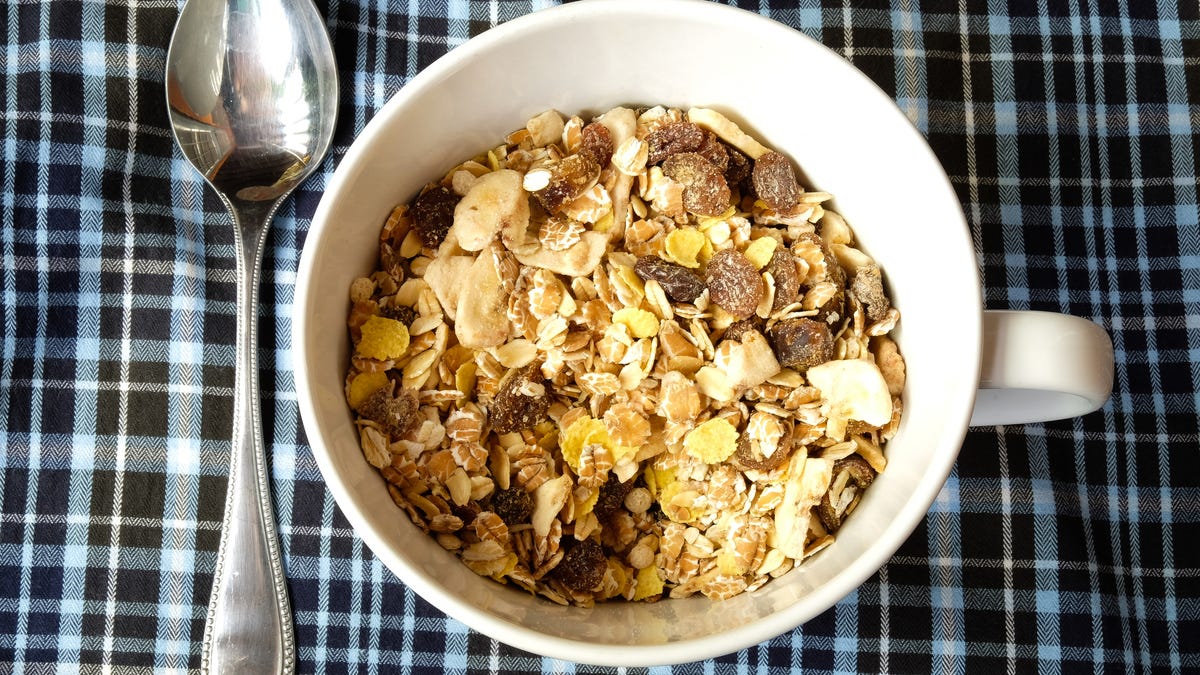
Cereal is one food that has woven itself into most of our everyday lives. It shows up in rushed weekday mornings, slow weekend breakfasts, late-night snacks and childhood memories. Its prevalence makes sense due to it being crunchy, comforting, convenient, endlessly customizable and easy to enjoy with milk, yogurt, fruit or straight from the box.
Beyond enjoyment, cereal is also often promoted as a nutritious way to start the day, usually associated with improved energy, focus and overall health.
While some of that reputation comes from little more than clever marketing, there is real science behind other aspects of it, especially when cereal is made from whole grains or fortified with key nutrients. Here's which health benefits you get, and why moderation still matters.
While cereal "is a grain-based food commonly eaten at breakfast and made from grains such as wheat, corn, oats, rice or barley," explains Amy Goodson, a nutritionist and registered dietitian at The Sports Nutrition Playbook, fortified cereal is cereal that has vitamins and minerals added during manufacturing to increase its nutritional value. The vitamins and minerals are typically applied in powdered form after cooking and shaping, often sprayed onto the cereal.