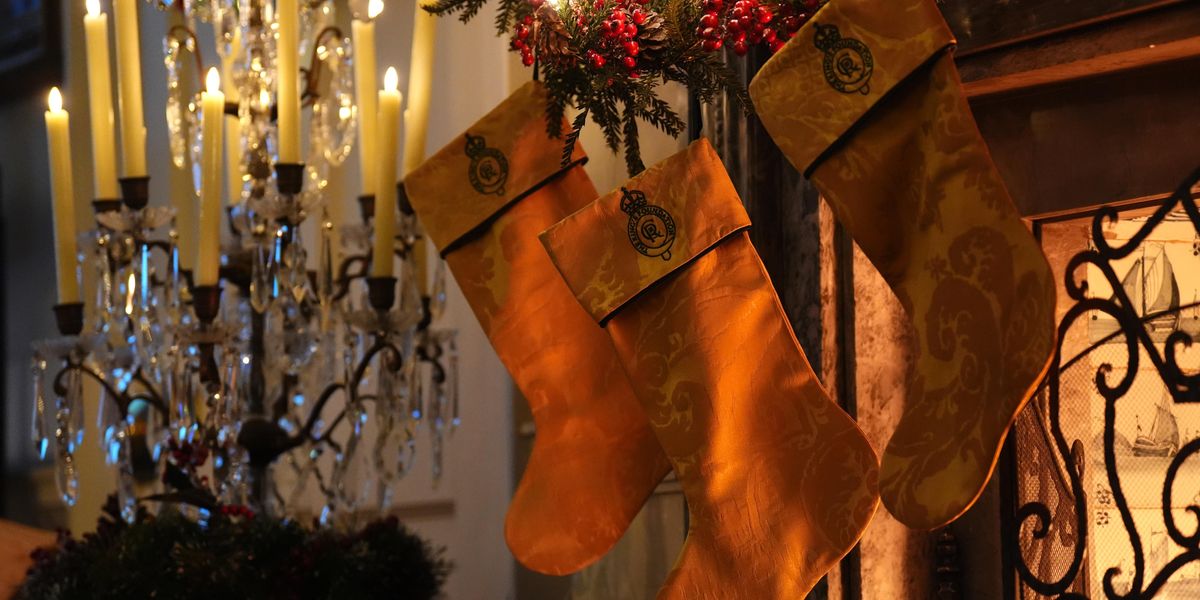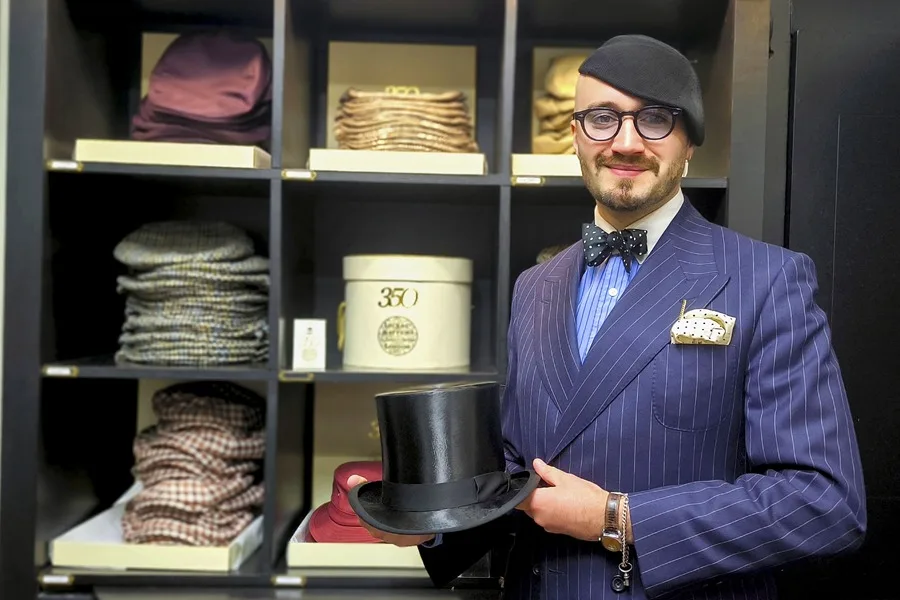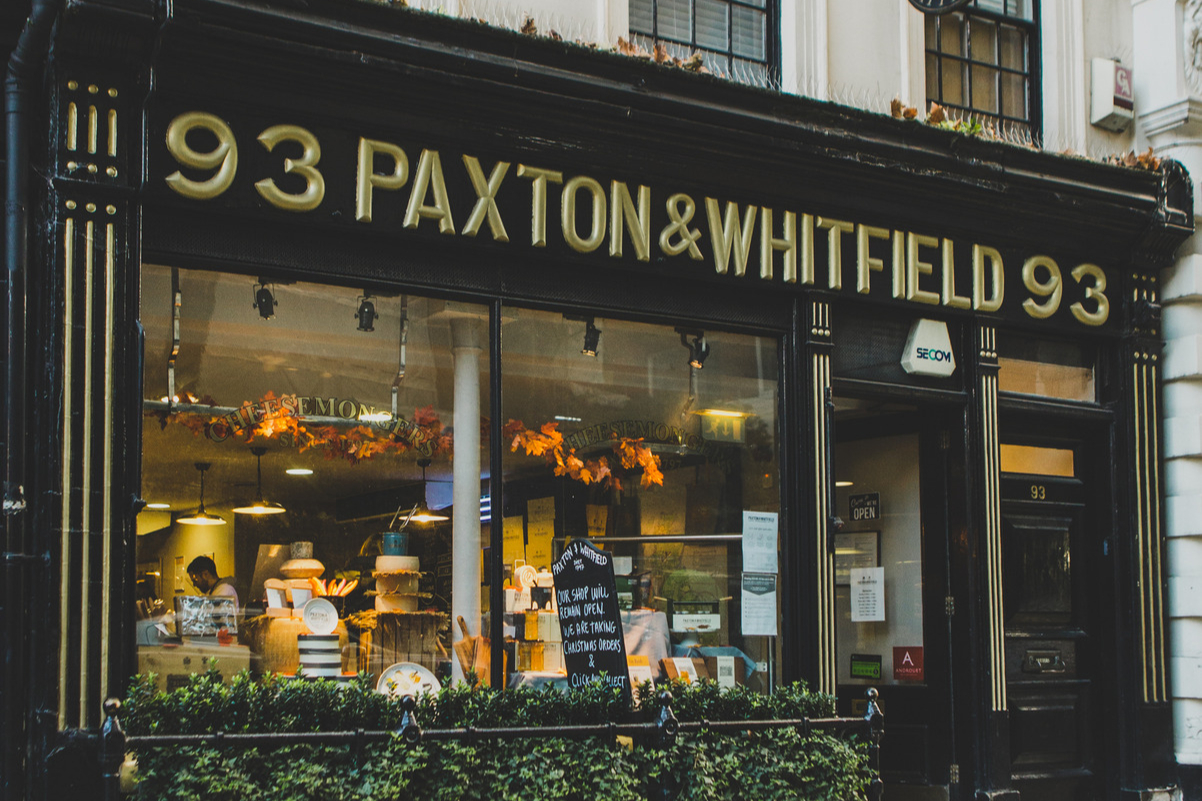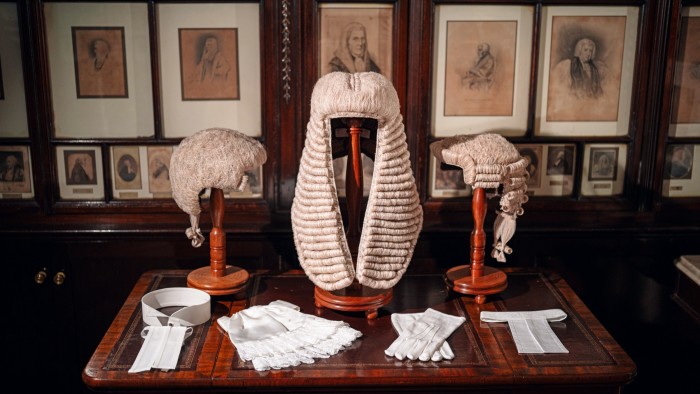
Ede & Ravenscroft is a very British establishment. Since the Shudall family founded the business in 1689, the shop has crafted royal robes for 13 British coronations, most recently for His Majesty King Charles III, alongside attire for peers in the House of Lords and London’s livery companies. Beyond its legacy as the city’s oldest tailor’s, the shop on Holborn’s Chancery Lane draws a legal flock with its wig-making service. It is the UK’s leading supplier in the market, producing around 1,000 wigs each year using the same patented process invented by Humphrey Ravenscroft in 1822.
The shopfront in the City of London © Charlie Bibby
It is not known exactly when or why wigs became popular for barristers and judges. The story goes that, in the 17th century, King Louis XIV of France and his cousin King Charles II of England started wearing perukes – a type of full-bottomed wig made of human hair and horsehair – in a bid to hide the premature baldness and greying allegedly caused by syphilis. The look (and the disease) quickly spread among aristocrats and the merchant classes, and the hairpieces became symbols of wealth and power that eventually found their way to the legal profession, where barristers and judges favoured them for the anonymity they provided.