Climate change is likely to lead to precipitation levels increasing by 15% to 50% and temperatures rising up to 2.94 °C, impacting water availability and crop yields in Telangana. This is expected to increase the number of vulnerable people from 28% to 45% at the start of the [21st] century, and to 59% by mid-century. The potential rise in evaporation rates and depletion of freshwater resources pose a significant threat to the future of agriculture, which is relied upon by more than half the working population for livelihood, according to a study done by CSIR-National Geophysical Research Institute (NGRI) scientists.
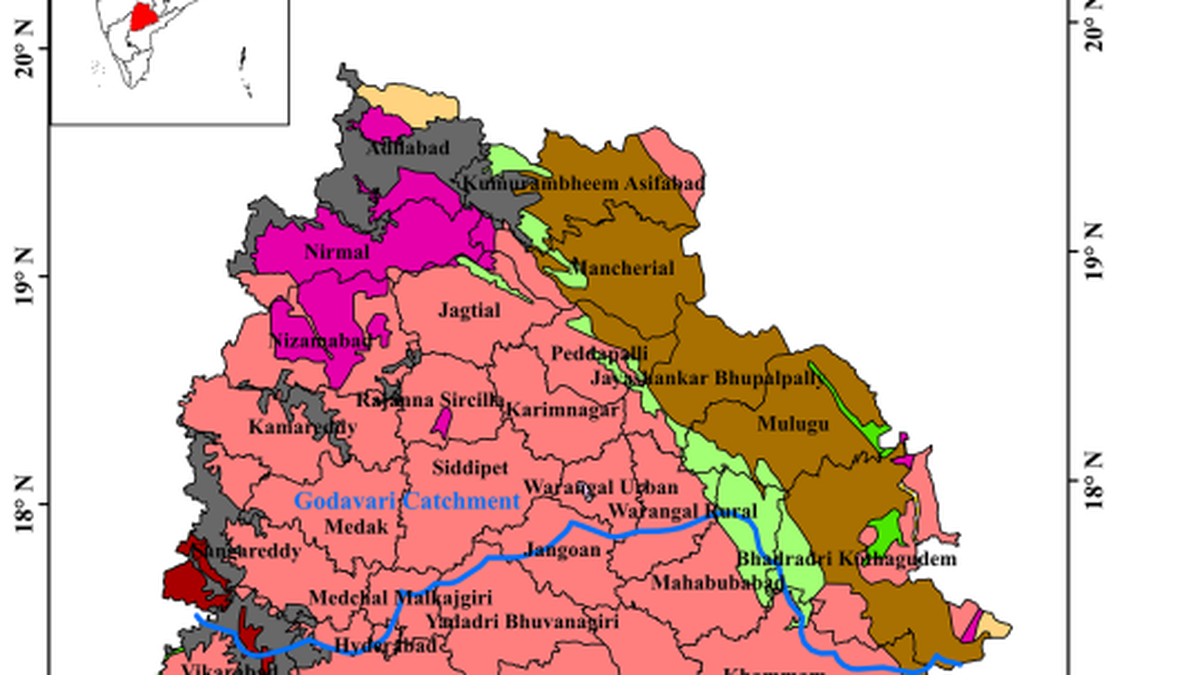
The study done in Krishna (6,453,850 Ha) and Godavari (7,833,432 Ha) water basins — which divide Telangana into equal parts — for the near future (2015–2045), mid future (2046–2075), and far future (2076−2100), showed rise in temperature, most pronounced in minimum temperatures.