HomeAI · summaries
Storia in 11 fonti
Scientists ‘really worried’ as ocean surface temps hit record high
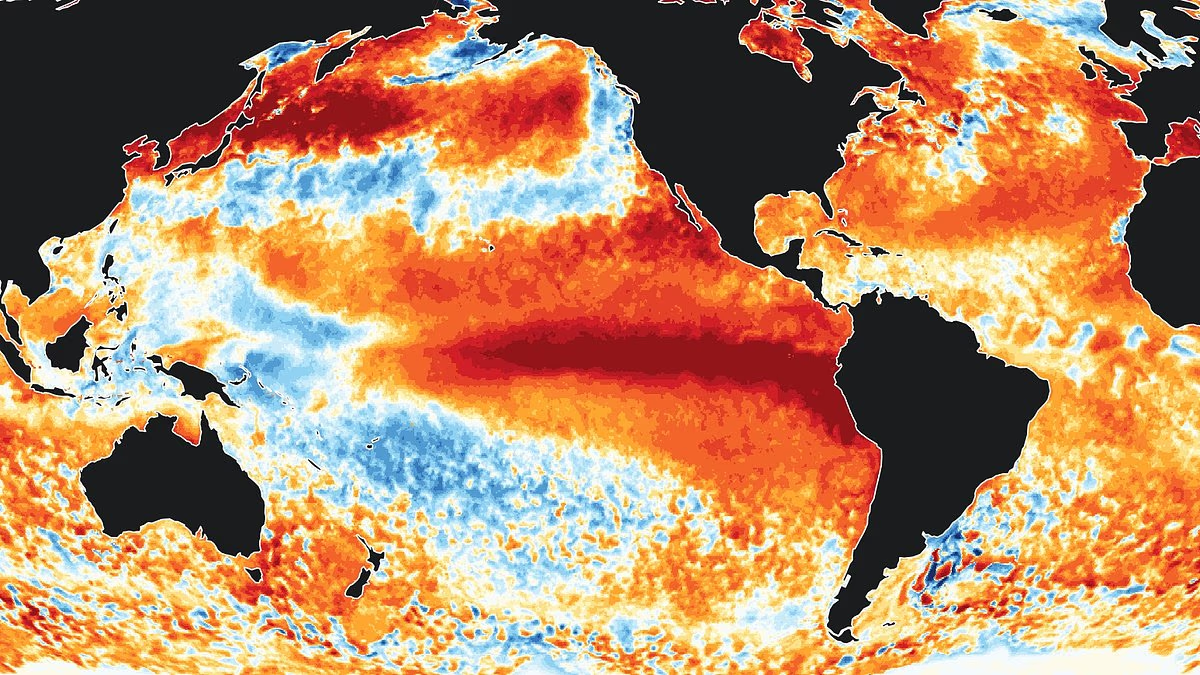
Jump to contentAllNewsSportCultureLifestyleGlobal sea surface temperatures reached an unprecedented high of 21.1 degrees Celsius (70 degrees Fahrenheit) in August, driven by a combination of human-induced climate change and an intensifying El Niño pattern. The European climate service Copernicus warned that ocean temperatures will likely continue rising until the El Niño phenomenon reaches its peak between November and January, leading to unprecedented climate conditions. Oceanographers say warming seas disrupt atmospheric conditions, exacerbate storm intensity and rainfall, and amplify land heatwaves by limiting the cooling effects of nighttime sea breezes. Marine ecologists highlight severe risks to marine life and global food security, pointing out that coral populations have dropped to a fifth of 1990s levels and major commercial fisheries face potential collapse. Scientists warn that as oceans lose oxygen and become increasingly acidic, vital marine ecosystems are collapsing, forcing larger species to migrate while opportunistic organisms like jellyfish thrive in the warmer waters. In fullOceans reach hottest temperatures on record in ‘very troubling’ development for humans and marine lifeMore bulletinsThank you for registeringPlease refresh the page or navigate to another page on the site to be automatically logged inPlease refresh your browser to be logged in
Confronto fonti
6 prospettive sulla stessa storiaTimeline cronologica
- ·
thehindubusinessline.com
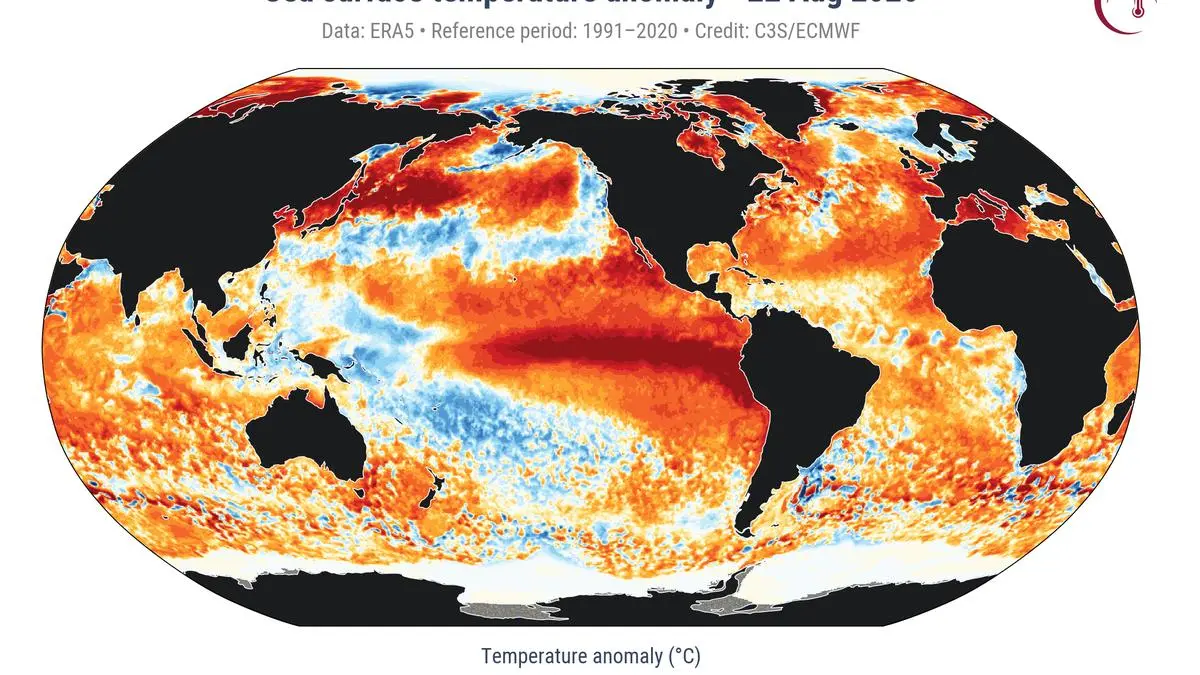
Global Sea Surface Temperature breaks record as El Nino gains strength
Record global sea surface temperature reaches 21.1°C amid strengthening El Niño, signaling increased ocean stress and climate impact risks.
- ·
theguardian.com

World’s oceans hit hottest temperature on record in August
Average sea surface temperature outside polar regions was 21.1C on Saturday, latest data finds