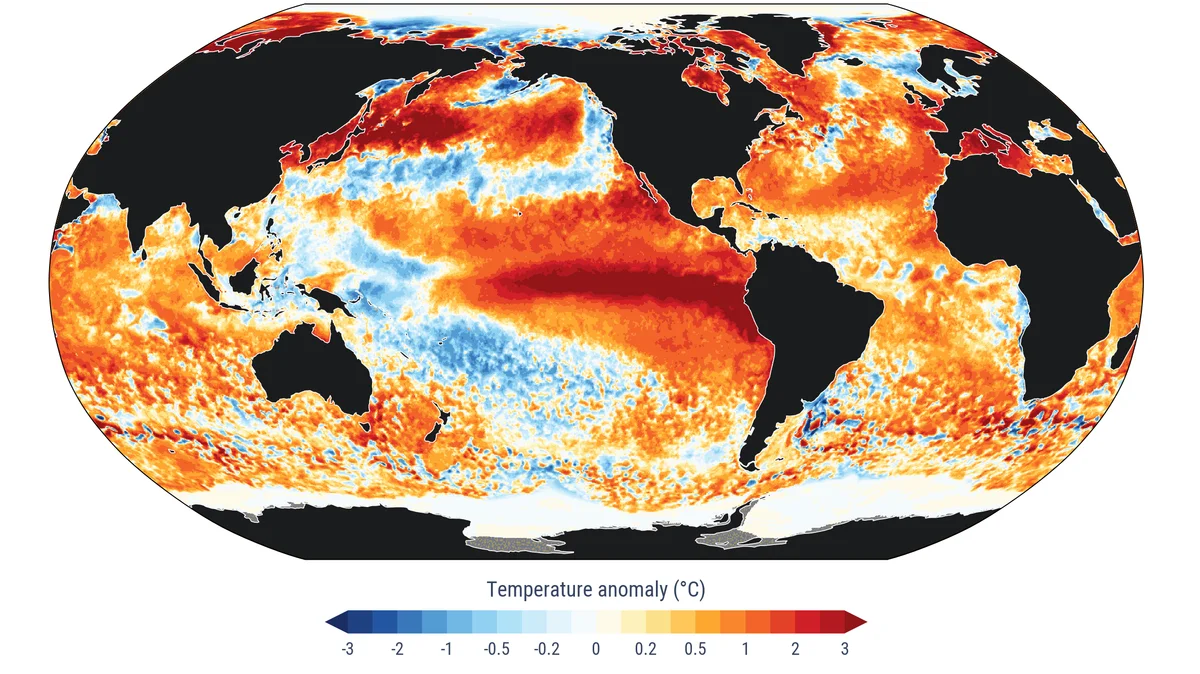
The world’s oceans simmered to their hottest temperatures on record over the weekend and are likely to warm even further in the next few months, putting stress on life in the water and on land too, the European climate service Copernicus announced Monday.Spurred by a still growing but already supersized natural El Nino and human-caused climate change, the world’s ocean temperatures hit 21.1 degrees Celsius (70 degrees Fahrenheit) on Friday and Saturday, narrowly edging out the average daily record set in March 2024, said Samantha Burgess, strategic climate lead for Copernicus.“This is yet another sign of our climate system under strain and the ocean under immense pressure,” Burgess said.Jane Lubchenco, an oceanographer and former chief of the U.S. National Oceanic and Atmospheric Administration called the record “very troubling.”“An ocean this warm destabilizes weather patterns and threatens food security, economic prosperity and marine life,” Lubchenco said in an email. “A warmer ocean is not our friend.”
Warmer water means worse storms, hotter nightsWhen the ocean warms it becomes more acidic and carries less oxygen which hurts food industries that rely on the seas, Burgess said. It also changes ocean currents and weather patterns, giving more juice to storms to make them rainier and make storm surge bigger, Burgess said.“When we have a warmer ocean such as we’ve had in Europe this summer, it amplifies the impact of heat waves because you don’t get the cooler nighttime temperatures with the sea breeze coming off the ocean when the ocean is very warm,” Burgess said.