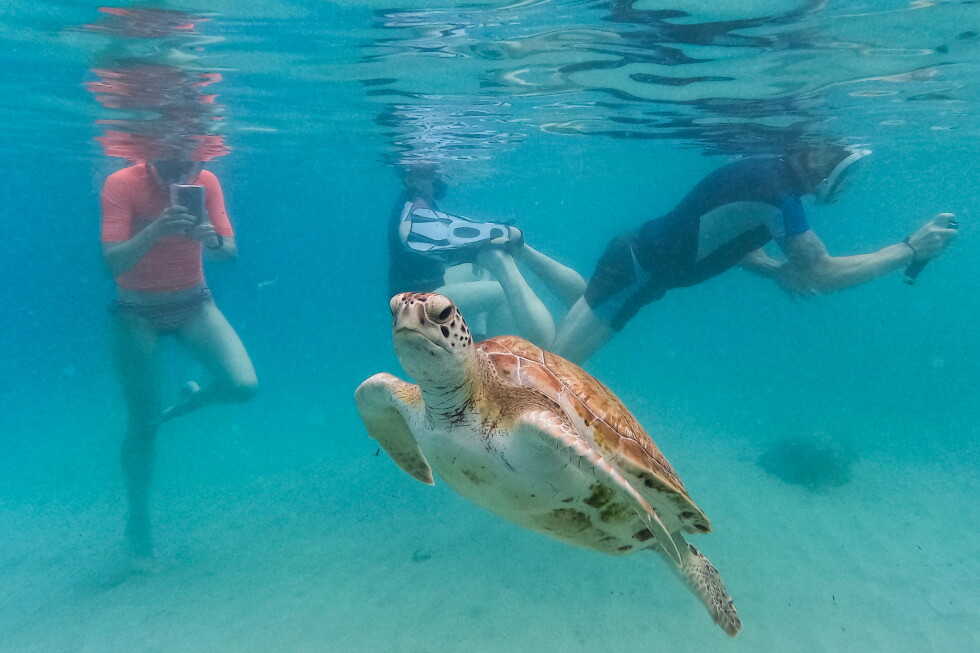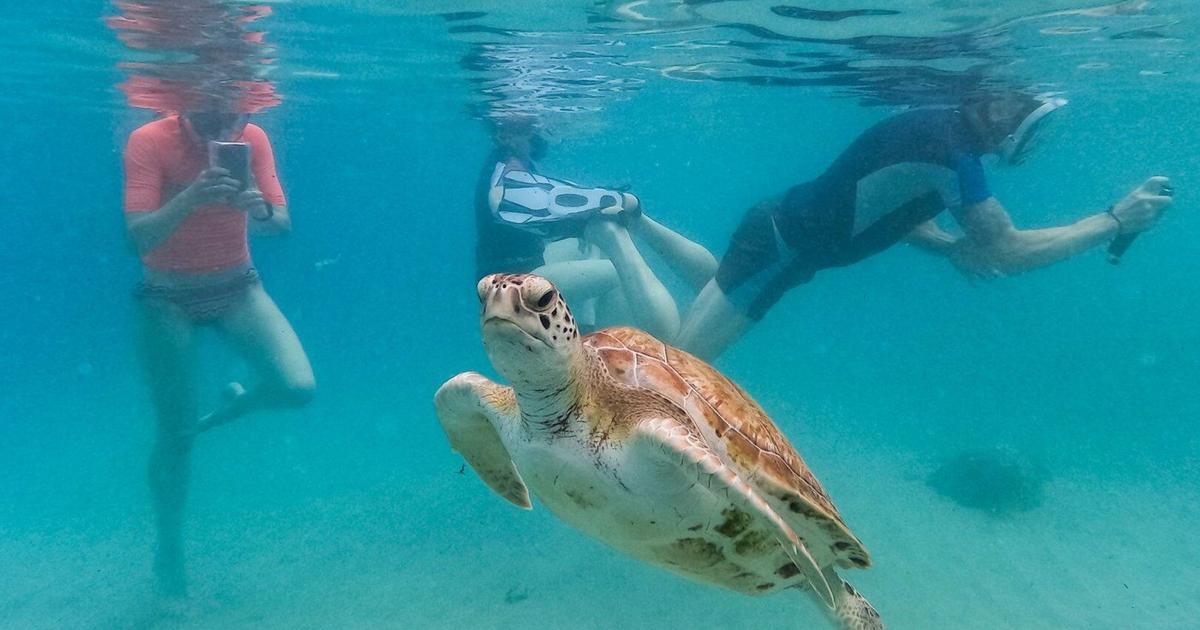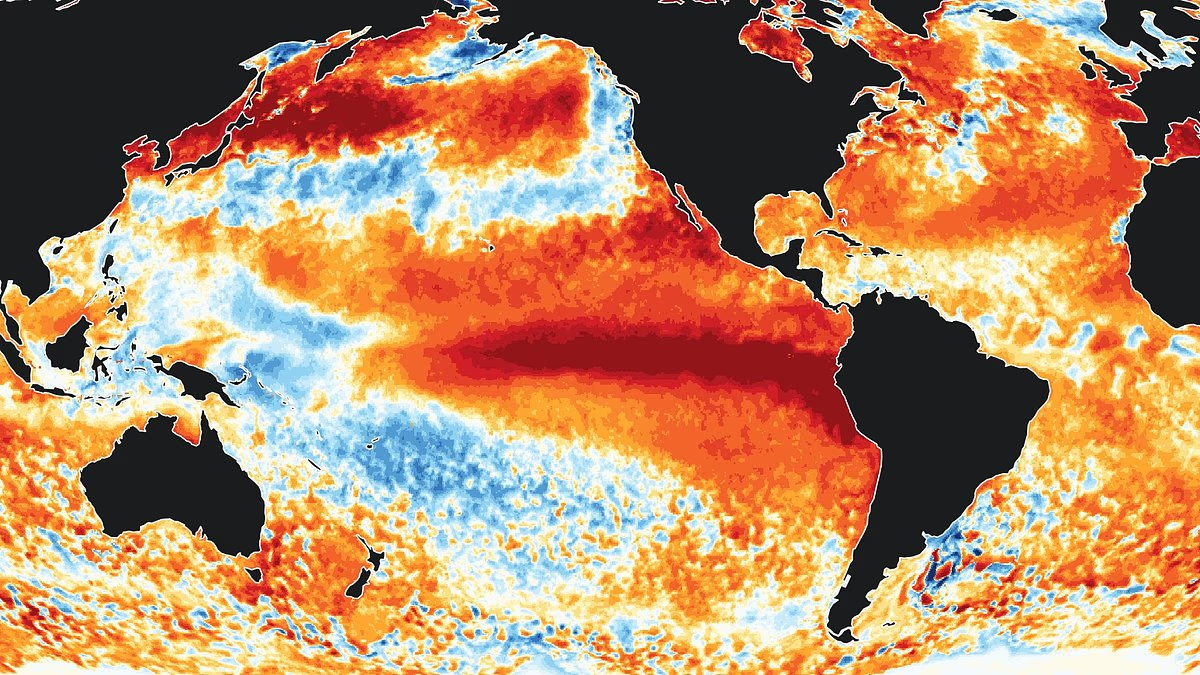
Global sea surface temperatures reached unprecedented highs over the weekend and are expected to continue rising in the coming months, placing severe strain on life in the water and on land too, the European climate service Copernicus warned Monday.Driven by a combination of human-induced climate change and a powerful El Nino phenomenon, sea temperatures touched 21.1 degrees Celsius (70 degrees Fahrenheit) on Friday and Saturday. This slightly surpassed the previous daily average record recorded in March 2024, according to Samantha Burgess, strategic climate lead for Copernicus."This is yet another sign of our climate system under strain and the ocean under immense pressure," Burgess said.Jane Lubchenco, an oceanographer and former chief of the U.S. National Oceanic and Atmospheric Administration, described the landmark warmth as "very troubling.""An ocean this warm destabilizes weather patterns and threatens food security, economic prosperity and marine life," Lubchenco stated in an email, adding that "A warmer ocean is not our friend."As oceans heat up, they lose oxygen and become increasingly acidic, threatening industries reliant on marine life, Burgess noted. The warming also disrupts atmospheric conditions and ocean currents, intensifying storms by increasing rainfall totals and storm surges.A sea turtle swims among tourists snorkeling at Piskado beach in Westpunt, Curacao, May 15, 2026 (AP Photo/Matias Delacroix, File)Burgess explained that elevated marine temperatures worsen conditions on land during heatwaves. "When we have a warmer ocean such as we’ve had in Europe this summer, it amplifies the impact of heat waves because you don’t get the cooler nighttime temperatures with the sea breeze coming off the ocean when the ocean is very warm," she said.Typically, global sea surface temperatures peak in March or April as the summer season in the Southern Hemisphere ends. However, the latest peak occurred in August. Burgess warned that temperatures will likely climb further until the current El Nino—a periodic warming of parts of the Pacific Ocean that impacts global climate patterns—reaches its height between November and January.The active El Nino is already comparable in size to major past events and continues to intensify, with projections suggesting it could hit historic levels. While El Nino accounts for a significant portion of the current thermal spike, long-term warming driven by fossil fuel combustion has raised average water temperatures by 0.8 degrees Celsius (1.4 degrees Fahrenheit), Burgess added."The thing that makes my heart sink is that this starts so early and it's so out-of-normal that you know when it hits its peak, it's going to be unprecedented," said Boris Worm, a biology professor at Dalhousie University in Canada. "The ocean is not supposed to do this.""It's just that there is no normal anymore," Worm said."It's frightening," said John Bruno, a marine ecologist at the University of North Carolina. "We’re not even in October yet. You know, usually the Caribbean peaks at like late September, early October. And I think next year in the Southern Ocean, the Great Barrier Reef, yeah I’m really worried about what’s going to happen in the southern hemisphere in February, March."Bruno noted that heat-sensitive coral populations have declined to roughly a fifth of their 1990s levels. However, recent observations indicate that certain "weedy" species are displaying greater adaptability to warmer waters than structural, long-lived species like staghorn, preventing total devastation so far.A man carries a child through sargassum seaweed after cooling off in the ocean in Miami Beach, Fla., June 11, 2026 (AP Photo/Rebecca Blackwell)Both Bruno and Worm raised concerns regarding potential food shortages and the collapse of key commercial fisheries.They highlighted the Peruvian anchovy fishery, the world's largest, which frequently collapses during El Nino cycles and faces extreme risk under current temperatures. Such disruptions cascade throughout the broader ecosystem, affecting seabirds, predatory fish, and marine mammals.While larger ocean species can migrate vast distances to cooler waters, "anchovies can't leave so they just don't reproduce or starve," Worm said, leaving human populations and wildlife that depend on them vulnerable.In conditions of extreme heat, "not everybody is hit equally, obviously, but the whole system collapses," Worm said. "It’s like when you pull out the rug from underneath an economy. It’s, like, the whole thing collapses. Some sectors may do a little bit better, but overall, everybody suffers."Burgess observed that rising water temperatures in European seas coincide with an influx of jellyfish, a phenomenon Bruno suggested may also be unfolding along the U.S. East Coast."Jellyfish are often opportunistic and they like warm waters," Worm said. "So yes, I would expect them to do a little bit better."Another former NOAA chief, Rick Spinrad, emphasized that the ocean functions as the Earth's primary climate regulator, warning that "as long as we depend on a healthy ocean for our safety, prosperity and wellbeing, these record-breaking sea surface temperatures portend even greater challenges for us all."
Oceans reach hottest temperatures on record and scientists are ‘really worried’
The sea will keep getting hotter until the current El Nino reaches its peak sometime between November and January, scientists warn
786 words~4 min read