HomeAI · summaries
Storia in 2 fonti
Quantum Art Verifies Fault-Tolerant Thresholds for Trapped-Ion Multi-Qubit Gates - Quantum Computing Report
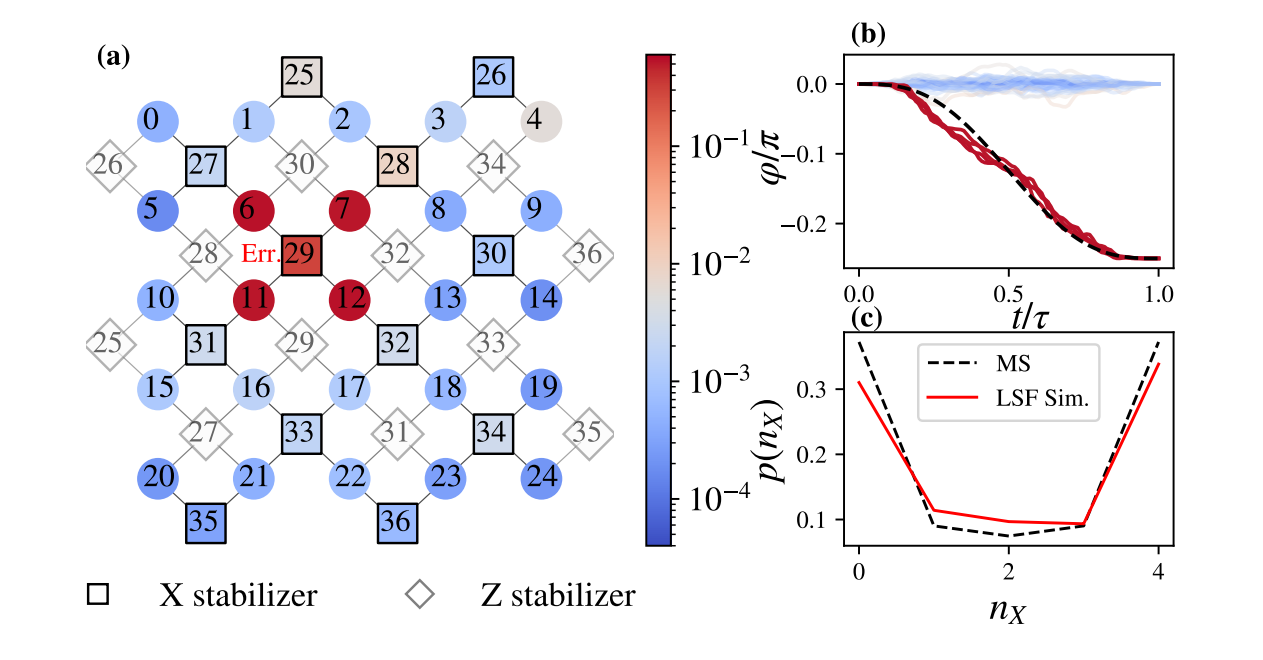
Trapped-ion quantum hardware developer Quantum Art has released comprehensive numerical simulations verifying that its proprietary multi-qubit (MQ) gate architecture is fully compatible with large-scale quantum error correction (QEC). Historically, the quantum computing sector has targeted fault-tolerant pathways constructed almost exclusively from dense sequences of isolated single- and two-qubit operations, leaving open questions regarding whether simultaneous, broad entangling operations would cause catastrophic, long-range error propagation. Quantum Art’s validation bridges device-level atomic physics and macroscopic code performance, demonstrating a stable fault-tolerance threshold at the practical 1% level when evaluated against standard rotated surface code topologies. To model physical hardware imperfections accurately, researchers constructed [...]
Confronto fonti
2 prospettive sulla stessa storiaTimeline cronologica
- ·
quantumcomputingreport.com
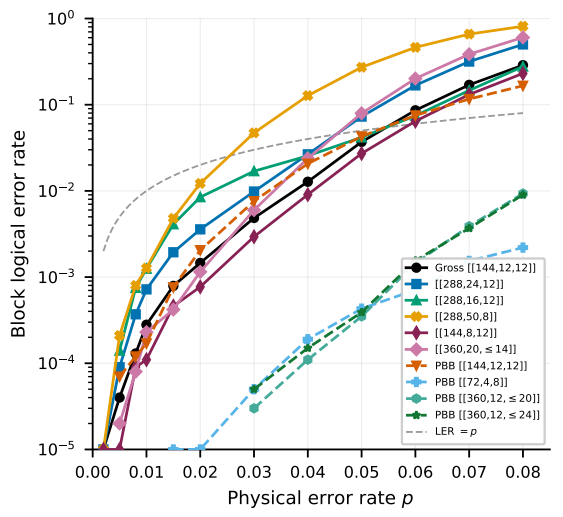
IBM is Using AI to Help Identify New Quantum Error Correction Codes - Quantum Computing Report
Searching for optimal Quantum Error Correction (QEC) codes is an incredibly time-consuming and computationally demanding bottleneck due to the vast space of potential algebraic…
- ·

AIX Global Innovations Discloses Software-Governed Fault-Tolerant Quantum Computing Campaign on Cloud-Accessible IBM Hardware - Quantum…