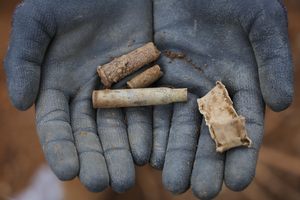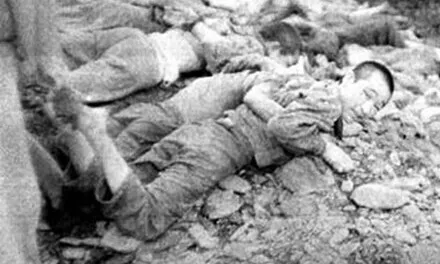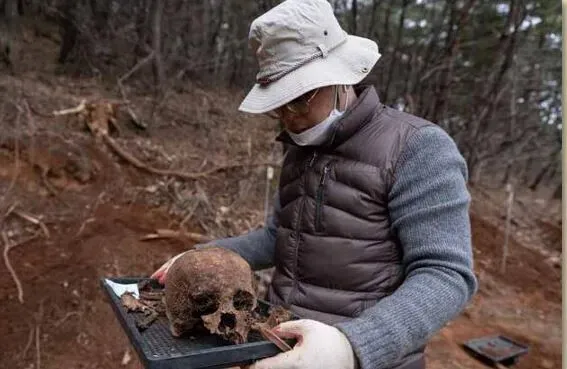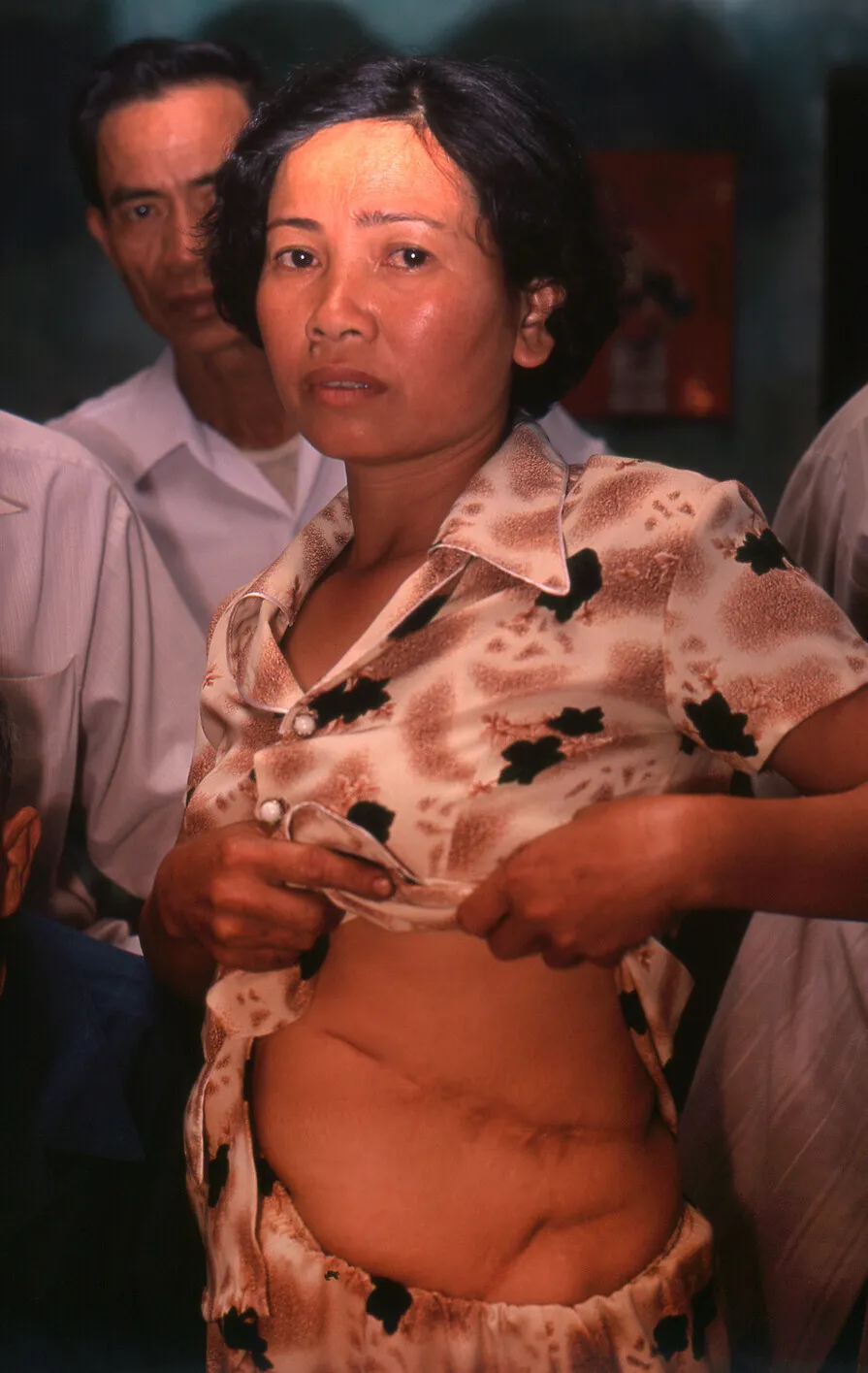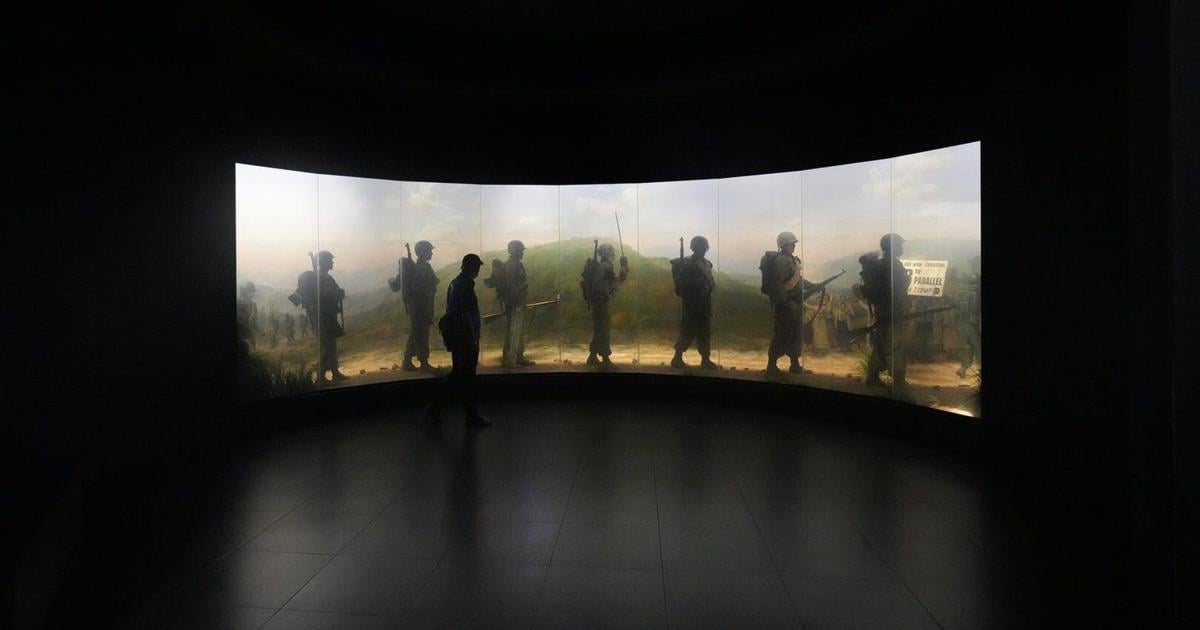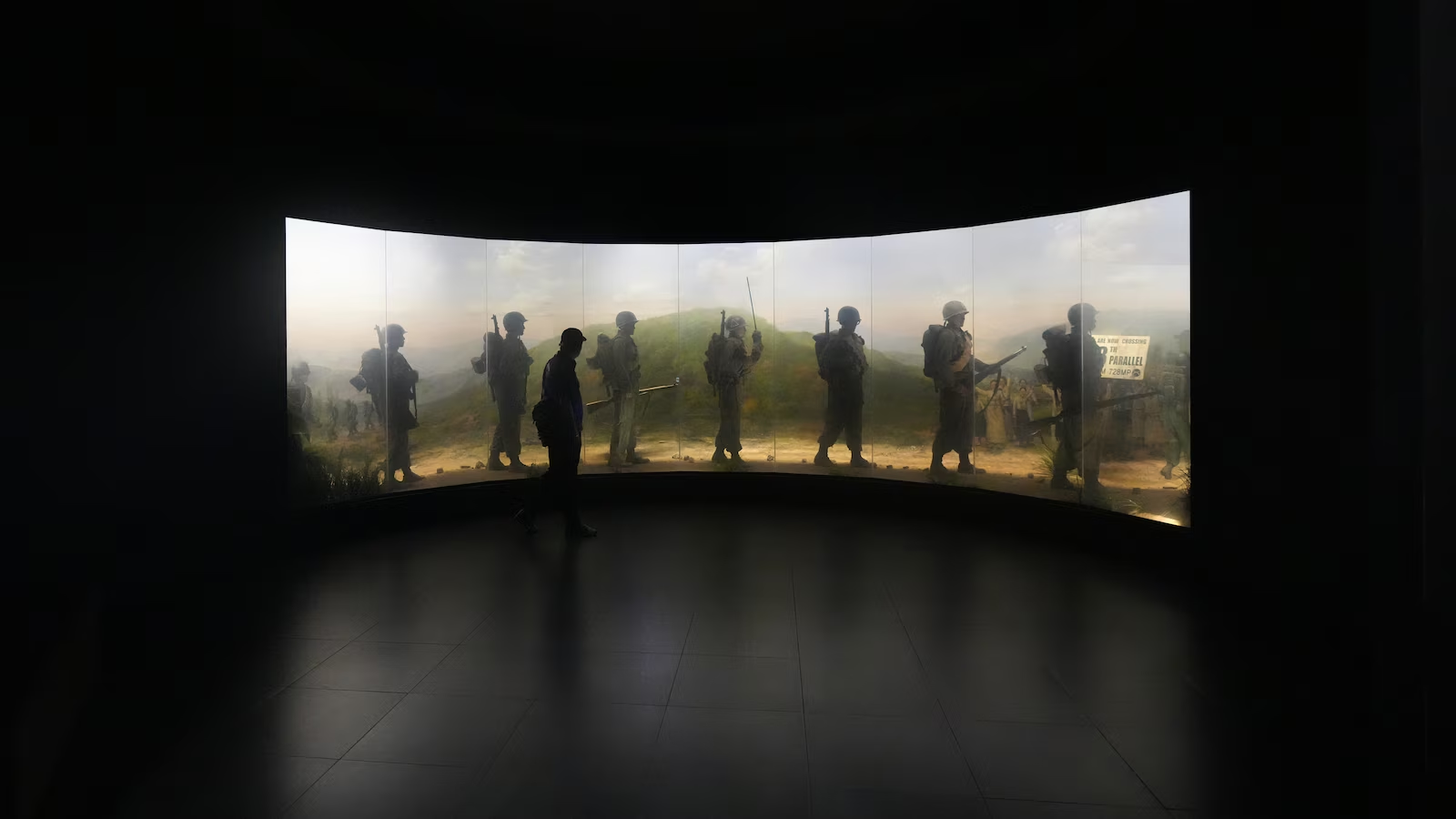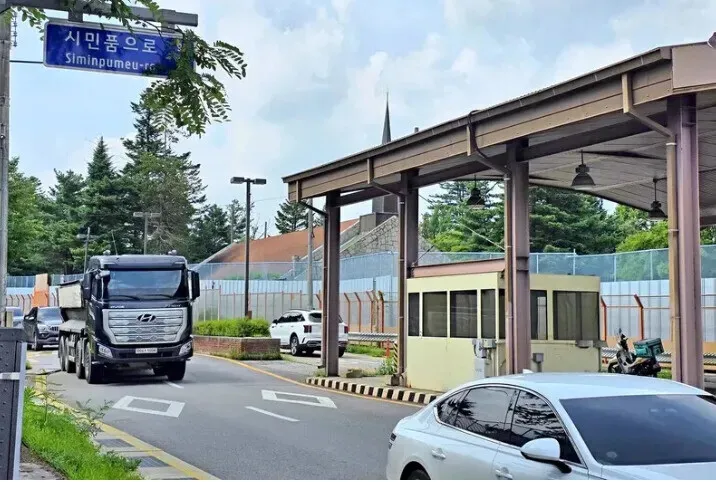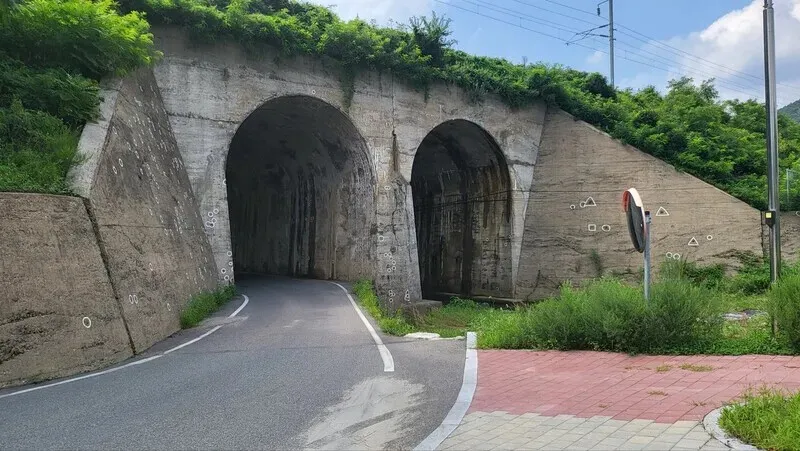
Ssanggul Bridge in Nogeun-ri, central Korea, the site of a horrific massacre of refugees by the US military between July 25 and July 29 in 1950, during the early days of the Korean War. (Kim Dong-hoon/Hankyoreh)
By Kim Dong-hoon, national news editorThe county of Yeongdong in North Chungcheong Province is located right around the middle of South Korea. It is also home to Samdo Peak, so named because of its position where the three (“sam”) provinces (“do”) of Chungcheong, Jeolla, and Gyeongsang come together.Temperatures in Yeongdong vary widely throughout the day, and this, combined with the ample sunshine, has made it a rich area for fruit. Some of the leading crops are grapes, persimmons and apples. It’s also well-known for its walnuts.This county with its lush grapevines was the scene of a horrific massacre that began on July 25, 1950, and lasted for five days.The events took place a month after the outbreak of the Korean War on June 25. The US military and the Korean People’s Army were engaged in fierce combat around Yeongdong, and residents in its villages of Imgye and Jugok fled to the mountains.But the US military ordered them to come back from the mountains, claiming it would assist them in taking refuge. They were joined by others fleeing from Daejeon and other locations, with a total of 500 to 600 people in all.As the procession arrived in the village of Nogeun, sometimes written as No Gun Ri, the US troops blocked the route with tanks and ordered the refugees to travel up via a nearby railway. They proceeded to search their belongings, which consisted of bundles tied in blankets, cast-iron jars, and barley rice.After completing their search, the US troops disappeared. Shortly thereafter, US bombers arrived and began dropping bombs on the refugees and strafing them.In an instant, the scene became an image of hell on earth. Blood sprayed as screams and cries rang out. In all, an estimated 100 people were killed.It was not over. US troops reappeared and herded the 400 to 500 surviving refugees to the nearby Ssanggul Bridge. Anyone who so much as took a footstep outside it was shot. As the bodies piled up, the refugees huddled closer to survive.For several days, they endured starvation and scorching summer heat. Most of those who fled in desperation were shot dead by the US troops. Eventually, the US forces opened fire into the tunnels beneath the bridge.Based on reports from family members and others, the South Korean government would later recognize a total of 228 victims, including 150 who were killed. It is commonly accepted that the actual death toll was as high as 400.Why did the US military fire on civilians? The most compelling argument is that they were concerned about the presence of Korean People’s Army members concealed among the refugees, but even that leaves questions unanswered.As in the cases of the Jeju April 3 incident and Yeosu-Suncheon Rebellion, the family members of victims in the Nogeun-ri incident were long unable to speak out. The world finally learned about it through the efforts of Chung Eun-yong.Chung was himself a surviving family member, having lost a 5-year-old son and a 2-year-old daughter. Compiling a detailed record of the Nogeun-ri incident, he submitted a request for compensation to the US government in October 1960. The US did not respond.In 1994, Chung published a book entitled “Do You Know Our Suffering?” Rather than being a work of fiction, it was an accurate account of the events of the Nogeun-ri massacre.Additional details of the incident came to light through reporting by the Hankyoreh and in-depth coverage by the monthly magazine Mal. The full picture finally emerged with a 1999 report by the Associated Press based on interviews with around 10 US soldiers who had been sent to the village at the time and the acquisition of four documents, including US orders. The AP team responsible was awarded the Pulitzer Prize the following year.I met one of those reporters, Charles Hanley, at the Nogunri International Peace Forum three years ago. He recalled the investigation as having been difficult, requiring efforts to persuade agency officials who were opposed to the report.He also described the reports of the incident as having come as a great shock to Americans, as it was at odds with the version of history that they had known.In 2001, then-US President Bill Clinton issued a statement expressing regret over the Nogeun-ri incident. A 15-month investigation ensued. This was an unusual step without precedent among the previous conflicts that the US had been involved in.The time has now come for the South Korean government to take action. No compensation or indemnification has yet been provided for the victims. While a special act on the incident was passed by the National Assembly in 2004, 17 family members of victims were unsuccessful in a suit they filed to demand damages from the state.In July 2020, Chung Koo-do — chairperson of the No Gun Ri International Peace Foundation and son of Chung Eun-yong — published the book “Nogeun-ri Is Alive,” presenting a compilation of information about the incident. He described it as an example of “history created by the surviving families.”Another Nogunri International Peace Forum is scheduled to take place in Washington, DC, on July 25, which represents the event’s 75th anniversary. The theme is “reflecting on the past, building the future.”With the passage of three-quarters of a century, the Nogeun-ri incident has risen beyond the level of ideology to become a symbol of human rights and peace. Nogeun-ri is indeed still alive.Please direct questions or comments to [english@hani.co.kr]