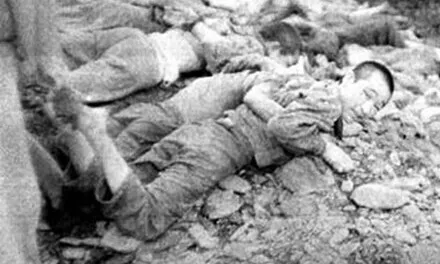
A Korean man looks at the camera before being executed after having his feet bound and being taken to Daejeon’s Sannae Gollyeong Valley in 1950, just after the start of the Korean War. The photo was discovered in the US National Archives by the late Lee Do-young in 1999. (Hankyoreh file photo)
On July 4, 1950, Im Sun-jae walked out of his house, leaving behind a crying daughter who was just over 100 days old. He could not imagine what problems would lie in store if he defied the message ordering him to report to the Yuseong Police Station.He did not have a good feeling about it. Telling his wife that he would “head to work after stopping at the police station,” he got on his bicycle like any other day.Born in the village of Eumnae in Hoedeok, a town in Daedeok County (now Daedeok District in Daejeon), Im was bright as a child, and his family had high hopes for him. Since the eldest son’s family had no children, he was adopted by them, but his aunt and uncle treated him as if he were their own.After graduating from the railroad school during the Japanese occupation, he was hired by the railway bureau in 1944 and began a comfortable working life. He had been named a deputy department director in April 1950 when the Korean War broke out.After getting on his bike and heading to work like any other day, Im was never seen again.His family searched everywhere for him. His sister-in-law’s brother, a police officer, visited the Yuseong Police Station to ask about his whereabouts. The fellow police at the station sternly told him not to ask any more questions or do any more searching.“Apparently he was taken to Sannae.”It was only after some time had passed that the word “Sannae” was mentioned in connection with Im’s whereabouts.