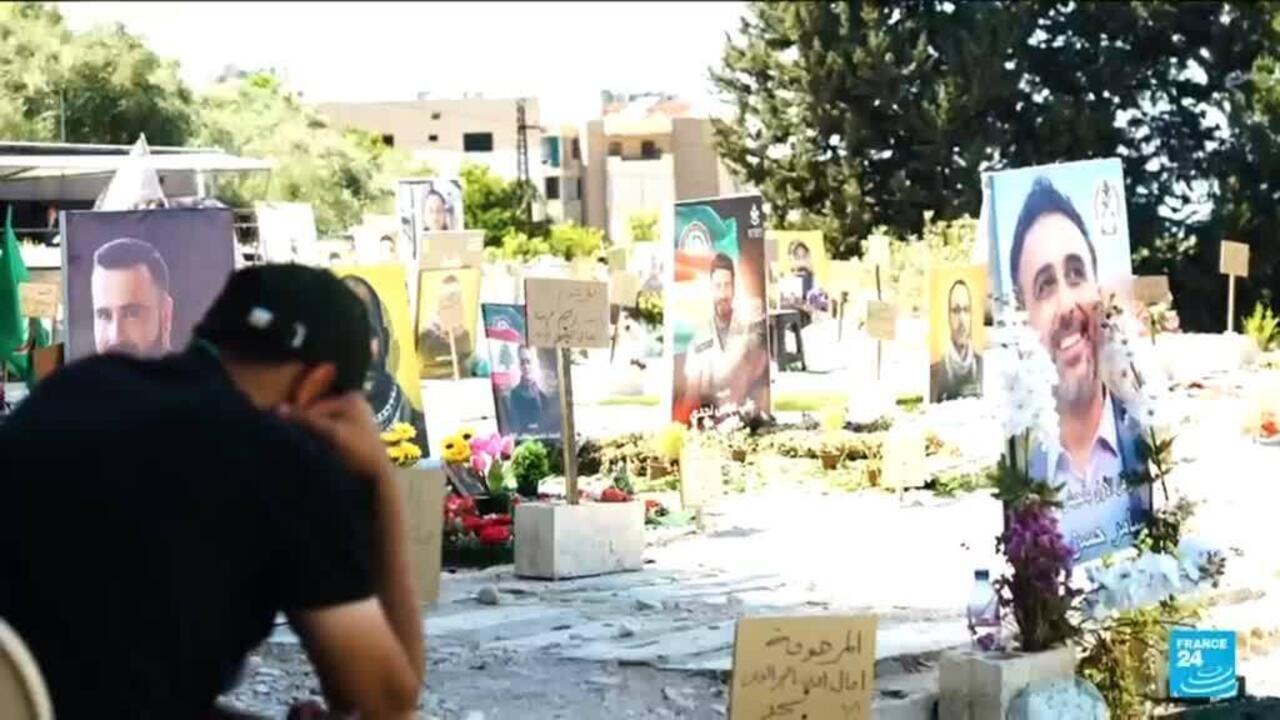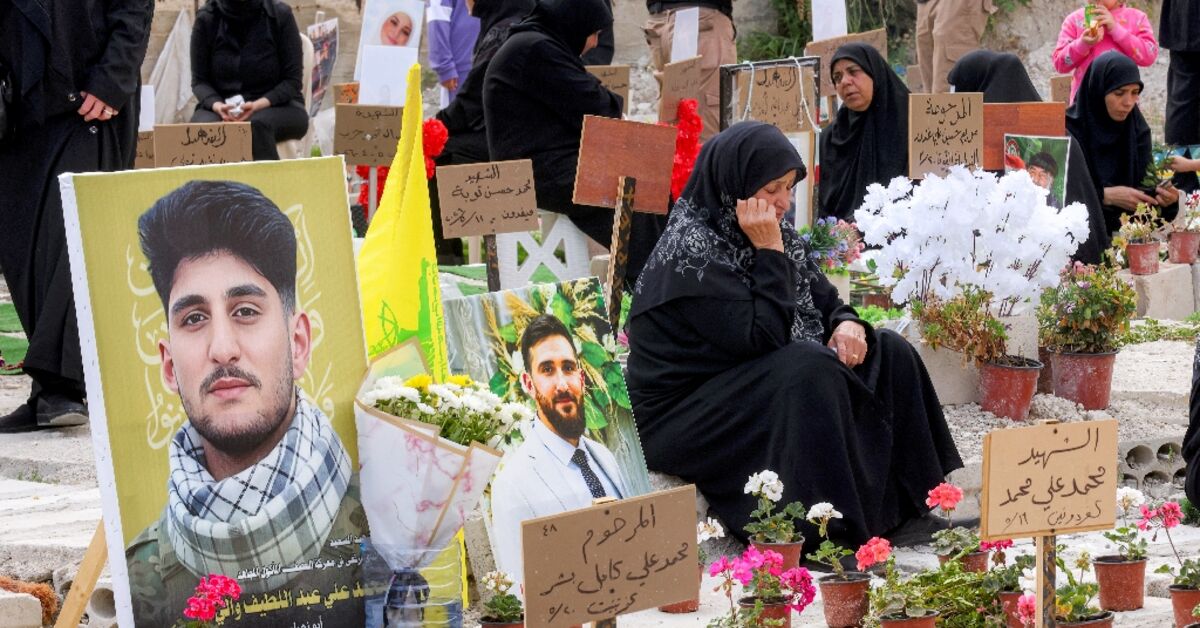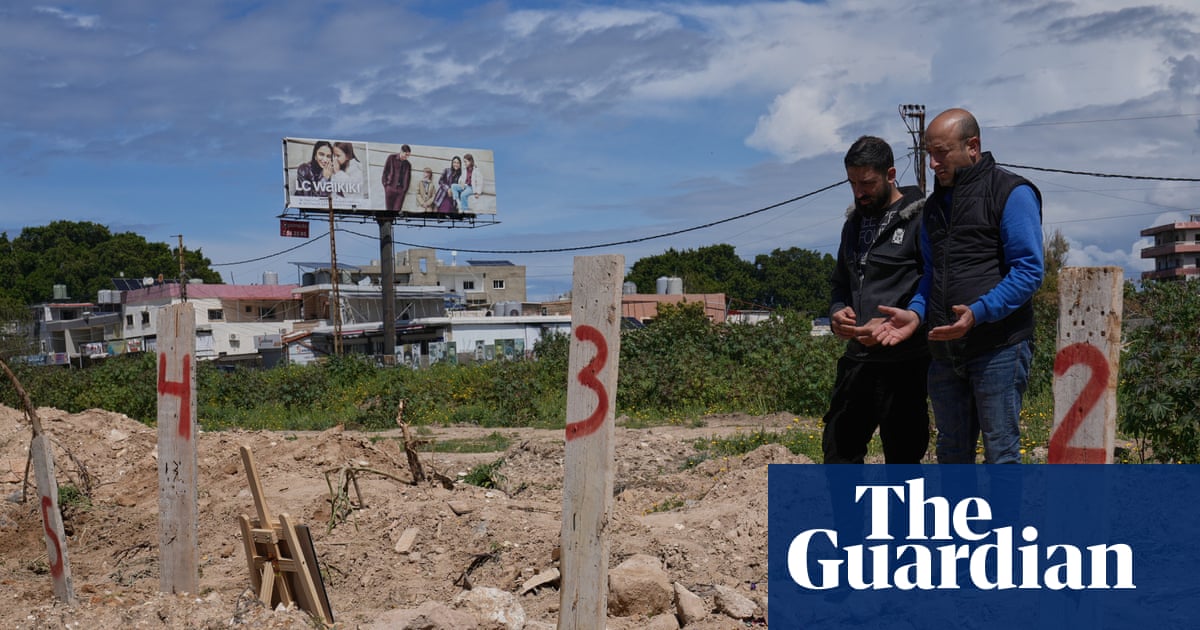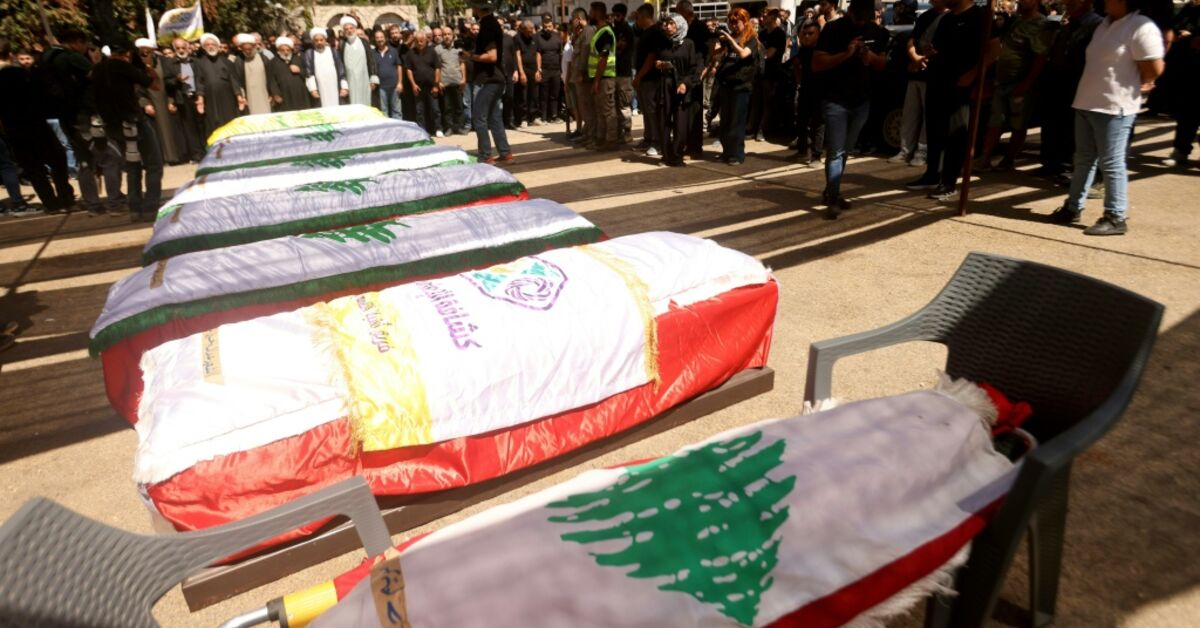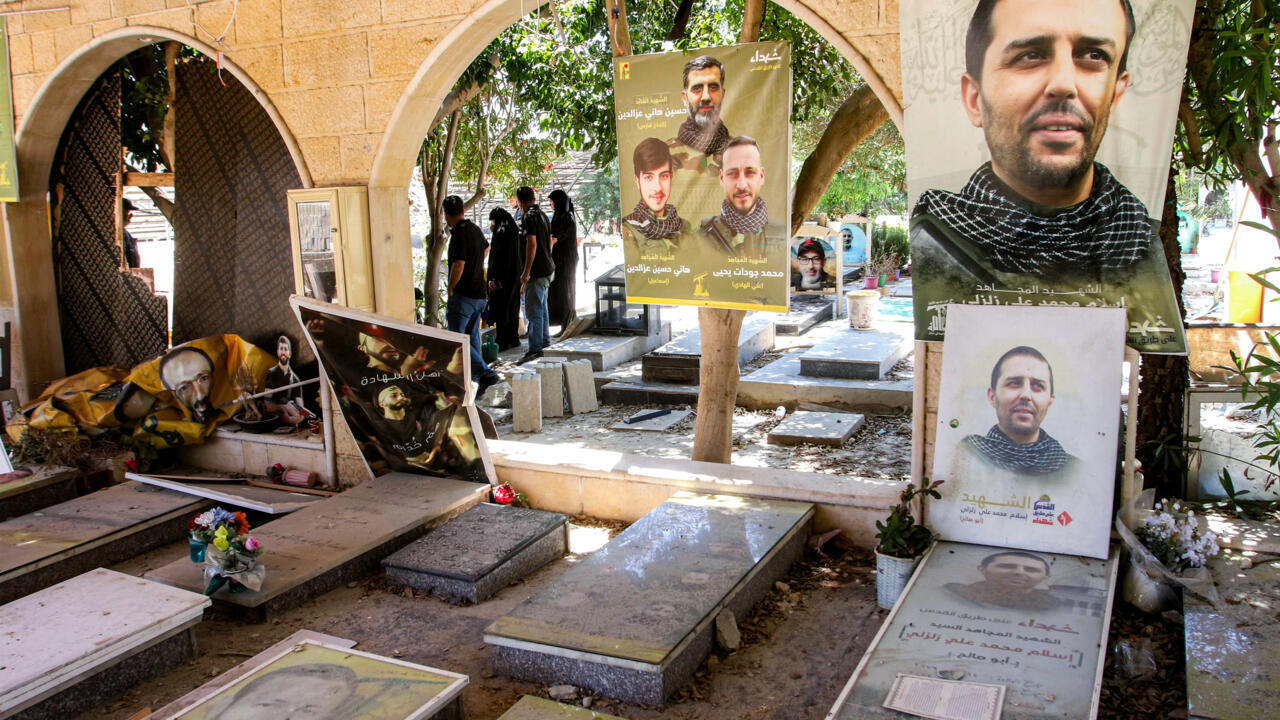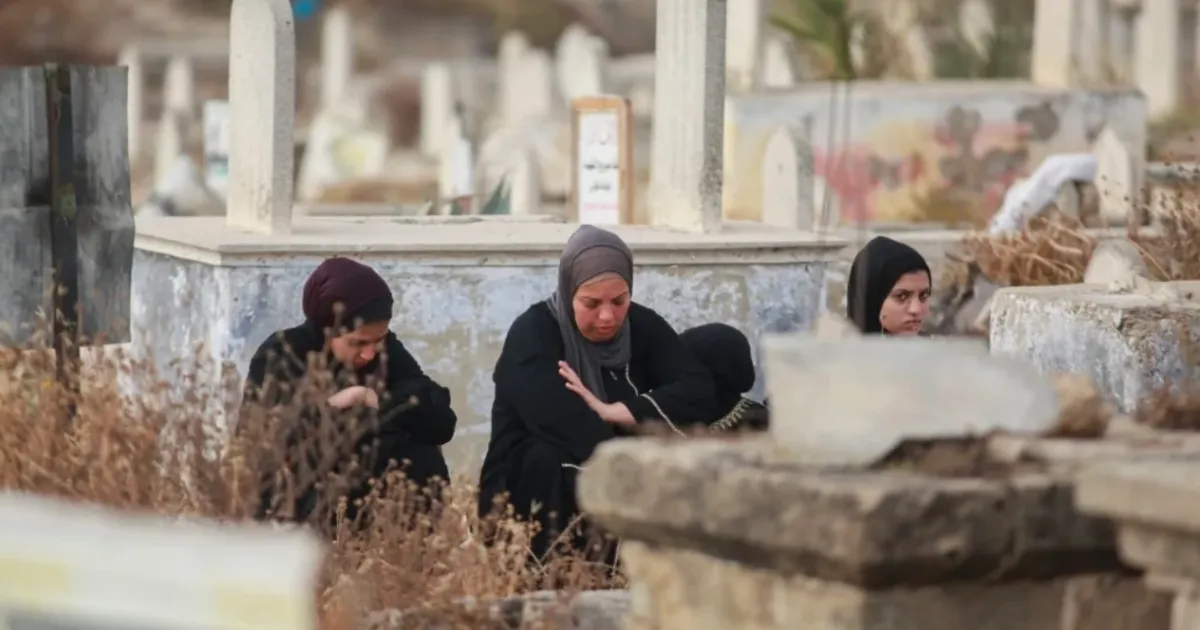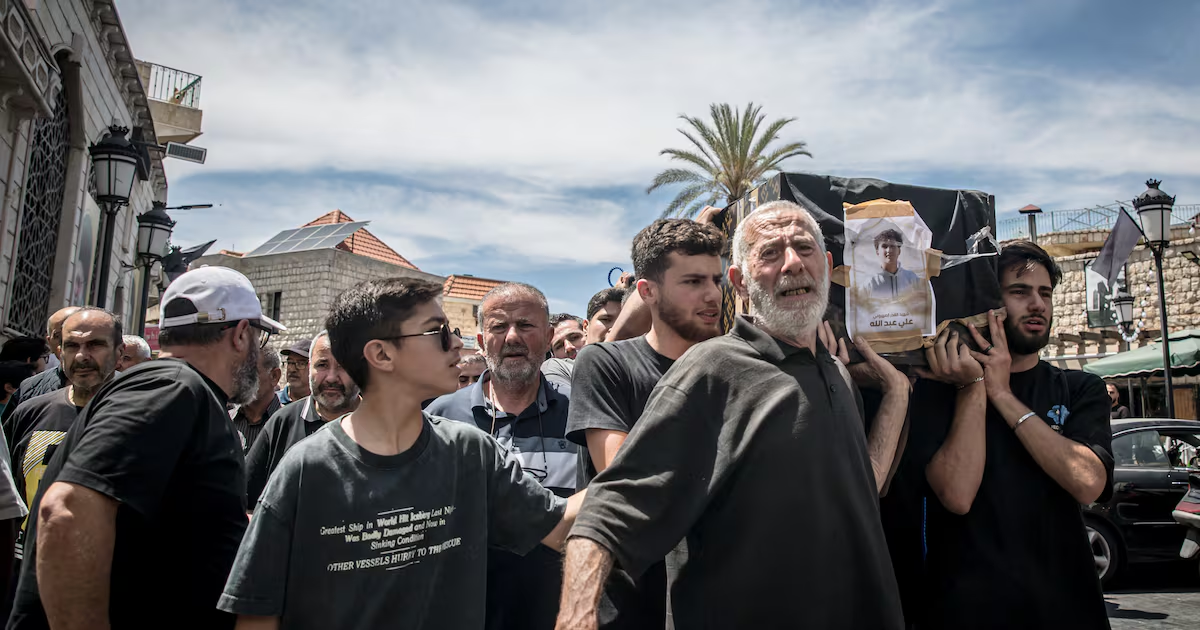
Makeshift cemeteries across the south provide a place for the dead until it is safe to hold a proper funeral in their home townsMourners carry the coffins of the Abdallah family, six of whom who were killed by Israeli airstrikes on Monday. Photograph: Sally Hayden Thu Jun 04 2026 - 18:09 • 5 MIN READRows of empty graves stretched out under the beating sun. Hundreds of people will likely be buried here, their coffins layered on top of each other, said Yasin Daoud, who described himself as the volunteer “servant” of the temporary cemetery.It opened on donated land about a week ago, he said – more than a month after Israel and Lebanon announced a ceasefire, which came into force on April 17th. This town, Wardanieh, is a 40km drive south of capital city Beirut, in the Chouf region. Another temporary cemetery nearby reached its capacity of about 125 people during the war, locals said. Daoud – a former Lebanese soldier – walked towards one grave, pointing to the pink and yellow flowers strewn over the top. That was a woman, he said – there were four women and two children among those buried so far.Similar temporary cemeteries are now spread across southern Lebanon, providing a place for the dead to rest until it is safe for their families to hold a proper funeral in their home towns and villages. In the previous week, 26 bodies had been buried in this new one, said Daoud. Some were Hizbullah fighters, pictures at the top of their graves announcing them as “martyrs”, and others were civilians. Within two hours, there would be six new additions – an entire family killed by an Israeli air strike, four children and their parents. Coffins are carried to a temporary cemetery in Wardanieh, Lebanon, during a funeral for six members of the Abdallah family who were killed by Israeli air strikes on Monday. Photograph: Sally Hayden The Abdallah family were originally from Khiam, a town in the Nabatieh Governorate which has seen intense fighting, but they had been living in Marwanieh in the Saida district, a 25km drive from Wardanieh. The family had no involvement with Hizbullah, friends and relatives said. Just one son survived what was reported to be a two-missile strike on Monday: a relative pulled out a photograph of Ahmed – aged about 12 – in a hospital bed. Rescuers who arrived on the scene were reportedly wounded by another attack soon afterwards.On Wednesday afternoon in the Wardanieh cemetery, their six coffins were prayed over – the smallest of them for Julia, who was about six years old, relatives said.“She’s the mother, my sister,” gestured a woman in black as Hanan’s coffin was carried past her to be buried. “Israel,” she said, dejectedly.Mourners carry the coffin of Julia, the youngest member of the Abdallah family, who was killed on Monday. Photograph: Sally Hayden The eldest daughter to die, Lynn, was studying engineering at university, relatives said.The next oldest, Ali, was preparing for his final high school exams, according to friends and relatives. Zainab (17) said she had been friends with Ali for two years, though he was in a higher class than her. “He is so gentle. He was so proud of finishing school this year. All the people love him, he is so nice to all of them,” she said.Zainab pulled out messages Ali sent her saying he wanted to study information technology. Ali’s cousins said exam preparation was the reason he had stayed at home, even when an Israeli evacuation warning was announced for the town (Zainab said it was also because he loved his home). The rest of his family left, but a few hours later decided it was safe to return. They were all killed together.A mourner cries at the grave of a woman and two children at the temporary cemetery in Wardanieh. Photograph: Sally Hayden When asked if there would be any justice for their deaths, Zainab said, “We don’t believe in the government, it depends on God.”Since Iranian-backed Lebanese militant group Hizbullah fired rockets at Israel in the early hours of March 2nd, at least 3,512 people have been killed by Israeli attacks in Lebanon, according to Lebanon’s ministry of health. This includes 338 women, while at least 1,324 women have been injured. At least 245 children up to the age of 18 have been killed and 954 injured. This shows the scale at which Israeli attacks and killings have continued despite the April 17th ceasefire agreement – at which time 2,294 people had been killed, including 260 women and 172 children, official figures say. Thousands more were killed between October 2023 and March 2026, including hundreds by Israeli attacks during the previous ceasefire period (from November 2024 to early March 2026) which many Lebanese decried as “one-sided”. [ Israel plans big settlement push across occupied West BankOpens in new window ]More than one million people remain registered as displaced, with more than 133,000 still in shelters, according to the UN Office for the Co-ordination of Humanitarian Affairs.Human rights organisations and many locals have long accused Israeli forces of killing civilians and violating international law in Lebanon – either as deliberate retaliation for Hizbullah’s actions or due to a lack of care to minimise civilian casualties when aiming at military targets. The Israel Defense Forces were asked for a statement on the killings of the Abdallah family, but did not respond. In a joint statement released on Wednesday night following Israel-Lebanon talks in Washington, the US, Lebanon and Israel said a new ceasefire had been agreed “contingent on a complete cessation of Hizbollah fire and the evacuation of all Hizbollah operatives from the South Litani Sector”. The agreement would see the “creation of pilot zones” that the Lebanese armed forces would take control of, the statement said.It was not clear what this would mean in practice. Despite the agreement, Israeli defence minister Israel Katz said Israeli forces would continue operating in southern Lebanon, where they are occupying an area encompassing dozens of towns and villages that they have been actively demolishing. Hizbullah – which has also continued attacks since the April 17th ceasefire – rejected the agreement on Thursday, after previously saying it wanted to see a halt to the free movement of Israeli forces and Israeli attacks. Hizbullah secretary general Naim Qassem said any agreement “must be comprehensive; there can be no separation between the south and the rest of Lebanon. As long as the occupation continues, the resistance [by Hizbullah] will continue”. Attacks by both sides continued on Thursday. Mourners place their hands on coffins during the funeral of six members of the Abdallah family. Photograph: Sally Hayden From here, the future remains unclear and the death toll looks likely to continue rising. After the last of their cousins were buried on Wednesday, sisters Lea (18) and Layal (21) stood together, close to the new temporary cemetery’s entrance. They said they personally see Hizbullah as the only force willing to defend them, adding that they worry the rest of the country is ready to disregard their experiences and has come to regard mass death, destruction and displacement in the south as the new normal. “They’re moving on as if the south is not really part of Lebanon. They’re moving on without even thinking of the people that are dying and being martyred here,” said Layal.“Just because the war has been postponed or stopped in Beirut doesn’t mean it has been stopped here,” said Lea. “People are dying day by day. No one is batting an eye.”IN THIS SECTION
Graveyard is temporary, grief permanent at funeral for six family members in Lebanon
Makeshift cemeteries across the south provide a place for the dead until it is safe to hold a proper funeral in their home towns
1,263 words~6 min read