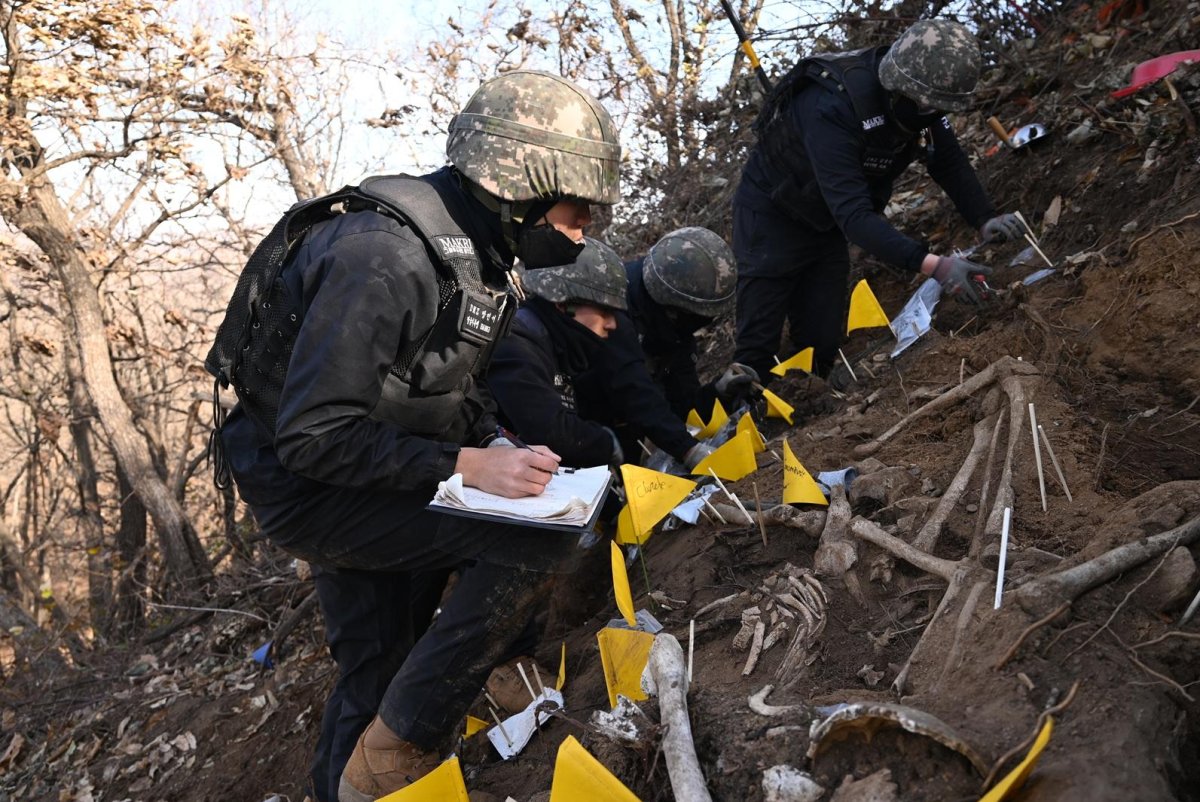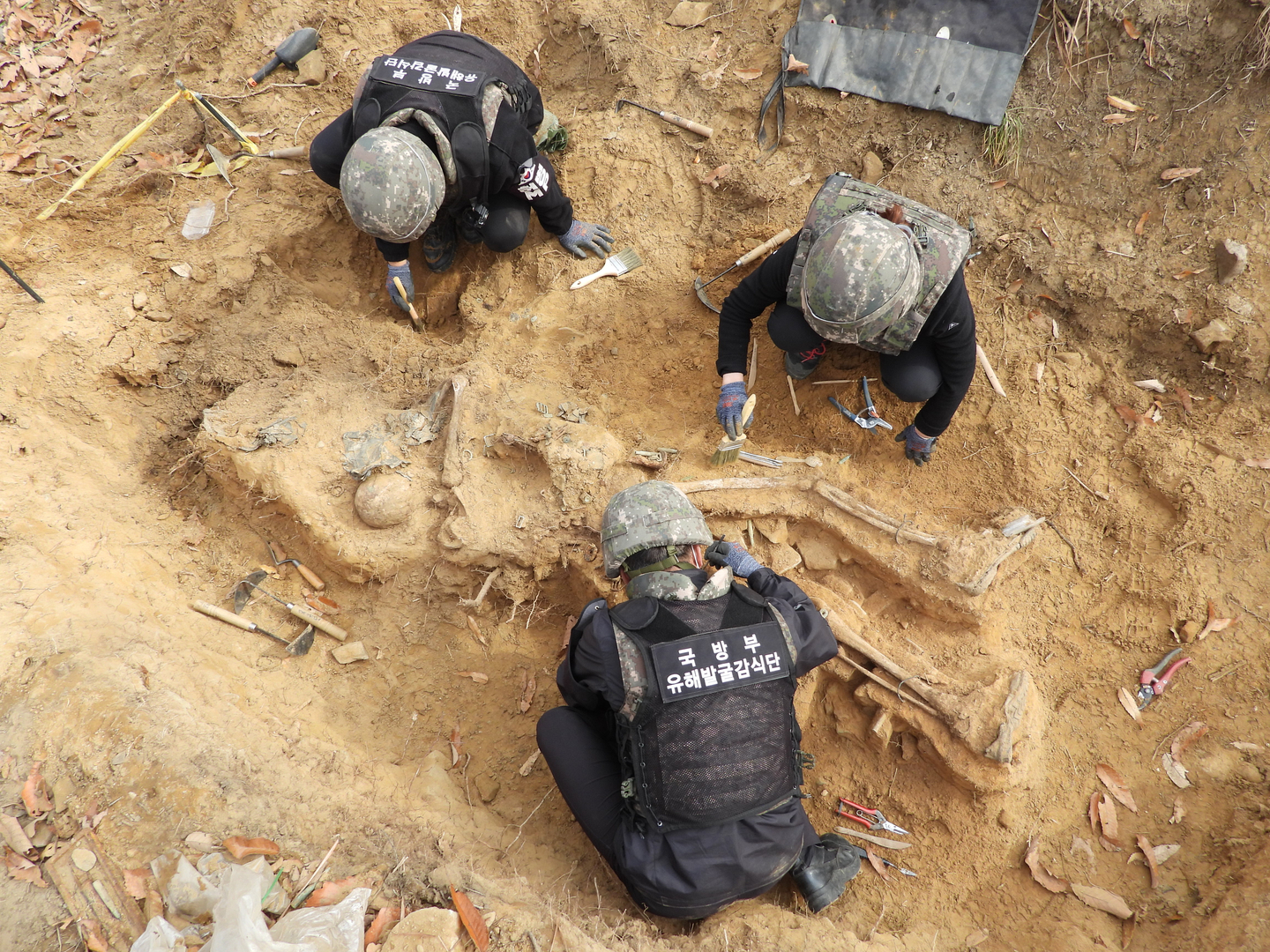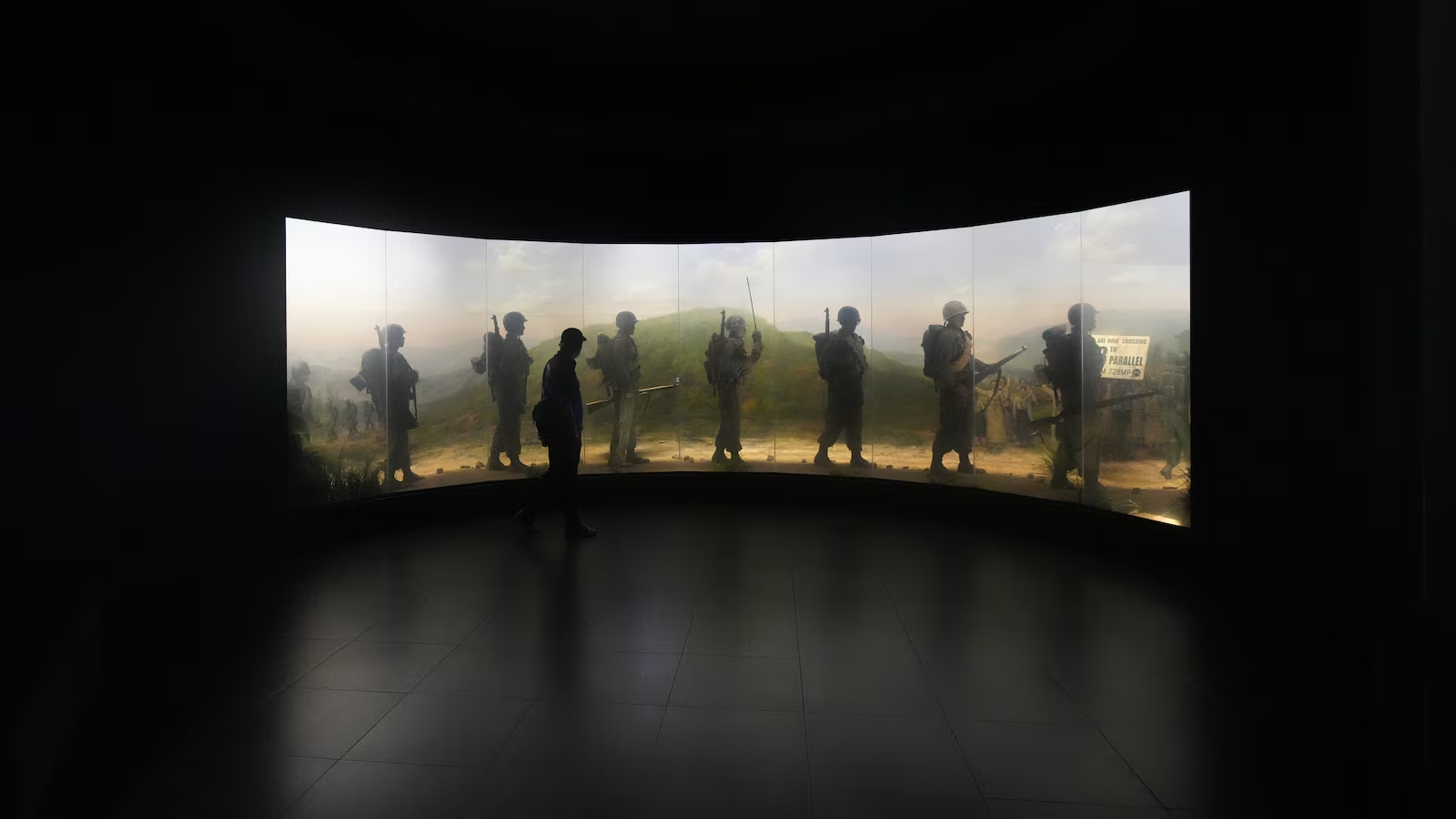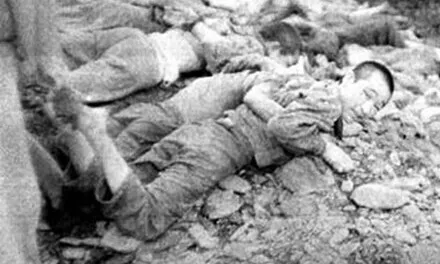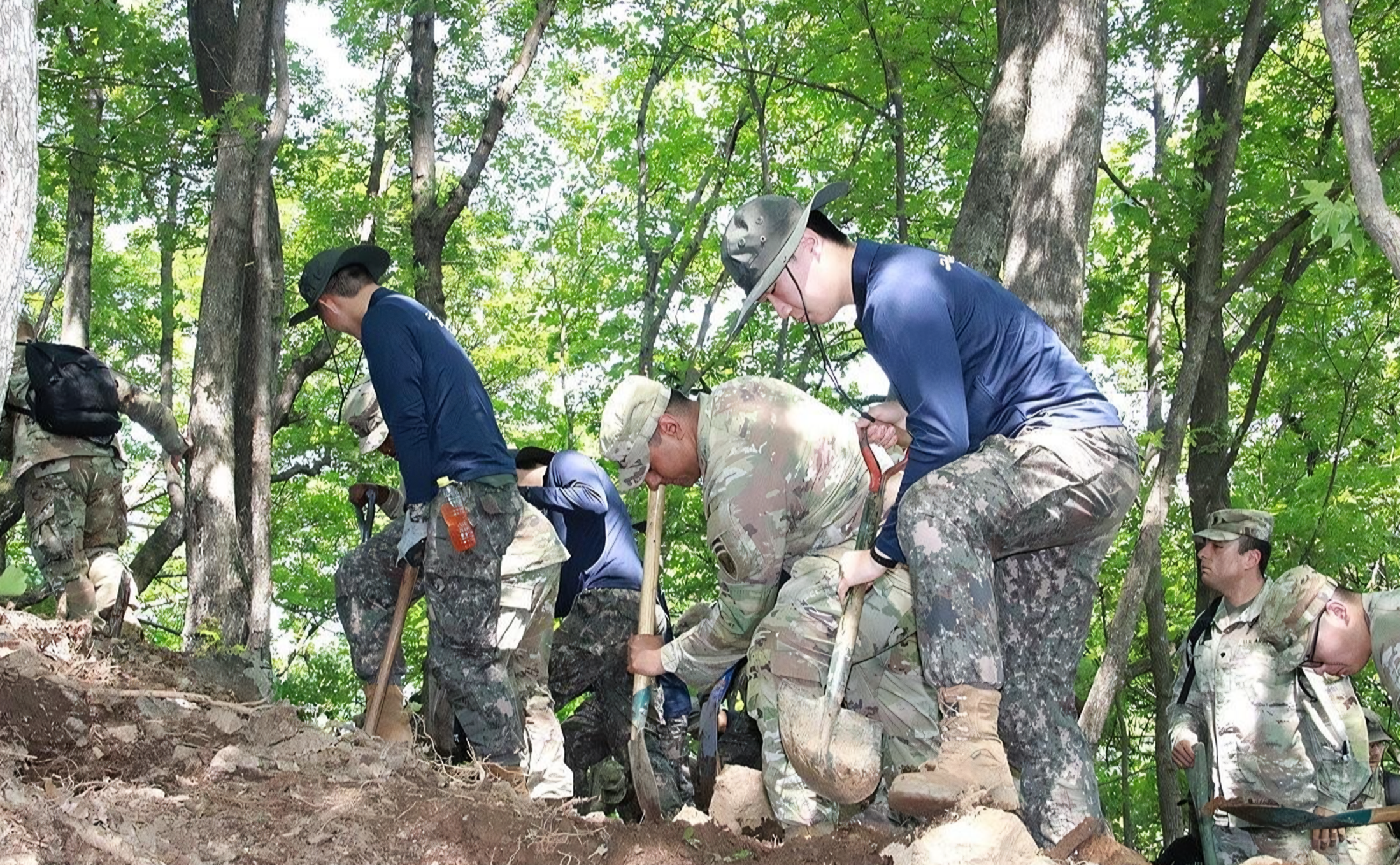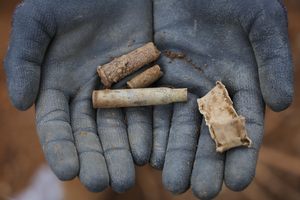
Artifacts found at Hill 367, one of the fiercest battlefields of the Korean War, in Paju, Gyeonggi Province, are shown by soldiers searching the area on Thursday. (Yonhap) The Korean War ended with a cease-fire in 1953, but the scale and ferocity of the fighting remain evident in the remains of fallen soldiers and wartime relics found across South Korea.The Army's 2nd Armored Brigade, together with the Ministry of National Defense's Agency for Killed in Action Recovery and Identification, began excavating war remains at Hill 367 in Paju, Gyeonggi Province, on Thursday. The excavation will continue through Oct. 16.The area was the site of fierce battles during the war. In 1951, South Korea's 1st Infantry Division and the US 3rd Infantry Division fought Chinese forces there to halt their advance toward Seoul and secure reconnaissance positions.According to the Ministry of National Defense, the Paju excavation is part of a nationwide recovery project for the second half of this year. Soldiers search for war remains with metal detectors during an excavation in Paju, Gyeonggi Province, on Thursday. (Yonhap) During the first half of the year, the ministry recovered 77 sets of remains and 31,000 artifacts over four months since March.For the second half, it has deployed 12 divisions and three brigades to 13 cities and counties across Gyeonggi, Gangwon, South Chungcheong, North Jeolla and North Gyeongsang provinces, including areas near the border.The ministry also receives reports from local residents about suspected sites before excavation begins. Six sets of remains were discovered through such reports during the first half of the year, it said.Meanwhile, the ministry is collecting genetic information from bereaved families to help identify recovered remains.Family members of Korean War fallen soldiers can provide genetic samples if they are related to the fallen soldier within the eighth degree of kinship on either the paternal or maternal side. If the identity of a fallen soldier is confirmed through the genetic information provided, a reward of 10 million won ($7,441) will be paid. Soldiers shovel earth to search for war remains during an excavation in Paju, Gyeonggi Province, on Thursday. (Yonhap)
Battle ended, remains await recovery over 70 years later
The Korean War ended with a cease-fire in 1953, but the scale and ferocity of the fighting remain evident in the remains of fallen soldiers and wartime relics f
350 words~2 min read