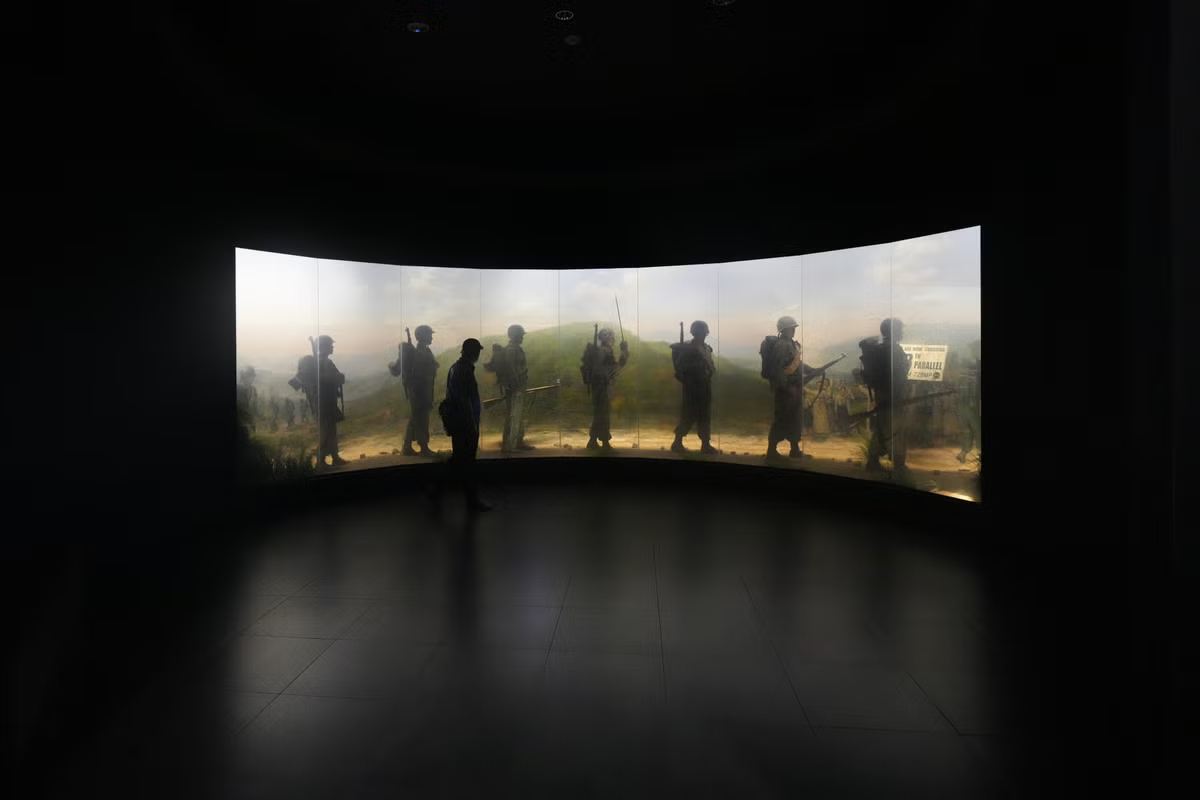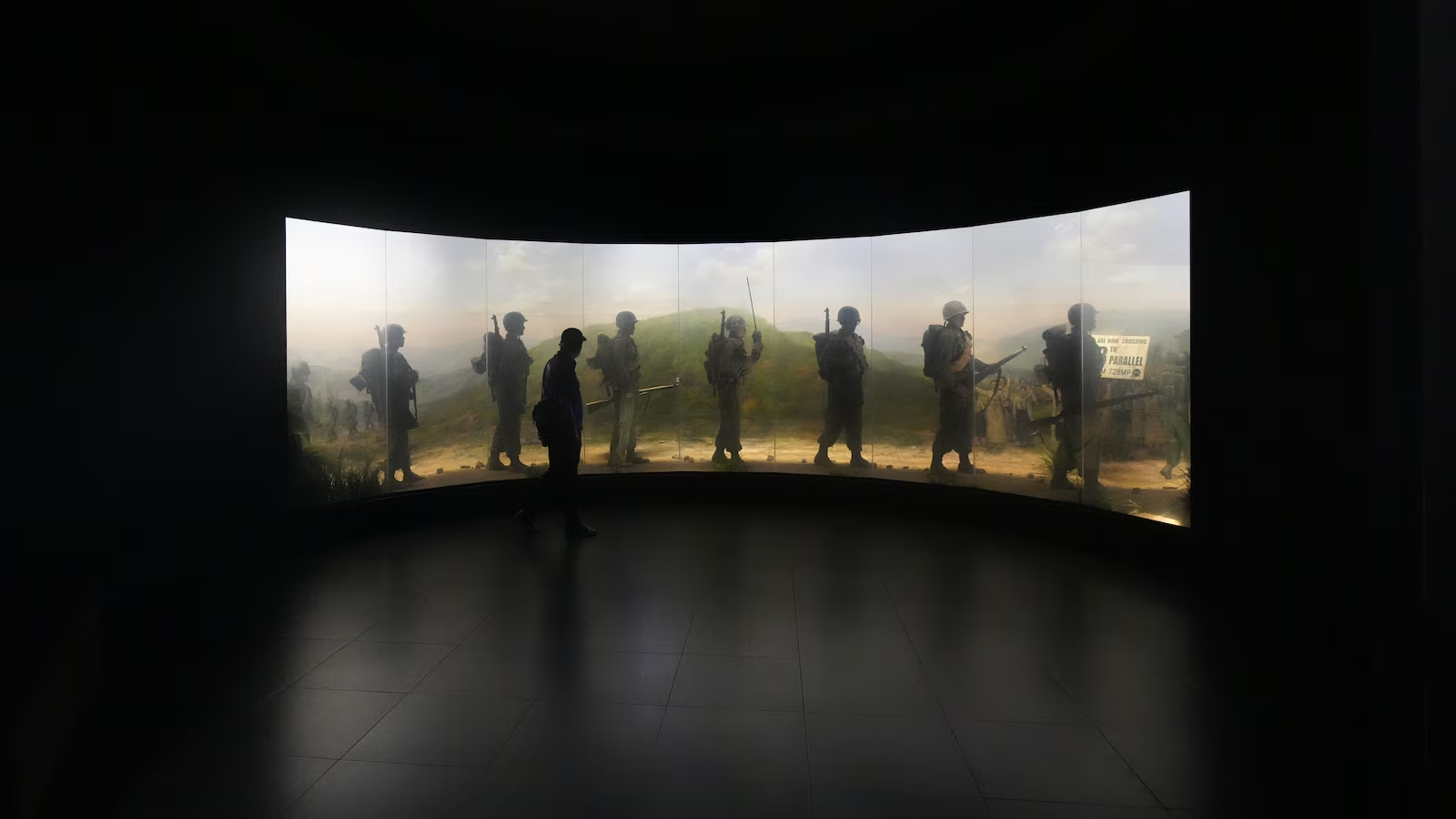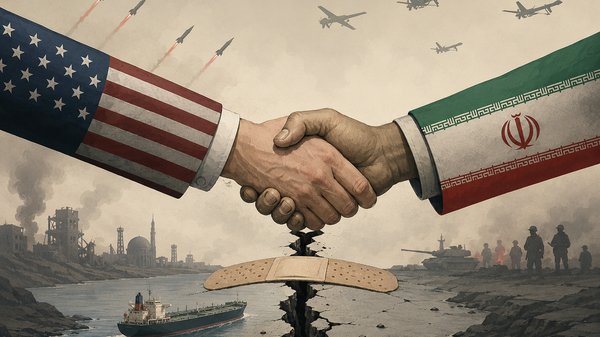
In 1953, an armistice agreement was signed that ended the fighting on the Korean Peninsula, but it did not formally end the war, which technically continues to this day. Despite more than 70 years having passed, the agreement merely halted the fighting and established a demilitarized zone. It did not address the root of the dispute or create genuine peace. Instead, it postponed the war, leaving the situation largely unchanged to this day.For all the latest headlines, follow our Google News channel online or via the app.This is an indication that, in politics, not every truce marks the beginning of peace, just as a ceasefire does not necessarily mean the end of a conflict. Peace begins when all sides feel that mutual trust exists. History offers many examples of this. Many wars do not end when the shooting stops, but when one side becomes convinced that the cost of confrontation has grown greater than the potential gains. Only then can the process of building trust and moving toward peace begin. Anything short of that remains a maneuver, a truce designed to allow each side to catch its breath and rearrange its position in preparation for the next round.For this reason, many believe that the memorandum of understanding signed between the United States and Iran was not a declaration that the confrontation had ended. Rather, it was closer to a truce imposed by circumstances following a war from which Tehran emerged burdened by heavy losses. The most significant of these was the loss of senior leaders, foremost among them late Supreme Leader Ali Khamenei, in addition to human casualties and damage to infrastructure and nuclear facilities. Iran’s economy was also struggling under painful international sanctions. Tehran therefore needed time more than it needed an agreement. It sought a truce not because it had abandoned its project, but because it wanted to salvage what it could. The other side, meanwhile, continued to view the truce as a stage in the process of building trust with Iran.The weeks following the signing quickly revealed that Tehran had not changed its behavior and that the agreement had altered the pace of the confrontation rather than the nature of the regime. This was evident during the official funeral of Khamenei. The funeral was not used as an opportunity to reduce tensions or send messages of reassurance. Instead, it became a political platform that reproduced the same revolutionary rhetoric. Chants called for revenge, banners targeted the United States, and the official discourse remained trapped in the language of confrontation. This sent a clear message that the institution governing Tehran does not view the truce as a strategic shift, but as a temporary stop in what it considers a long-term conflict.The targeting of commercial ships in the Arabian Gulf is also one of the escalatory tools Iran uses to harm the global economy and apply pressure on Washington. This is followed by Iranian threats to close the Bab al-Mandeb Strait, reflecting Tehran’s awareness of the importance of maritime routes and their impact on the global economy after what it did in the Strait of Hormuz. It was no coincidence that the Houthis renewed their threats to target airports and vital facilities in Saudi Arabia and disrupt maritime navigation in the Arabian Sea. This was followed by the seizure of a ship arriving from Iran carrying weapons and ammunition reportedly destined for the Houthis. This is an indication that Iran wants to replicate the Strait of Hormuz experience in Bab al-Mandeb. The resumption of flights from Tehran to Sanaa, without regard for international considerations, also sends a message that Iranian influence in the region was not on the negotiating table and that Tehran’s regional tools remain part of its bargaining strategy.Iran has never stopped targeting its Arab surroundings since the truce. Its conduct has continued to be based on expanding its influence rather than building trust and partnerships. Saudi Arabia, the Gulf states, Jordan and Syria have continued to be targeted with drones and missiles because Tehran does not view neighboring countries as partners and neighbors. Instead, it regards them as arenas of influence. Consequently, talk of building trust with the Iranian regime remains of limited value as long as its political and security doctrine is based on exporting influence before respecting the sovereignty of other states.For this reason, the resumption of US strikes was not surprising, because the underlying causes of the crisis remained unchanged. The truce addressed some tactical issues, but left the core disputes unresolved, including Iran’s nuclear program, its missiles, its regional influence and its network of proxies. When the root of a problem is postponed, peace is not being established. The next crisis is simply being delayed.
A truce to catch one’s breath
In 1953, an armistice agreement was signed that ended the fighting on the Korean Peninsula, but it did not formally end the war, which technically
783 words~4 min read