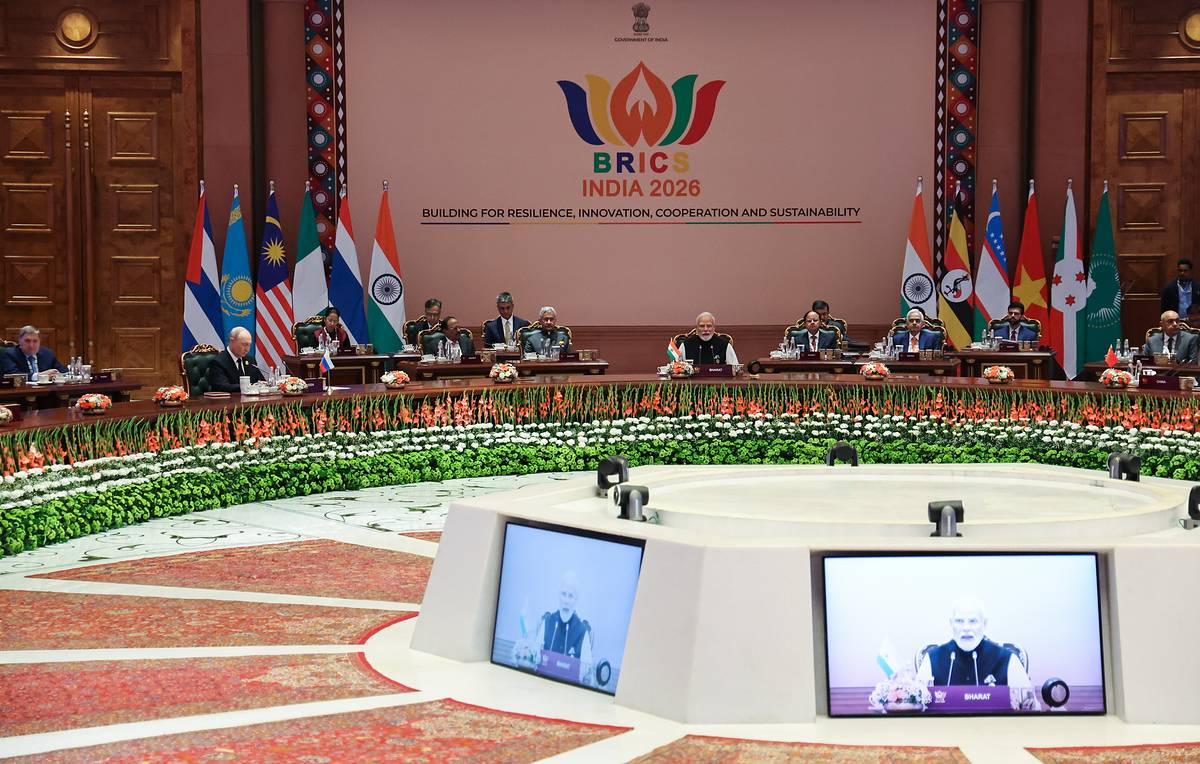
New Delhi: Leaders of BRICS countries on Saturday resolved to remain united in pursuing the purpose, principles and objectives of the United Nations Framework Convention on Climate Change (UNFCCC) and its Paris Agreement.In the New Delhi Declaration 2026, these leaders called on all countries to uphold their existing commitment as parties to treaties like the Paris Agreement and maintain and scale up their efforts to combat climate change."We further reaffirm our steadfast commitment, in pursuit of the objective of the UNFCCC, to tackle climate change by strengthening the full and effective implementation of the Paris Agreement," the declaration said.Read all BRICS-related stories hereIt added that provisions related to mitigation, adaptation, loss and damage, and the provision of means of implementation to developing countries should be implemented properly.There was also a call for coordinated international action to enhance debt sustainability, expand fiscal space and support sustainable development and climate financing."We recognise that high debt burdens further constrain climate and development investment in many developing countries," the leaders said in the declaration.Also read: BRICS declaration vows cooperation to dismantle cross-border scam networksMoreover, they opposed "unilateral, punitive, discriminatory and protectionist measures" that are not in line with international law, such as carbon-border-adjustment mechanisms.The leaders expressed concern that such measures undermine efforts by countries, specifically developing countries, aimed at addressing the adverse impacts of climate change and increasing adaptive capacity and resilience.
BRICS nations resolve to remain committed to aims of Paris Agreement
BRICS leaders on Saturday reaffirmed their commitment to the UN climate framework and Paris Agreement, calling for stronger action on mitigation, adaptation, loss and damage and climate finance. They urged measures to address developing countries debt burdens and opposed unilateral, punitive and protectionist climate measures such as carbon-border-adjustment mechanisms.
228 words~1 min read