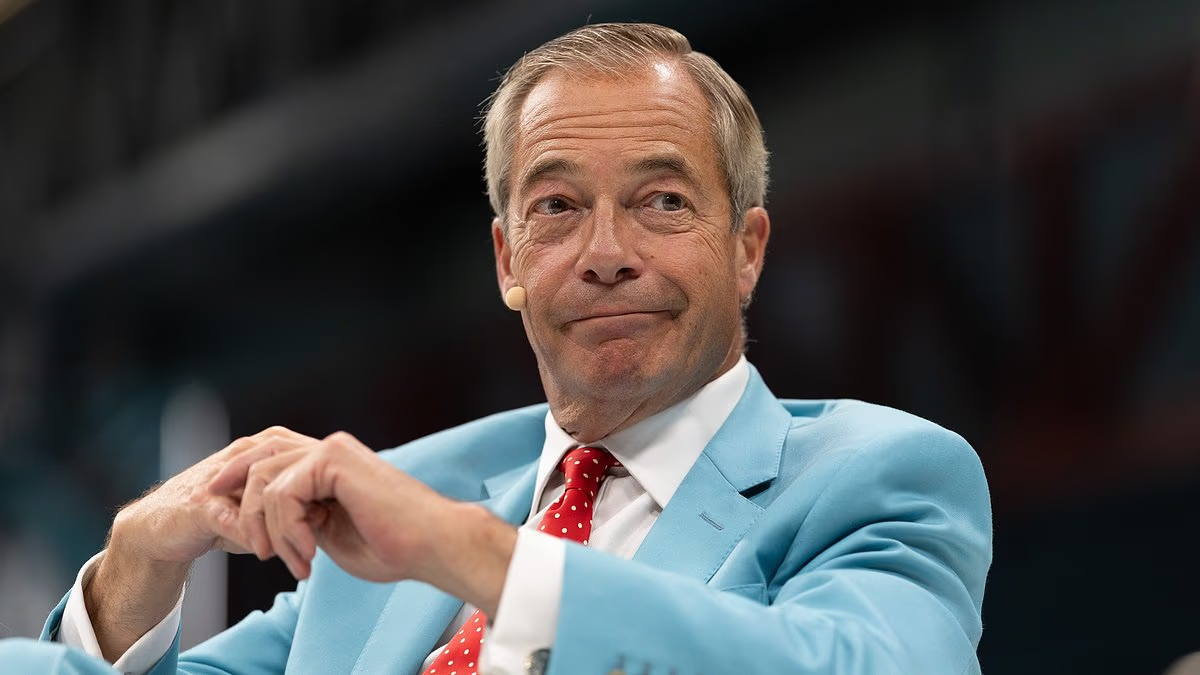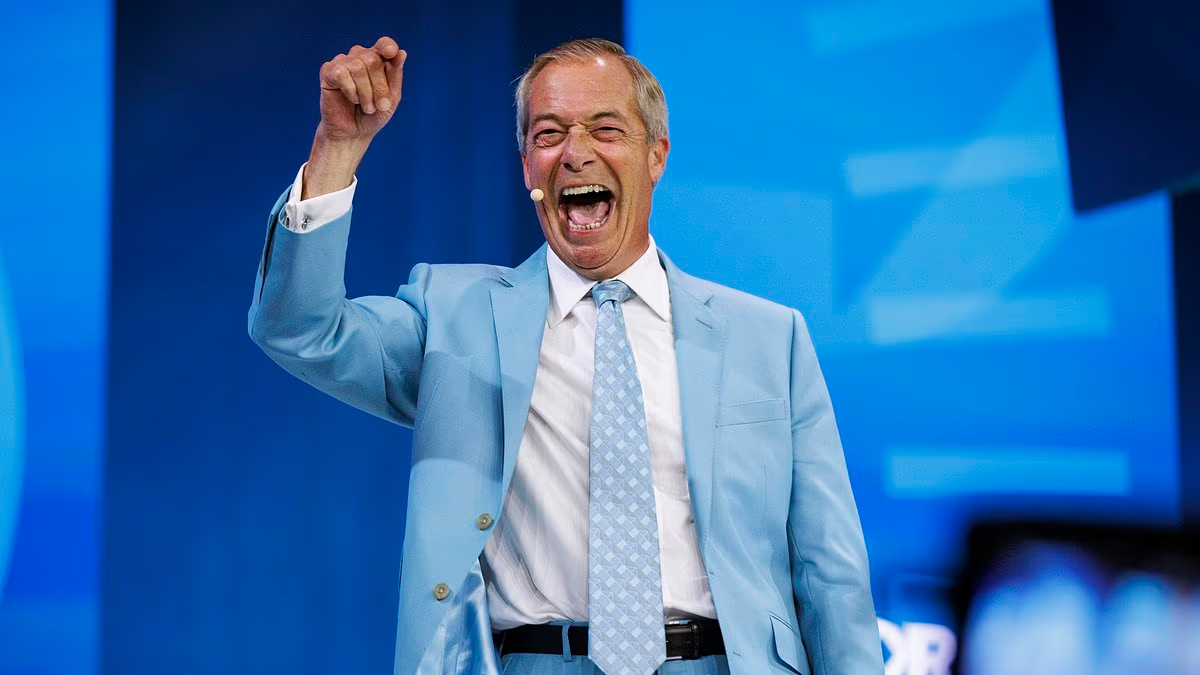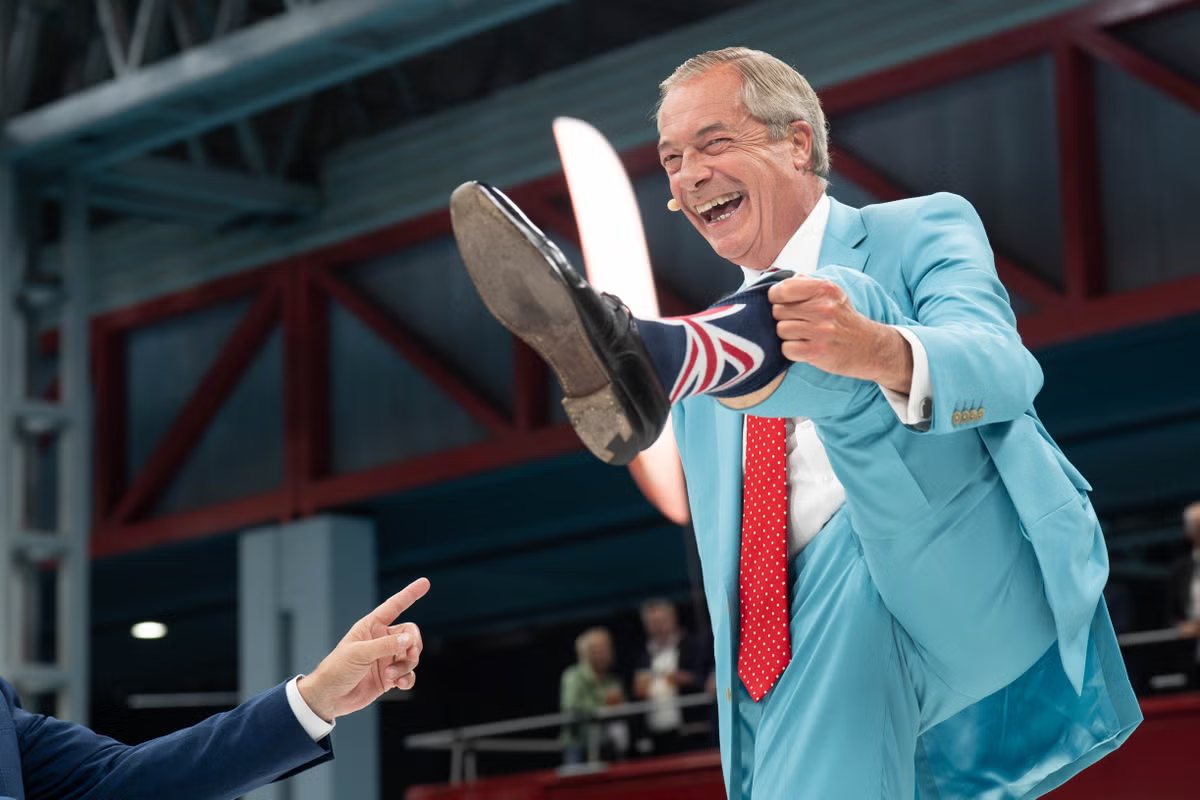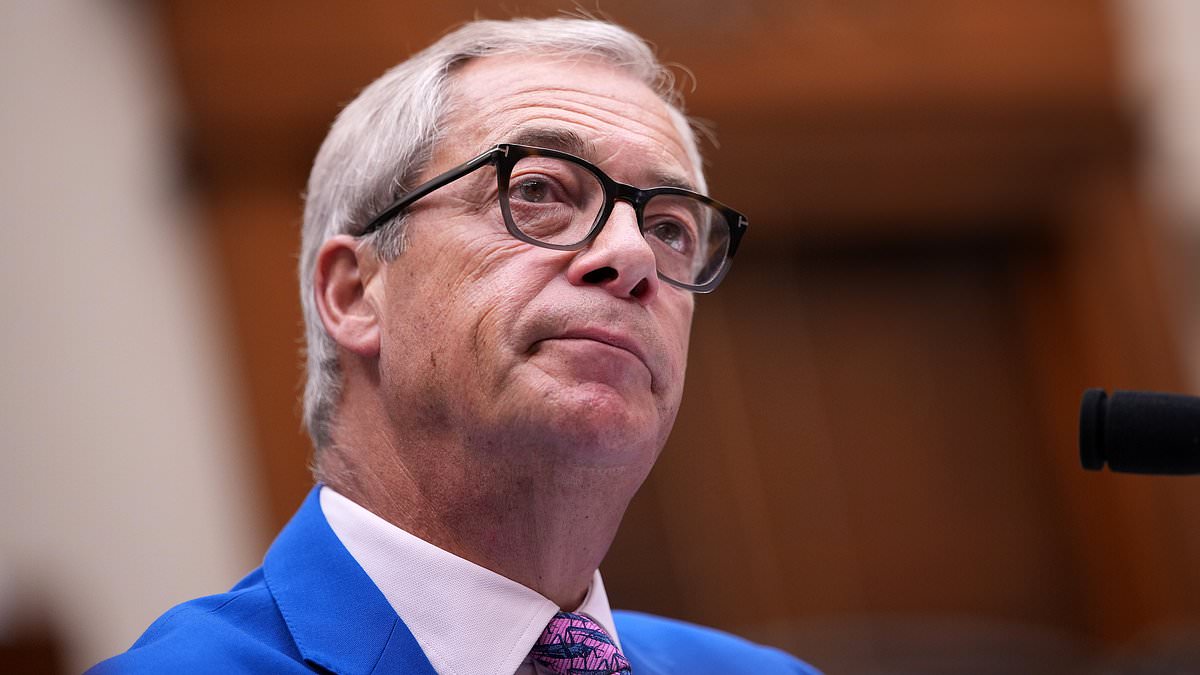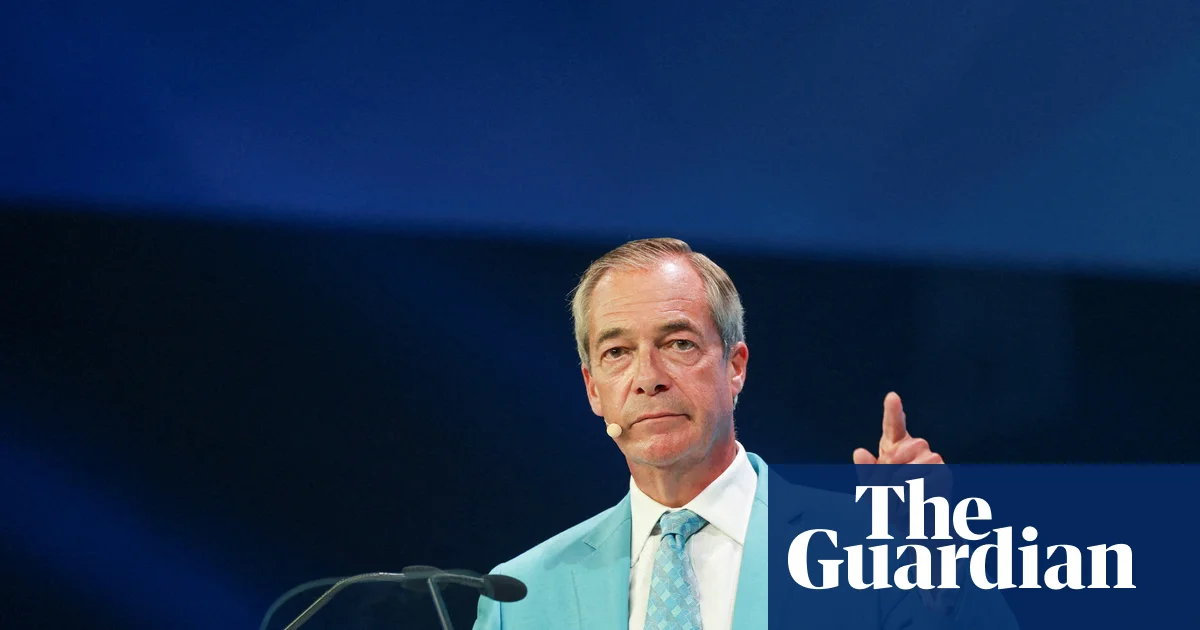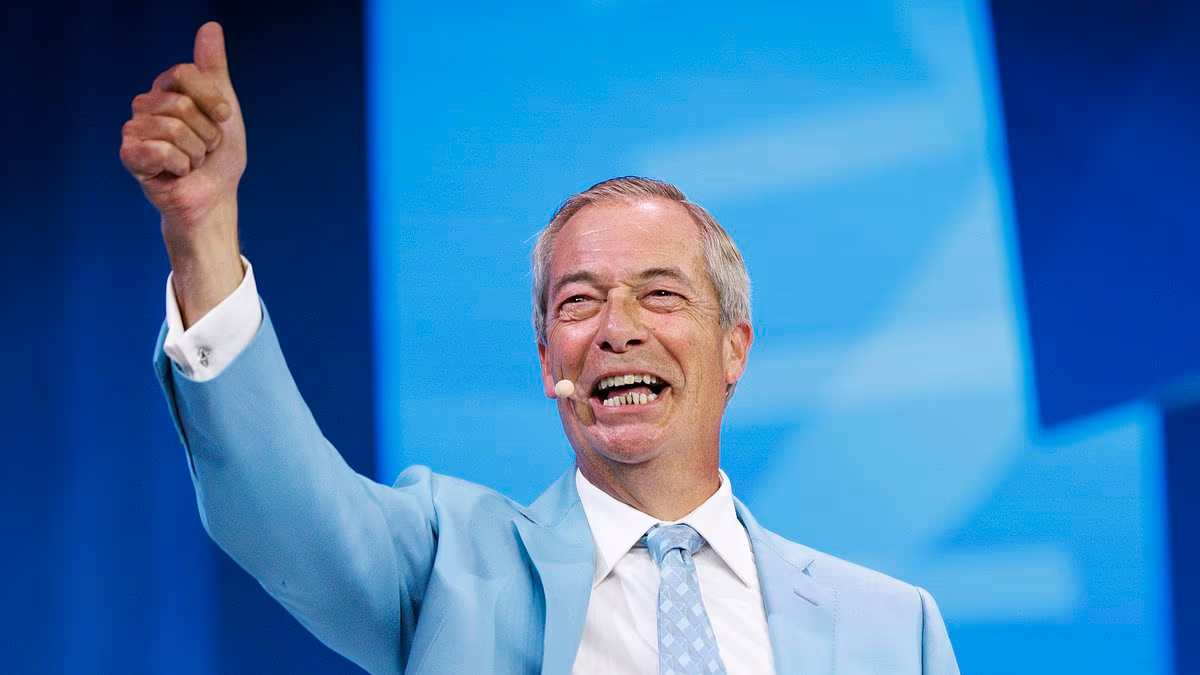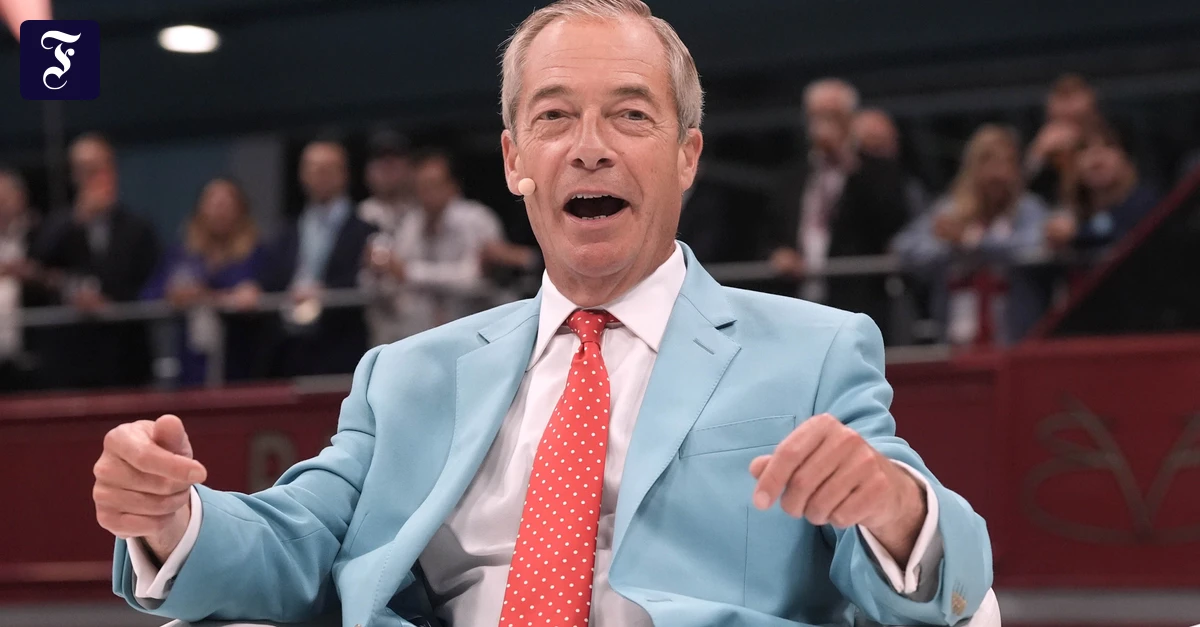
It is unfair that one person, Ben Delo, gave Reform the biggest donation ever in British politics – £36m, on top of the £4m he has already given this year. And even more unfair that Christopher Harborne, who has already given Reform £12m since the election (and Farage personally another £5m before it), has matched Delo’s money. But it would be difficult to enforce a law to limit the amount that individuals can donate. In America such laws have produced PACs, political action committees, that are notionally independent of parties and candidates, but which spend money on their behalf. Andy Burnham thought about a law to cap donations, but was reminded that it might block trade union funding for the Labour Party, even if that comes from millions of small payments from union members. So, yes, it is unfair, and it is outrageous that Reform is meanwhile promoting a pro-crypto policy; but my view is that a free society should not try to limit donations from its own resident citizens. And I have good news for those who worry that Delo can buy the next election. He cannot. Not even Donald Trump can buy the mid-term elections with a $5,000 bribe for all Americans if they give the Republicans majorities in both houses of Congress.What will Reform do with the money? Delo intended it to be £1m a month until the general election, but is paying it all up front in case Burnham changes his mind back again and tries to limit donations. Theo Bertram, who used to be a special adviser in No 10 under Tony Blair and Gordon Brown and now runs the Social Market Foundation, indulged in a political campaigner’s daydream on social media about how he would spend such a huge amount of money – and this was before we knew about the second donation. With £36m, he would “hire and train 80 local organisers in the 5-per-cent marginals, rising to 160 in 2028, with a cadre of senior field managers”. That would cost about £20m, he estimated. The remaining £16m he would spend on “tech and data”, to try to catch up with Labour and the Tories, who have had “years of head start”, aiming to “run local targeted campaigns on whatever drives emotional or attention change locally”.Which is a telling exercise, because it confirms that even a large sum of money can make a difference only at the margin. In 1997, James Goldsmith paid for a Eurosceptic outfit called the Referendum Party to outspend Labour and the Tories put together in press adverts, and to deliver a VHS tape – a technology at its peak – to 5 million households. It won 2.6 per cent of the vote. Even if Reform were a well-run, professional organisation, spending as intelligently as Bertram suggests, it might make a percentage-point difference at most. Spending twice as much will probably make no difference at all. No amount of money can make a divided party united, or quell the clash of egos at the top. In fact, the donations could even drive voters away from the party. The idea that big money is behind Reform, or that it might influence its policies, could easily get mixed up in the public consciousness with the investigation being carried out by the Met Police into allegations that the party breached political rules on foreign donations following a Channel 4 sting.More fundamentally, however, money cannot solve Reform’s structural problem, which is that it has failed to crush the Conservative Party. Farage’s mistake was not that he accepted too many Tory defectors, but that he took too few. If, say, half of Tory MPs had defected, he would now be the undisputed leader of the right in British politics. Instead, the Tory party is largely intact and Kemi Badenoch has fought back. It means that the right-wing vote is going to be split at the next election, which makes it harder for Farage to win. Superficially, it looks as if the left-wing vote is split too, but the decline of Green support in recent months means that the left is much more united than the right. Labour and the Liberal Democrats hardly compete with each other on the ground: they have divided up the country between them, and their voters are quite happy to vote for whichever party has the best chance locally.That is not true of Reform and the Tories, as an opinion poll this week by Scarlett Maguire of Merlin Strategy confirmed. She found that Reform is the party people are most likely to want to vote against, and that Tory voters are almost as keen to vote against Farage’s party as they are to vote against Labour. Farage still has his issues – above all the boats coming across the Channel. But Burnham has shown that he can neutralise them, as long as the numbers are down. Too many voters just do not like Farage and his party, and all the money in the world cannot change that.
Nigel Farage won't win the election with all the money in the world
Two record donations, a total of £72m for Reform in two days, still leave the party with a major problem, says John Rentoul
837 words~4 min read