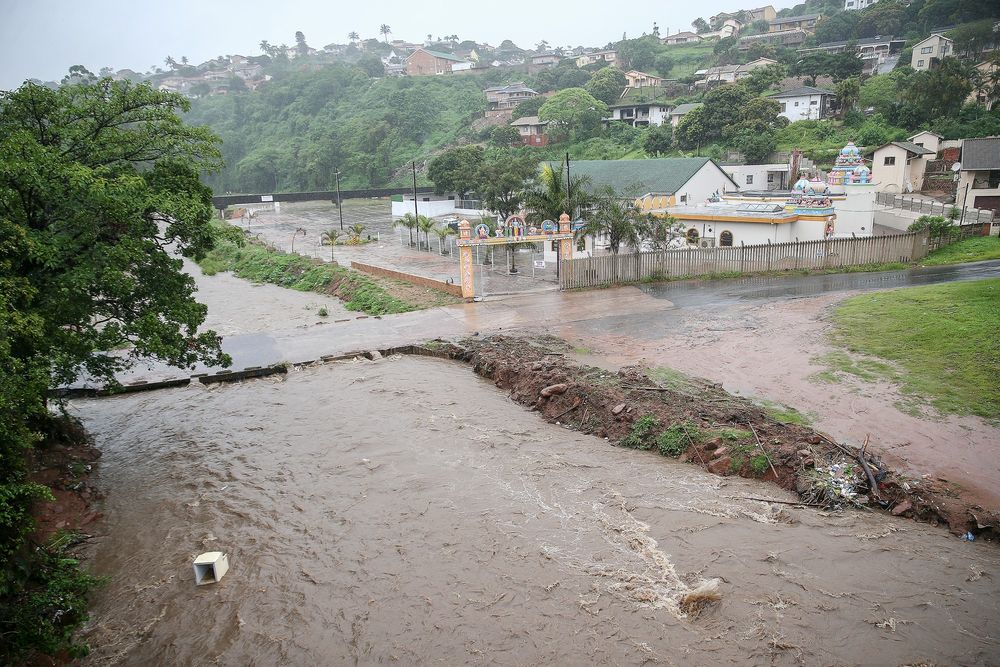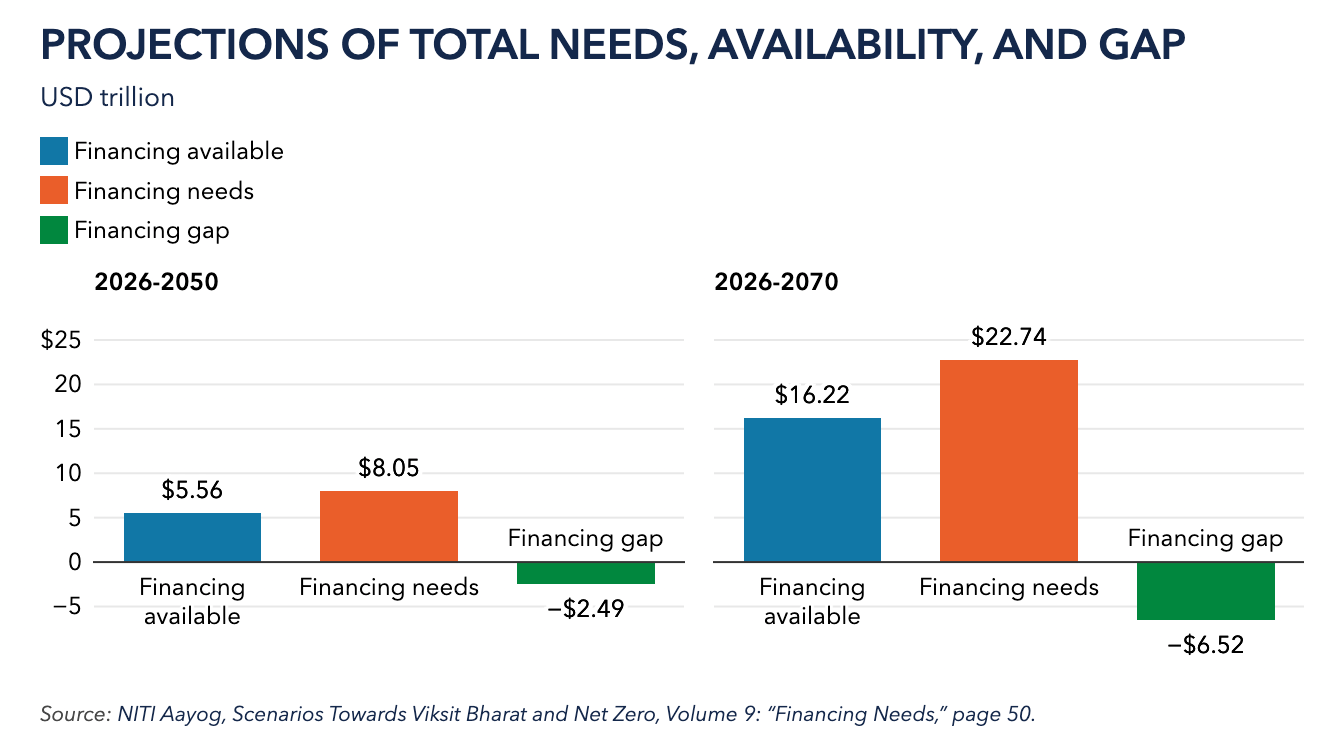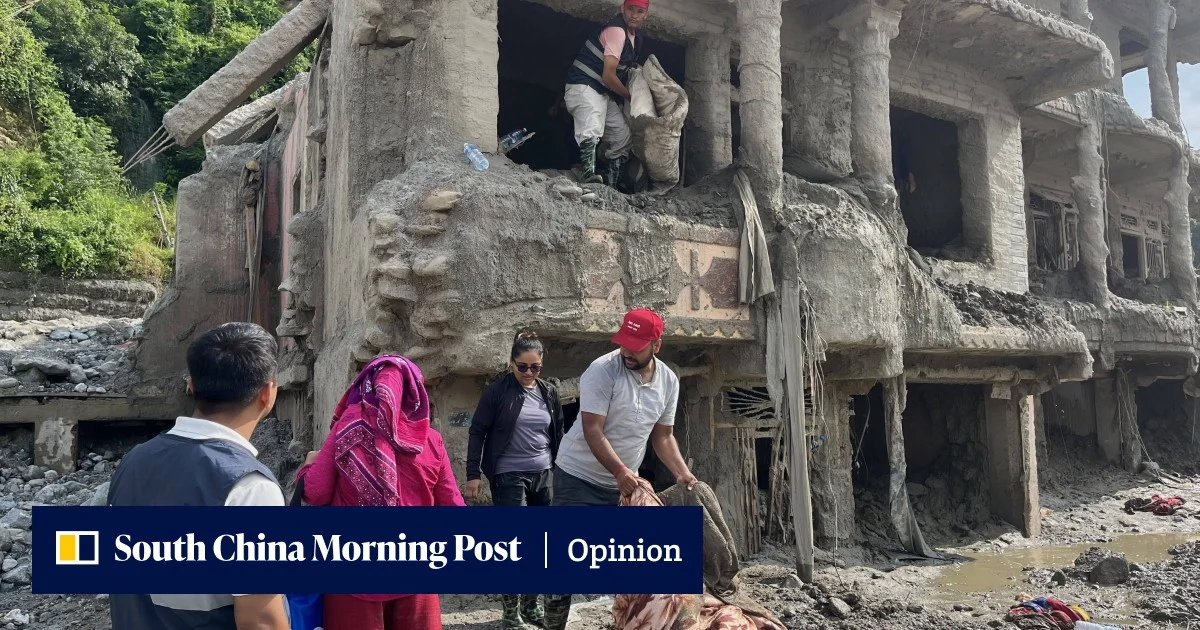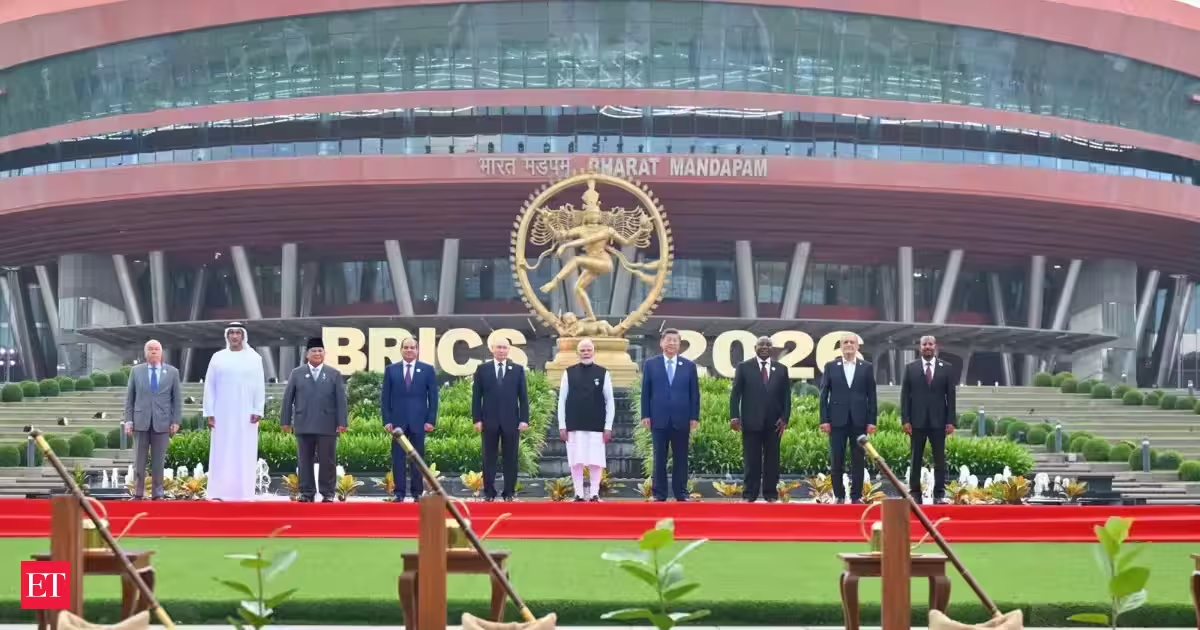
Let’s begin with a number that should end the debate before it starts: $170 billion. That is the annual climate finance gap developing countries face, the difference between what they need to adapt to a crisis they did not create, and what the Global North has actually delivered.At COP29, the much-celebrated climate finance deal committed $300 billion annually by 2035, a figure that the very nations it was meant to serve called “disappointingly low” and “an insult”. India’s chief negotiator walked out. The Global South’s patience, already wearing dangerously thin, is now effectively exhausted.Into this vacuum steps the most consequential geopolitical bloc the climate world has yet to fully reckon with: BRICS.BRICS is no longer the acronym of a Goldman Sachs investment thesis. It is a 45-member-strong economic coalition — following the 2024 expansion; representing over 40 per cent of global GDP, more than 50 per cent of the world’s population, and crucially, the majority of the world’s most climate-exposed communities.Brazil’s Amazon is the planet’s most critical carbon sink. Russia’s permafrost holds one of its largest methane time bombs. India has crossed 52 per cent non-fossil electricity capacity and is racing towards 500 gigawatts of renewables.China is manufacturing 80 per cent of the world’s solar panels. South Africa sits at the heart of the continent that is losing the most while contributing the least to the crisis. This is not a bloc on the periphery of the climate conversation. It is the conversation.And yet BRICS has spent the better part of the last decade deferring to a Global North climate architecture that has consistently failed it — promising technology transfer while patenting it, pledging climate finance while disbursing a fraction of it, and designing adaptation frameworks in Geneva for communities whose names they cannot pronounce.The recent catastrophic floods in Nepal —submerging entire valleys, displacing hundreds of thousands, and wiping out decades of development gains in 72 hours — are a case study in precisely what happens when the world’s most vulnerable communities are left waiting for a multilateral system that moves at the speed of diplomatic courtesy.Technologies like that of Climate Risk Observatory — has been generating district and ward-level compound climate risk intelligence for cities across South Asia, including flood, heat, and landslide compound hazard mapping. The technology exists. The methodology exists. The need is screaming. What is missing is the political architecture to deploy it at speed and at scale — and BRICS is uniquely positioned to build that architecture.Consider what a genuine BRICS Climate Hub would actually look like in practice. The New Development Bank, BRICS’s own multilateral financial institution, already has climate infrastructure lending in its mandate.What it needs is a Climate Readiness Facility that replicates, for the Global South, what the Green Climate Fund was always supposed to be but never quite became: a fast-disbursing, directly accessible, nationally embedded climate finance instrument that does not require a developing country to spend three years navigating accreditation bureaucracy before its most vulnerable citizens receive a single rupee or rand or real of adaptation support.Tech transferThe technology transfer question is where the Global North’s credibility collapses most visibly. For 30 years, developed countries have promised to share the clean technologies that make the low-carbon transition possible — and for 30 years, intellectual property regimes have ensured that promise was structurally unfulfillable.BRICS can break this cycle not by negotiating with the Global North for permission, but by building its own technology commons. China’s solar manufacturing cost curve — which has driven the price of photovoltaic panels down by 90 per cent since 2010 — is the single most important climate technology contribution of the 21st century, and it happened entirely outside the Global North’s technology transfer framework.India’s green hydrogen mission, Brazil’s sustainable aviation fuel programme, and South Africa’s just transition partnership are all examples of the Global South generating climate solutions at scale. What they need is the institutional architecture to share them with each other — and with Nepal, with Mozambique, with Vietnam — at the speed the climate emergency demands.Green jobs potentialThe green jobs opportunity is where the BRICS Climate Hub argument becomes not just morally compelling but economically irresistible. India alone has the potential to generate 35 million green jobs by 2047.Brazil’s bioeconomy could employ 20 million in sustainable agriculture, forest restoration, and green manufacturing by 2035. A coordinated BRICS green jobs compact — linking skills recognition, labour mobility, and green manufacturing investment across member states — would be the largest deliberate employment programme in human history. This is the growth agenda the Global South has been waiting for someone to articulate loudly enough.For over a decade, Indian climate-focused organisations have worked at the intersection of climate science, institutional governance, and development finance across South Asia and Africa. From pioneering tools such as the Climate Readiness Index and the Mumbai Multi-Hazard Risk Atlas to supporting India’s first Model Heat Action Plan, this journey has been anchored in a fundamental conviction: the Global South must build and own the knowledge, institutions, and financing solutions needed to shape its climate-resilient future — on its own terms, responsive to its realities, and at the pace its people need. Neither can BRICS. The moment is here. The bloc is assembled. The crisis is accelerating. BRICS does not need to become the world’s climate leader by displacing anyone.It needs to stop stepping aside for institutions that have repeatedly proven they are not equal to the scale of what this moment demands — and start building the architecture, the finance, the technology commons, and the political will to lead from where the crisis is actually being felt.BRICS: stop waiting. Start building.Mohanty is Director and Global Sector Head of Climate Change and Sustainability; Singh is Founder and Managing Director- at IPE GlobalPublished on September 12, 2026
Climate: Time for BRICS to act
BRICS must stop relying on the Global North for technology or finance on the climate front
963 words~4 min read