Support CleanTechnica's work through a Substack subscription, on Patreon, or on Stripe. Help us produce all of the high-quality, original content we publish week after week despite the challenges of content-scraping AI, antisocial media, inflation, and other hurdles.
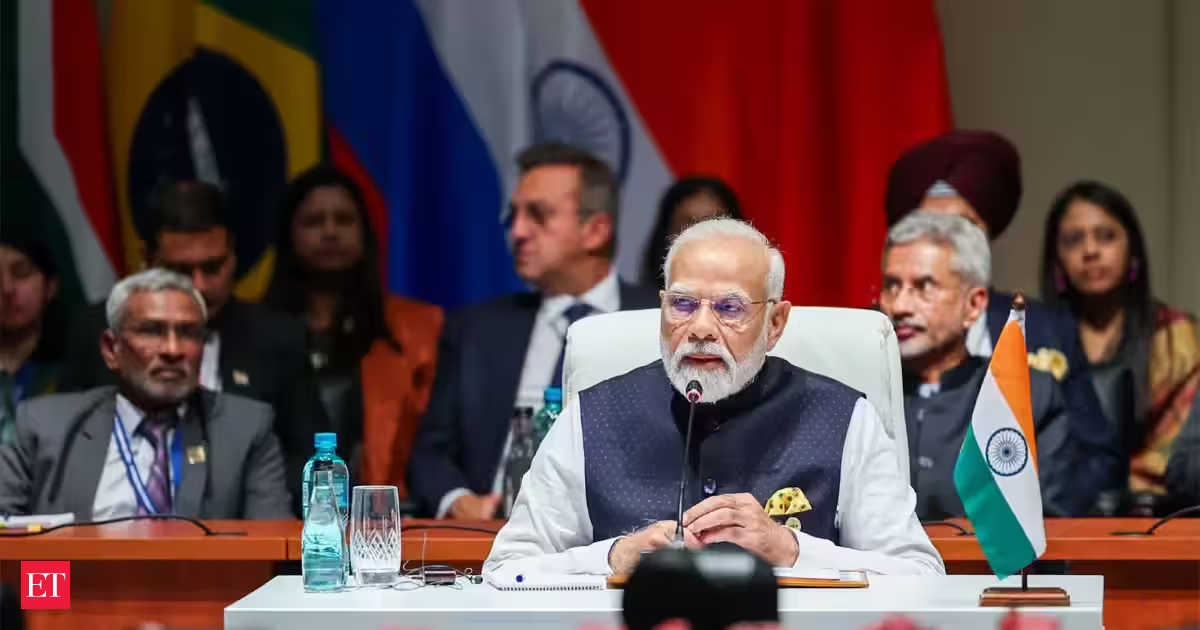
As India hosts the BRICS leaders’ summit in September and the world heads to Antalya, Turkey, for COP31, India is making the case for why international climate finance must flow differently.
By Dr. Vyoma Jha, India Clean Energy Senior Advocate, International, NRDC
The world is going electric. The West Asia crisis has made it clear why this cannot happen fast enough. As conflict disrupts oil and gas flows through the Strait of Hormuz, countries in the Global South have been hit especially hard with rising fuel prices, food inflation, and constrained growth. The COP31 Presidency’s “35-by-35” electrification goal—raising the share of final global energy demand met by electricity from just above 20 percent today to 35 percent by 2035—is framed explicitly as an energy security measure as much as it is a climate one. But a higher electrification rate is not by itself a success. The question is not merely how fast the world goes electric, but who pays, on what terms, and who gets left behind? Finance remains the missing link. The rules determining how climate finance flows are being written not only at COP31 in Antalya, Turkey, this November but also by multilateral development banks in domestic capital markets, the G20, and at the BRICS leaders’ summit to be held in New Delhi on September 12–13, 2026. India sits at the center of all of it.