AI Agent Architecture 2026: Building Production-Grade Systems — Patterns, Benchmarks, and Lessons from 10,000-Agent Swarms
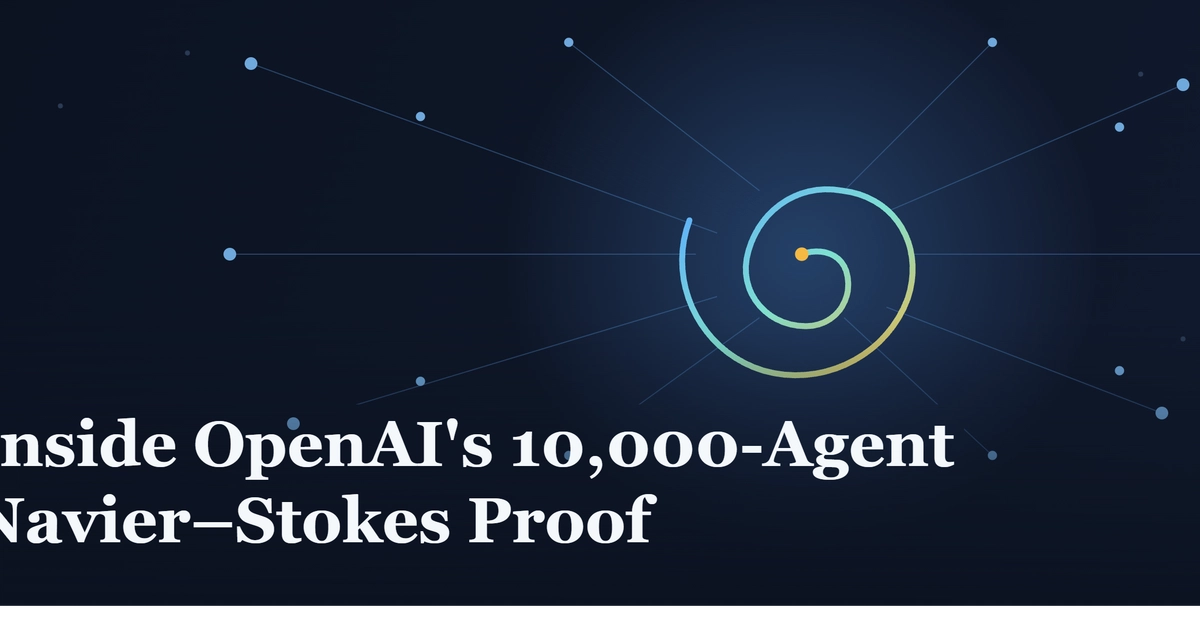
In August 2026, OpenAI deployed approximately 10,000 AI agents simultaneously and, in 88 hours, solved the Navier-Stokes Millennium Prize Problem — one of the seven $1M Clay Institute problems — as reported by The Verge (Sept. 9, 2026). That result did not come from a bigger chat window or a cleverer prompt. It came from architecture: decomposition, orchestration, memory, tool use, aggregation, and hard operational controls.
That is the real shift engineers need to understand about AI agent architecture 2026: the competitive gap is no longer explained by model quality alone. It is increasingly explained by whether your system can coordinate many imperfect reasoning loops into one reliable, auditable, cost-aware execution graph.
If you are building internal copilots, coding agents, research assistants, multimodal operators, or workflow automators, this is what AI agent architecture 2026 actually means in practice.
Table of Contents