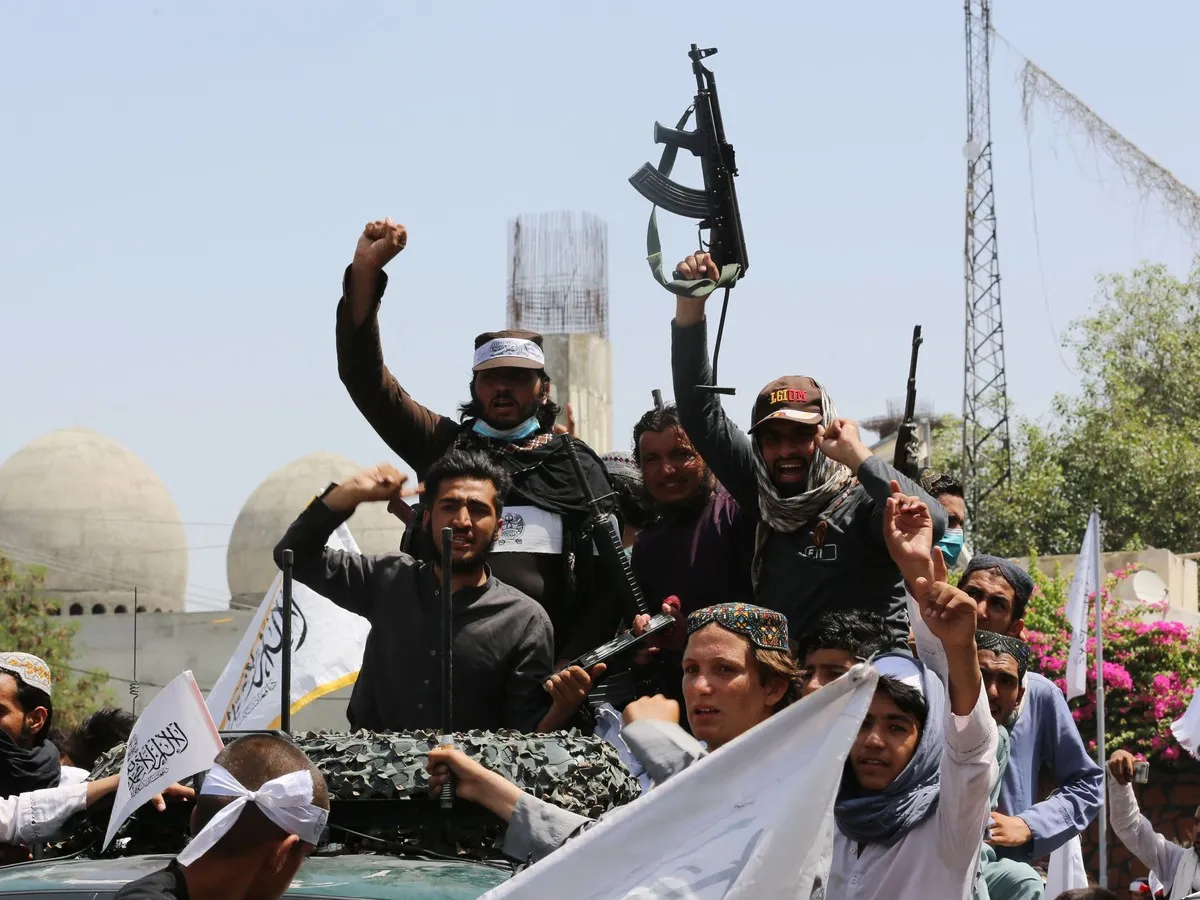
Skip to Content Subscribe My Account Manage My Subscriptions FAQ Newsletters Canada Canadian True Crime Canadian Politics Health World Israel & Middle East Financial Post NP Comment Longreads Puzzmo Diversions Comics NP News Quiz New York Times Crossword Horoscopes Modern Life Eating & Drinking Style Sponsored Play for Ontario Travel Travel Canada Travel USA Travel International Cruises Travel Essentials Culture Books Celebrity Movies Music Theatre Television Business Essentials Advice Lives Told Tails Told Shopping Buy Canadian Home Living Outdoor Living Kitchen & Dining Tech Style & Beauty Personal Care Entertainment & Hobbies Gift Guide Travel Guide Deals Savings National Post Store More Sports Hockey Baseball Basketball Football Soccer Golf Tennis Driving Vehicle Research Reviews News Gear Guide Obituaries Place an Obituary Place an In Memoriam Classifieds Place an Ad Celebrations Working Business Ads Archives Healthing Epaper Manage Print Subscription Profile Settings My Subscriptions My Offers Newsletters Customer Service FAQ Newsletters Canada World Financial Post NP Comment Longreads Puzzmo Diversions Modern Life Shopping Epaper Manage Print Subscription HomeNP CommentTerry Glavin: 25 years after 9/11, the West has given upA 'forever war' is one you choose to loseArmed Taliban security personnel ride on a vehicle convoy as they celebrate the second anniversary of their takeover, in Jalalabad on August 15, 2023. Photo by SHAFIULLAH KAKAR /AFP via Getty ImagesThe 25th anniversary of the terrorist atrocities of September 11, 2001 is rendering all the memorials, tributes, reminiscences, chat-show panel discussions and public ceremonies that you might expect.Enjoy the latest local, national and international news.Exclusive articles by Conrad Black, Barbara Kay and others. Plus, special edition NP Platformed and First Reading newsletters and virtual events.Unlimited online access to National Post.National Post ePaper, an electronic replica of the print edition to view on any device, share and comment on.Daily puzzles including the New York Times Crossword.Support local journalism.Enjoy the latest local, national and international news.Exclusive articles by Conrad Black, Barbara Kay and others. Plus, special edition NP Platformed and First Reading newsletters and virtual events.Unlimited online access to National Post.National Post ePaper, an electronic replica of the print edition to view on any device, share and comment on.Daily puzzles including the New York Times Crossword.Support local journalism.Create an account or sign in to continue with your reading experience.Access articles from across Canada with one account.Share your thoughts and join the conversation in the comments.Enjoy additional articles per month.Get email updates from your favourite authors.Create an account or sign in to continue with your reading experience.Access articles from across Canada with one accountShare your thoughts and join the conversation in the commentsEnjoy additional articles per monthGet email updates from your favourite authorsSign In or Create an AccountorAt their best, Americans recall their unity and resolve in the face of what was an unprecedented attack from the skies, straight out of a science-fiction movie. Canadians will offer an accounting of themselves as plucky allies. The generosity of the people of Gander, Nfld., who opened their homes to thousands of stranded airline passengers, has just been awarded its own Heritage Minute from Historica Canada.But as a world-historical event, September 11 is easily matched by the grotesque scenes from Hamid Karzai International Airport in Kabul, 20 years later. Tens of thousands of terrified Afghans had swarmed the airport in desperation and panic in the days leading up to Aug. 30, 2021. That was the day the last U.S. troops left Afghanistan. It was the day U.S. president Joe Biden squandered the $995-billion investment the U.S. Treasury had sunk into a multinational project to rebuild Afghanistan after decades of Russian occupation, famine, proxy-war barbarism and Taliban rule.The National Post newsletter that doesn’t hold back, giving readers the unvarnished truth on media, politics and culture.By signing up, you consent to receive the above newsletter from Postmedia Network Inc.A welcome email is on its way. If you don't see it, please check your junk folder.The next issue of Right? will soon be in your inbox.We encountered an issue signing you up. Please try againThat project was well underway: A new generation of Afghans was just graduating from university, women’s rights were respected as well as anywhere in the Muslim world and a fledgling Afghan democracy was just beginning to claw its way out from under the older generation’s cronyism and corruption.To be fair, Biden’s withdrawal was an American bipartisan consensus. From his earliest days as vice-president, in 2009, Biden was of the same mind as Donald Rumsfeld, secretary of defence under George W. Bush: Like Rumsfeld, Biden sneered at the notion of what he called “nation-building” in Afghanistan.The Bush-Biden cynicism gradually seeped into Barack Obama’s Oval Office, but it wasn’t fully rewarded until President Donald Trump’s first term. In February, 2020, Trump’s negotiators cemented a pact with the Taliban that forced Afghans to “reconcile” with Mullah Omar’s sadistic Pakistani-backed insurgent emirate.Against its will, the Afghan government was required to integrate the Taliban into its administration. Afghan President Ashraf Ghani was strongarmed into releasing thousands of Taliban commanders and fighters from prison, without regard to war crimes proceedings by the International Criminal Court.The Doha arrangements permitted the Taliban to intensify their attacks on Afghan forces, so long as U.S. troops, drawn down to 2,500 soldiers, were left unmolested. The pact also stipulated that the U.S. would ensure the removal of all NATO troops from the country.As president, Biden was pleased to honour the agreement even though the Taliban had violated its terms, notably its assurance that it would no longer shelter terrorist organizations like al-Qaida. Biden’s withdrawal from Afghanistan left billions of dollars worth of U.S. military hardware in Taliban hands, and it wasn’t until July 21, 2022 that the senior al-Qaida cleric and 9-11 coordinator Ayman al-Zawahiri was eliminated by a Hellfire missile as he stood on the balcony of his upscale apartment in downtown Kabul.By then, however, the reassuring story that both American Democrats and Republicans preferred to tell themselves had settled in. Afghanistan was a hopeless backwater of Islamist losers. Afghanistan would never be Switzerland. The “forever wars” must cease. The jihadists’ days were over, and it was finally time for what President Barack Obama called “nation-building at home.”In this self-exculpating loop, it became necessary to overlook what Afghans had to say about all this.In the years after September 11, 2001, Afghans became the most closely studied people in Central Asia, and Afghan polling consistently showed overwhelming public support for democracy, for the rights of girls to go to school, the rights of women to work outside the home and run for political office. Afghans consistently showed up as the most optimistic people on earth. Despite its colossal failures and missteps, the NATO-led International Security Assistance Force in the country was broadly and consistently supported.It’s similarly inconvenient to notice that after perhaps a trillion dollars spent on the “war on terror,” al-Qaida offshoots like the Islamic State went on to slaughter tens of thousands of Iraqis and Syrians, and even now, the Global Terrorism Index lists ISIS, the al-Qaida-linked Al Shabaab in Somalia, and the Tehrik-e-Taliban in Pakistan, along with Jama’at Nusrat al-Islam wal-Muslimin — an alliance that includes the Saharan al-Qaida subsidiary — as the four deadliest terrorist organizations on earth.Al-Qaida’s franchises in Africa command up to 10,000 fighters and earn about $100 million annually in taxation, smuggling and expropriation, according to Yale University’s Graeme Wood, author of The Way of the Strangers: Encounters With the Islamic State. This is a state of affairs that confounds the notion that al-Qaida has been reduced to an irrelevant, incompetent rump, Wood points out. “It’s hard to accept that your enemy is an idiot and that somehow you are losing to him anyway.”For Canadians, the legacy of 9/11 was this country’s dedication to the cause of a sovereign, democratic Afghan republic. The task the Canadian Forces took on was to join with 35 other NATO countries to open up enough space to make that happen. It became something of a Canadian habit, especially after being confronted by President Trump’s first-term belligerence, to take credit for having sent Canadian troops to America’s aid in pursuing al-Qaida in Afghanistan. But the Canadian Forces’ Operation Apollo lasted only until October, 2003, when Canada’s efforts shifted through Operation Athena, under ISAF, to build Afghan self-government and security.More than 40,000 troops ended up mobilized in the largest Canadian deployment since the Korean War. A total of 158 Canadian military personnel were killed in Afghanistan, along with a diplomat, four aid workers, a government contractor, and a journalist. It was the Canadian Forces’ misfortune to be assigned to Kandahar, in the Pashtun heartland, where the Taliban had put down its deepest roots after Pakistan’s Interservices Intelligence Agency first embedded the Talibs there in the early 1990s.While the Taliban was quickly driven out of most of Afghanistan in the weeks and months following 9/11, what made the Taliban resurgence possible was the failure of an Iraq-distracted America to force the issue of Pakistan’s persistent aid and comfort to the Taliban in the form of safe havens and madrassas on the Pakistani side of the “Durand Line” border.When the Taliban swept back into power and Afghanistan was plunged into chaos following Biden’s withdrawal, Pakistani prime minister Imran Khan congratulated the Taliban for having finally broken “the chains of slavery.” It mustn’t be cause for much satisfaction in Islamabad and Rawalpindi that the Taliban soon turned tables, using Afghanistan as a safe haven to launch terror attacks in Pakistan.By last October, Pakistani and Taliban forces had squared off against one another along the 2,600-kilometre disputed border, in ground skirmishes and airstrikes. By February, Islamabad declared an “open war” with the Taliban, and bombed several Afghan cities, including Kabul. Hundreds have been killed in the disturbances, which may or not be winding down.Among the close observers of the Trump administration’s 2020 capitulation to the Taliban and the Biden administration’s squalid retreat at Hamid Karzai International Airport the following year was Russian strongman Vladimir Putin. It turned out that American resolve was nothing like it had been advertised, and on February 24, 2022, Russian troops invaded Ukraine in a full-on war of conquest.It turns out that “forever wars” will go on, but only if you decide to lose them.National Post Join the Conversation This website uses cookies to personalize your content (including ads), and allows us to analyze our traffic. Read more about cookies here. By continuing to use our site, you agree to our Terms of Use and Privacy Policy.
Terry Glavin: 25 years after 9/11, the West has given up
A 'forever war' is one you choose to lose
1,738 words~8 min read