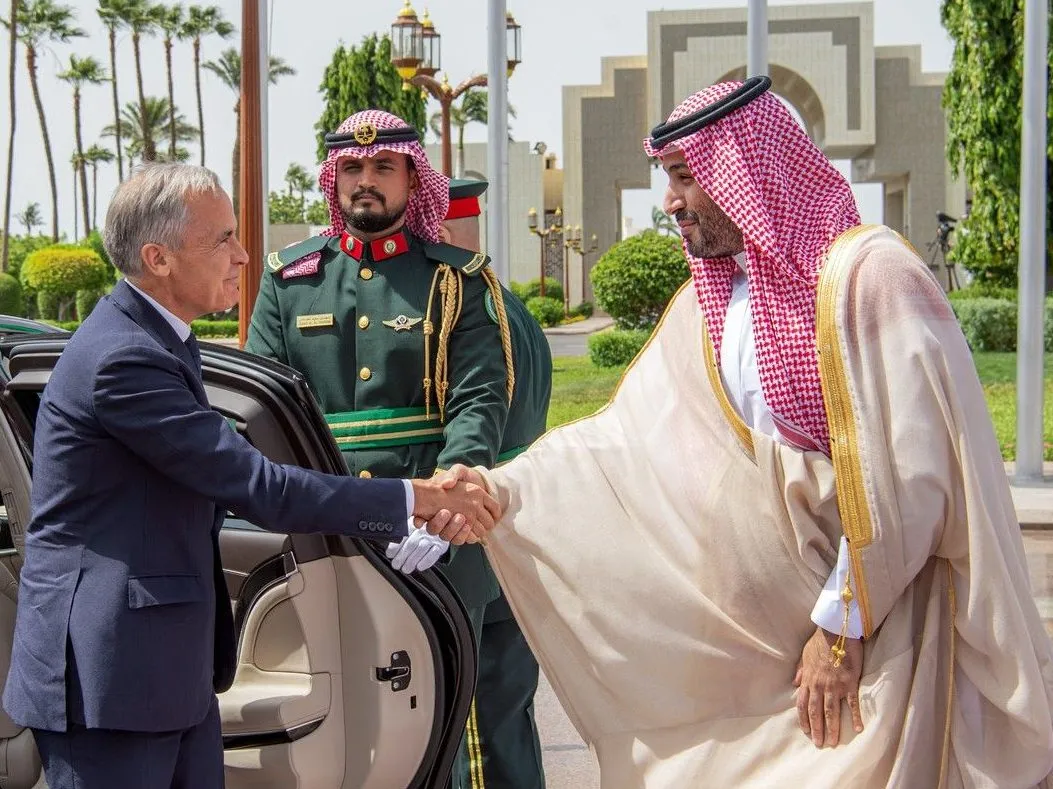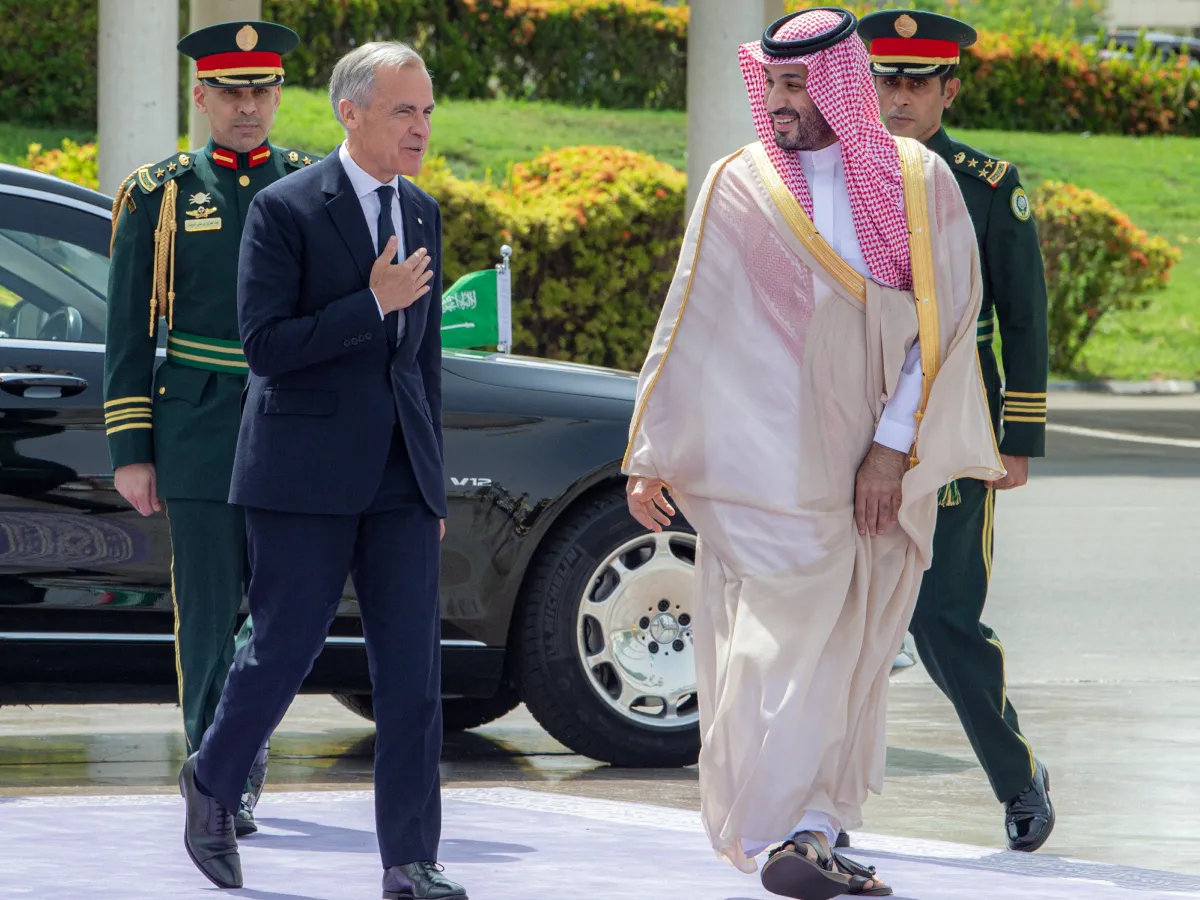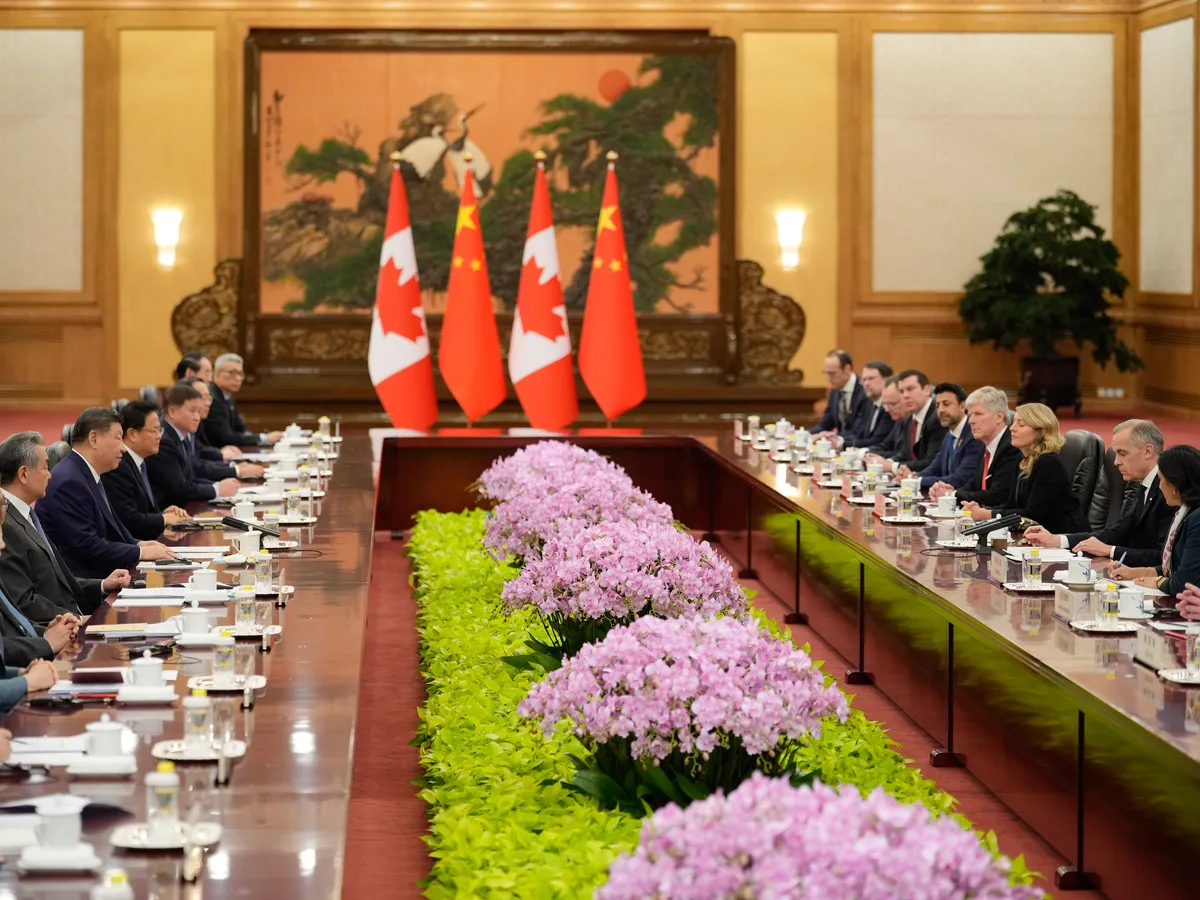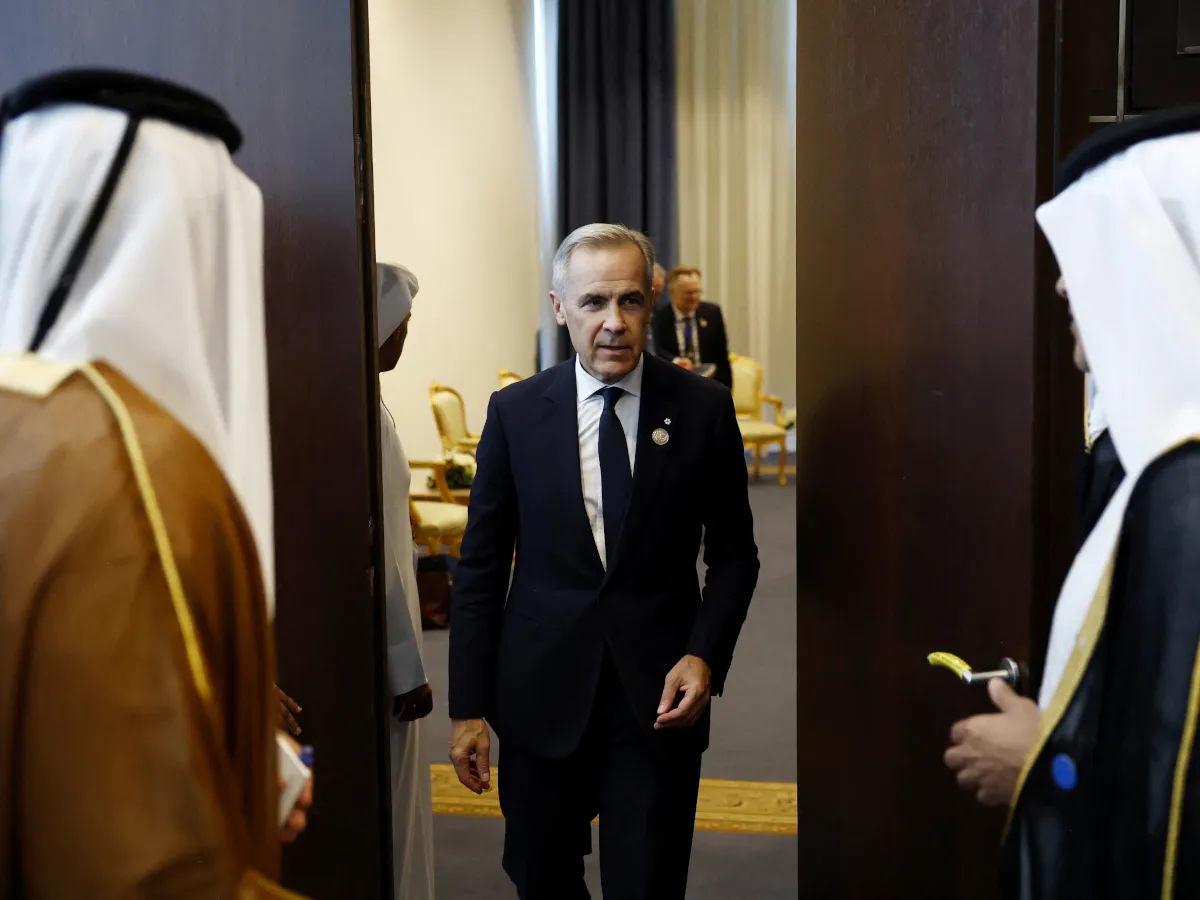
Skip to Content Subscribe Our Offers My Account Manage My Subscriptions FAQ Newsletters Canada Canadian True Crime Canadian Politics Health World Israel & Middle East Financial Post NP Comment Longreads Puzzmo Diversions Comics NP News Quiz New York Times Crossword Horoscopes Life Eating & Drinking Style Sponsored Play for Ontario Travel Travel Canada Travel USA Travel International Cruises Travel Essentials Culture Books Celebrity Movies Music Theatre Television Business Essentials Advice Lives Told Tails Told Shopping Buy Canadian Home Living Outdoor Living Kitchen & Dining Tech Style & Beauty Personal Care Entertainment & Hobbies Gift Guide Travel Guide Amazon Prime Day Deals Savings National Post Store More Sports Hockey Baseball Basketball Football Soccer Golf Tennis Driving Vehicle Research Reviews News Gear Guide Obituaries Place an Obituary Place an In Memoriam Classifieds Place an Ad Celebrations Working Business Ads Archives Healthing Epaper Manage Print Subscription Profile Settings My Subscriptions Saved Articles My Offers Newsletters Customer Service FAQ Newsletters Canada World Financial Post NP Comment Longreads Puzzmo Diversions Life Shopping Epaper Manage Print Subscription HomeNP CommentTerry Glavin: Carney's global quest for photo ops comes with crippling compromisesWhy has Canada signed a security MOU with Qatar?Last updated 13 hours ago You can save this article by registering for free here. Or sign-in if you have an account.Prime Minister Mark Carney leaves a bilateral meeting with Qatar's amir on the sideline of the Sharm El-Sheikh Peace Summit, in Sharm el-Sheikh, Egypt, in October 2025. Photo by YOAN VALAT/POOL/AFPThat’s Canada’s trade policy for you.Enjoy the latest local, national and international news.Exclusive articles by Conrad Black, Barbara Kay and others. Plus, special edition NP Platformed and First Reading newsletters and virtual events.Unlimited online access to National Post.National Post ePaper, an electronic replica of the print edition to view on any device, share and comment on.Daily puzzles including the New York Times Crossword.Support local journalism.Enjoy the latest local, national and international news.Exclusive articles by Conrad Black, Barbara Kay and others. Plus, special edition NP Platformed and First Reading newsletters and virtual events.Unlimited online access to National Post.National Post ePaper, an electronic replica of the print edition to view on any device, share and comment on.Daily puzzles including the New York Times Crossword.Support local journalism.Create an account or sign in to continue with your reading experience.Access articles from across Canada with one account.Share your thoughts and join the conversation in the comments.Enjoy additional articles per month.Get email updates from your favourite authors.Create an account or sign in to continue with your reading experience.Access articles from across Canada with one accountShare your thoughts and join the conversation in the commentsEnjoy additional articles per monthGet email updates from your favourite authorsSign In or Create an AccountorIt’s a peculiar axiomatic reality of Canadian public opinion. Whenever the popular loathing of United States President Donald Trump is inflamed, Prime Minister Mark Carney’s approval ratings either solidify or rise. While President Trump’s belligerent tariff manipulations alienate America’s friends and allies around the world, Carney can be found posing with yet another head of state at the signing of some shiny new free trade arrangement.Fair play to Carney for playing the game. Seeking out alternatives to trade with the United States is an especially easy case to make at the moment, but in all those photo opportunities at summits and official state visits, there’s quite a lot of moral hazard and diplomatic risk in play that the cameras don’t pick up.The National Post newsletter that doesn’t hold back, giving readers the unvarnished truth on media, politics and culture.By signing up, you consent to receive the above newsletter from Postmedia Network Inc.A welcome email is on its way. If you don't see it, please check your junk folder.The next issue of Right? will soon be in your inbox.We encountered an issue signing you up. Please try againWhat’s going unnoticed are the devils in the details embedded in the Carney government’s zeal to secure trade, investment and security partnerships with any country willing to sign on. And it isn’t easy to keep up.Carney and his ministers have made whirlwind visits to 29 foreign capitals in the 16 months since Justin Trudeau turned in the keys to the Prime Minister’s Office. Carney has entered into dozens of concordats, frameworks, memorandums of understanding, undertakings and partnerships that have attracted less attention than Trump’s latest threat to tariff Canada’s wildfire smoke, or hockey sticks, or whatever this most recent eruption is about.Even the bigger deals that are subjected to scrutiny, notably his foundational “new world order” strategic partnership with China, contain little-noticed trap doors. It’s troubling enough that the collaboration the RCMP was instructed to pursue with Beijing’s Ministry of Public Security last January remains hidden from public view. Just as troubling is how that secret memorandum is going to figure into Xi Jinping’s determination to extradite and prosecute anyone anywhere deemed too sympathetic to the cause of the persecuted Tibetans, or the Uyghurs, under China’s new “Ethnic Unity” law.How is the Liberal party’s longstanding enthusiasm for closer economic and cultural ties with China’s Communist Party elites going to accommodate what is rapidly shaping up as trade war between Europe and China?It’s not going to be easy to play both sides with that one. Despite what the Liberal party routinely claims, China is not Canada’s second-largest trading partner. Europe is, by far.European leaders had hoped that Trump’s return to the White House augured well for a common front against Beijing’s determination to mobilize its vastly subsidized manufacturing sector to hollow out Europe’s industrial base. Instead of teaming up with the European Commission, Trump built a tariff wall blocking European exports.German industry alone is now losing 10,000 jobs a month to China, and while China’s global share of manufacturing has risen from six per cent in 2000 to 30 per cent, Europe’s share has been halved to 17 per cent. The EU’s trade deficit with China has nearly doubled over the past decade to a gap exceeding $400 billion annually. Jens Eskelund, president of the EU Chamber of Commerce in China, compares the state of play to a “400-metre-long giant container ship loaded with 24,000 containers going to Europe and coming back almost empty.”The EU is on the lookout for allies. Japan, South Korea and Brazil are good prospects. Canada might have been, but that ship has sailed. Our own automotive sector is reeling from Trump’s intention to dismember North America’s integrated economy but Carney’s long-term low tariff guarantee to Chinese EV producers assures an “economic catastrophe” in the Canadian auto sector, says Brian Kingston, president of the Canadian Vehicle Manufacturers’ Association.“Europe was soft on China,” Kingston says. “Look at what the outcome has been: 90,000 auto jobs lost last year because they’ve allowed dumped Chinese vehicles into their market.”It isn’t only China that weaponizes its strategic vantage points in the democratic world’s economies, and Canada’s foreign-policy autonomy — and our internal security — is now further hamstrung by the Carney government’s trade and security agreements with the fabulously wealthy ruling family of Qatar, the Muslim Brotherhood’s primary global sponsor and benefactor.Just this past month, Volkswagen’s hopes to save its Osnabrück plant and its 2,300 jobs by converting to production of components for Israel’s Iron Dome defence system were dashed by Qatar’s objections. The Qatari sovereign wealth fund holds 10.4 per cent of Volkswagen’s shares and 17 percent of its voting rights.Among the several commitments Canada has made to Qatar in the hopes of convincing the Gulf autocracy’s ruling Al Thani family to double down on its energy investments in Canada is a June 25 memorandum of understanding between Canada’s Public Safety ministry and Qatar’s Internal Security Force. It’s also under wraps, like the RCMP agreement with Beijing’s Public Security ministry.The deal is supposed to extend Canada’s cooperation on a variety of law-enforcement portfolios, including money-laundering, financial crime and terrorism. This will be unavoidably awkward, owing to the Al Thani family’s conviction that the terrorist front Hamas, the Palestinian offshoot of the Muslim Brotherhood, is merely a national liberation movement. Qatar is already notorious in Canada’s national-security circles for the hundreds of millions of dollars it lavishes on the Muslim Brotherhood and its Canadian fronts and affiliates.Last year, the Institute for the Study of Global Antisemitism and Policy (ISGAP) published an in-depth study of the reach of Qatar and the Muslim Brotherhood in Canada, recommending that Canada’s intelligence agencies keep much closer tabs on Qatar’s promotion of extremist ideology and support for extremist organizations in Canada. “It is imperative to assess their level of penetration, areas of influence, and long-term goals in order to effectively manage the risks posed to Canada.”Second only to Qatar in its support of the Muslim Brotherhood’s ambitions for a global caliphate is Turkish strongman Recep Tayyip Erdoğan’s regime in Ankara. Two weeks ago, in yet another “trade diversification” milestone, Prime Minister Carney announced that Ankara and Ottawa have formally begun negotiations for a free trade agreement.The Carney government has also embarked on talks for a free trade agreement with the 11-member Association of Southeast Asian Nations (ASEAN) bloc, which will require some fancy stickhandling around ASEAN member Myanmar, a brutal and genocidal China-aligned police state. The Paris-based Financial Action Task Force lists Myanmar among only three countries on its blacklist, along with Iran and North Korea.So it’s all well and good for Canada to be looking for deep-pocketed police state investors and maybe even some customers beyond the United States, at least for now. But the lasting damage to Canada’s national security, diplomatic sovereignty, moral conscience, democratic alliances and international reputation might also be taken into account from time to time.National Post Join the Conversation This website uses cookies to personalize your content (including ads), and allows us to analyze our traffic. Read more about cookies here. By continuing to use our site, you agree to our Terms of Use and Privacy Policy.
Terry Glavin: Carney's global quest for photo ops comes with crippling compromises
Why has Canada signed a security MOU with Qatar?
1,637 words~7 min read