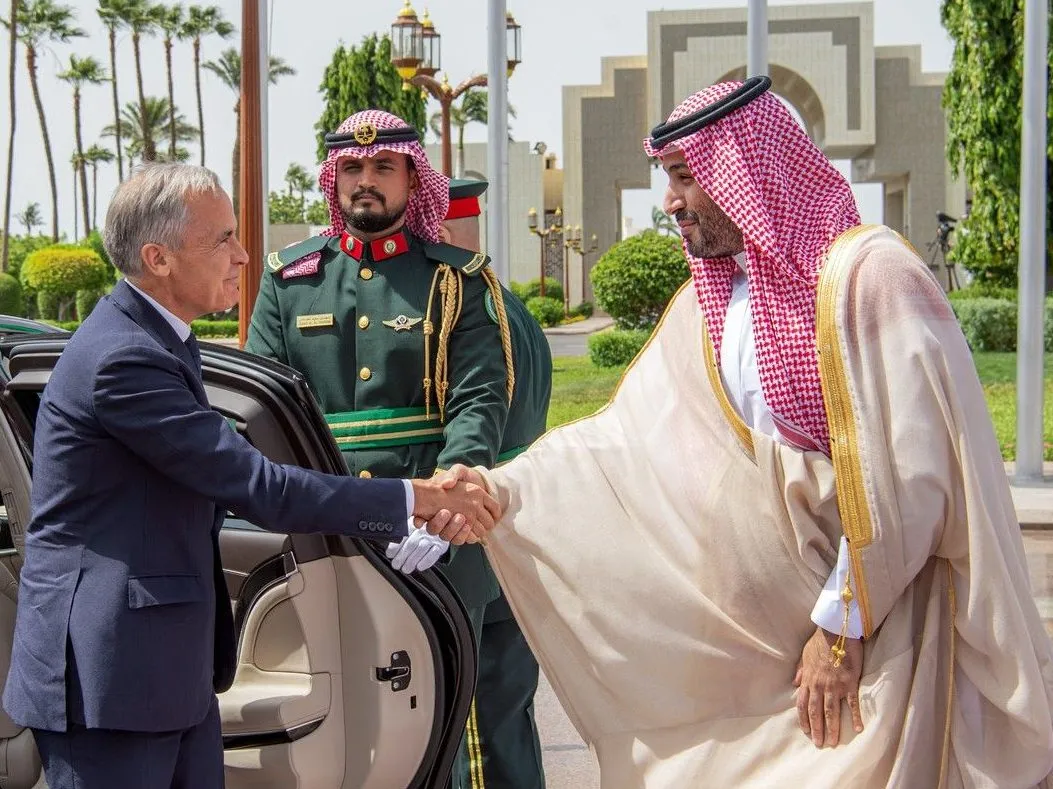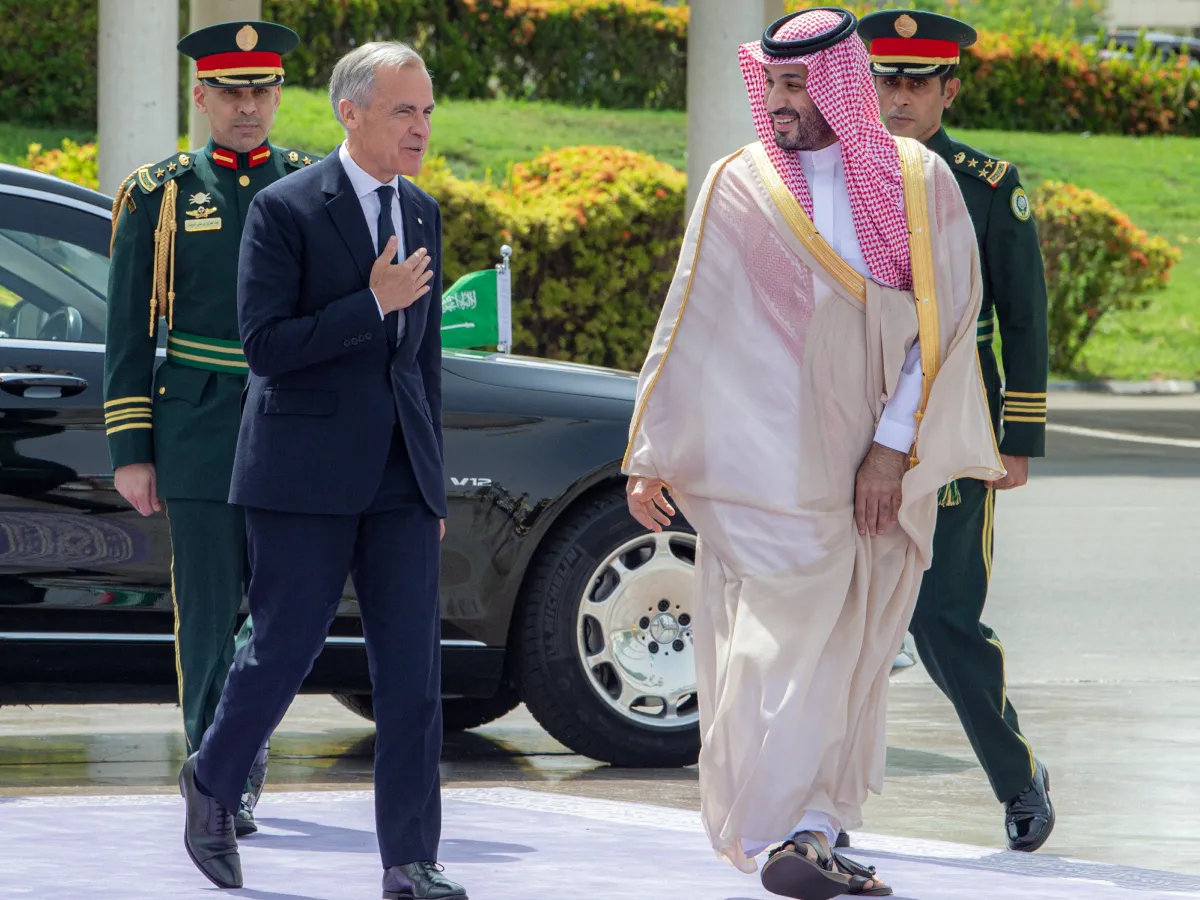
Skip to Content Subscribe Our Offers My Account Manage My Subscriptions FAQ Newsletters Canada Canadian True Crime Canadian Politics Health World Israel & Middle East Financial Post NP Comment Longreads Puzzmo Diversions Comics NP News Quiz New York Times Crossword Horoscopes Life Eating & Drinking Style Sponsored Play for Ontario Travel Travel Canada Travel USA Travel International Cruises Travel Essentials Culture Books Celebrity Movies Music Theatre Television Business Essentials Advice Lives Told Tails Told Shopping Buy Canadian Home Living Outdoor Living Kitchen & Dining Tech Style & Beauty Personal Care Entertainment & Hobbies Gift Guide Travel Guide Amazon Prime Day Deals Savings National Post Store More Sports Hockey Baseball Basketball Football Soccer Golf Tennis Driving Vehicle Research Reviews News Gear Guide Obituaries Place an Obituary Place an In Memoriam Classifieds Place an Ad Celebrations Working Business Ads Archives Healthing Epaper Manage Print Subscription Profile Settings My Subscriptions Saved Articles My Offers Newsletters Customer Service FAQ Newsletters Canada World Financial Post NP Comment Longreads Puzzmo Diversions Life Shopping Epaper Manage Print Subscription HomeNP CommentTerry Glavin: Carney should hold human-rights violators accountableThe PM's right that we shouldn't lecture from afar, but that doesn't mean we should do nothingLast updated 51 minutes ago You can save this article by registering for free here. Or sign-in if you have an account.Saudi Crown Prince Mohammed bin Salman, right, walks with Prime Minister Mark Carney, in Jeddah on July 9. Photo by Saudi Ministry of Media/AFP via Getty ImagesIt was perfectly packaged, deftly marketed, efficiently delivered and widely accepted as reasonable and wise: Prime Minister Mark Carney, in Jeddah, being suave and properly indisposed to “lecturing countries from afar,” would sensibly and of necessity do business with Saudi Arabia, one of the world’s worst serial human rights abusers.Enjoy the latest local, national and international news.Exclusive articles by Conrad Black, Barbara Kay and others. Plus, special edition NP Platformed and First Reading newsletters and virtual events.Unlimited online access to National Post.National Post ePaper, an electronic replica of the print edition to view on any device, share and comment on.Daily puzzles including the New York Times Crossword.Support local journalism.Enjoy the latest local, national and international news.Exclusive articles by Conrad Black, Barbara Kay and others. Plus, special edition NP Platformed and First Reading newsletters and virtual events.Unlimited online access to National Post.National Post ePaper, an electronic replica of the print edition to view on any device, share and comment on.Daily puzzles including the New York Times Crossword.Support local journalism.Create an account or sign in to continue with your reading experience.Access articles from across Canada with one account.Share your thoughts and join the conversation in the comments.Enjoy additional articles per month.Get email updates from your favourite authors.Create an account or sign in to continue with your reading experience.Access articles from across Canada with one accountShare your thoughts and join the conversation in the commentsEnjoy additional articles per monthGet email updates from your favourite authorsSign In or Create an AccountorOf course there would be “disagreements,” but in the newly disordered world thrust upon us by U.S. President Donald Trump, Canada’s “satisfying” but “ineffective” public scoldings of yesteryear will no longer do. Canada is calibrating new alignments with countries around the world, and that’s just how it is.“Engagement is not endorsement. So, engaging with the country doesn’t mean that we agree with everything that a country is doing,” Carney said on July 9. His words were taken nearly verbatim from Foreign Minister Anita Anand earlier in the day. Anand said she’d raised human rights concerns with the Saudis, quietly, adding, “It is necessary to fulfill Canadian values, to represent those values on the world stage and to bring those values to the table.”The National Post newsletter that doesn’t hold back, giving readers the unvarnished truth on media, politics and culture.By signing up, you consent to receive the above newsletter from Postmedia Network Inc.A welcome email is on its way. If you don't see it, please check your junk folder.The next issue of Right? will soon be in your inbox.We encountered an issue signing you up. Please try againThree important realities appear to have been missed in this reading of events.The first is that there is no “disagreement” between Riyadh and Ottawa on the point that trade must take precedence over any contradictions arising from differing “values.” The second is that there are no distinctly “Canadian” values at stake here. The values the House of Saud routinely tramples are embedded in the 1948 Universal Declaration of Human Rights.The third point is that nobody is proposing that the Saudis should be “lectured from afar,” and the tediously repeated claim that this is what former foreign affairs minister Chrystia Freeland was up to in 2018 — prompting the Saudis to blow a gasket, evict Canada’s ambassador and suspend all new trade and investment transactions — rests on a tidy little fiction.“The Canadian position is an overt and blatant interference in the internal affairs of the Kingdom of Saudi Arabia,” the royal family’s foreign ministry declared back then. All Canada’s ambassador did was issue an anodyne statement reflecting the content of an open letter that 30 Arab feminists and human rights leaders had written to the United Nations calling for the release of several civil rights activists the Saudis had imprisoned.The Canadian Embassy merely repeated, in Arabic, a shortened version of a statement from the UN’s Office of the High Commissioner for Human Rights urging the Saudi government to “release all human rights defenders and activists who have been detained for their peaceful human rights work.”This was the pretext the Saudis relied on to sever diplomatic ties with Canada, suspend flights to and from Toronto, order roughly 15,000 Saudi students in Canada to enrol in schools elsewhere and so on. But it had nothing to do with what Freeland or her ambassador said. It was about the chubby and pampered war criminal Prince Mohammed bin Salman throwing his newfound political weight around, making an example of Canada as a punching bag.Rather than the rumpus arising from Canada’s interference in Saudi affairs, it was the other way around.It wasn’t just that the Saudis had long been bankrolling religious institutions in Canada to propagandize the austere Salafist wing of Islam and bully Canadian Muslims into keeping their traps shut about the excesses of the kingdom’s thousands of jet-setting “princes.”At the time, bin Salman himself was also demanding that Canada extradite the senior Saudi intelligence official Saad Aljabri, who had fled for his life and found refuge in Canada ahead of the diplomatic rupture. Aljabri’s transgression was that his patron had been another prince, bin Salman’s rival, the deposed Mohammed bin Nayef.Bin Salman had imprisoned Aljabri’s sons, effectively taking them hostage, and his efforts to lure Aljabri back to Saudi Arabia mirrored his entreaties to the Washington Post columnist, Saudi dissident and author Jamal Khashoggi, who refused to return and ended up murdered on bin Salman’s orders in the Saudi Consulate in Istanbul in October 2018.In a civil suit filed in a U.S. court in 2020, Aljabri claimed that agents from the same unit that murdered and dismembered Khashoggi with a bone saw in Istanbul had been dispatched to Canada to kill him, but the would-be assassins had been turned away by suspicious Canada customs officials at the border.This brings us to the question: what, then, if even “lecturing countries from afar” is too stern a standpoint for Canada to adopt in such matters, should Canada do?Back in 2020, responding to the disturbing claims in Aljabri’s lawsuit, Public Safety Minister Bill Blair said all the right things. It was unacceptable for foreign actors to threaten anyone living in Canada. “Canadians can be confident that our security agencies have the skills and resources necessary to detect, investigate and respond to such threats,” he said. But Canadians still have no cause to be confident.There’s a lot that Ottawa could be doing. The Liberal government has been promising a new national security strategy since 2004, and there still isn’t even a national clearing house among and between Canada’s various intelligence and law-enforcement agencies to handle cases of transnational repression.After several years of scandals and shocking leaks to the news media about Beijing’s deep reach into Canada’s politics from frustrated intelligence-agency officials, an untested foreign influence registry is only now beginning operations. But in January, the RCMP was conscripted by Carney to collaborate with Beijing’s dreaded Ministry of Public Security, the source of several overseas intimidation rackets. The MOU setting out the collaboration remains a secret document.Uyghur, Tibetan and Hongkonger activists are increasingly going silent for fear of their relatives being persecuted back home. The extraterritorial reach of Beijing’s National Security Law and its recently promulgated “ethnic unity” law means that travel to any country that has concluded an extradition treaty with China will run the risk of arrest and extradition to face criminal charges back in China.Instances of Russian hacking and cyber-sabotage have become commonplace. On Tuesday the Macdonald-Laurier Institute — one of Moscow’s favourite Canadian targets — learned that its entire website had been replicated online. The mock site is believed to be an operation of the type the Five Eyes intelligence services have lately warned about: an effort to procure sensitive or even classified information from unsuspecting Canadian sources.Iranian dissidents say they live in fear of the Khomeinist regime’s agents here in Canada, and just this week, the Atlantic Council’s Digital Forensics Research Lab released a report about a major surveillance and intimidation operation targeting Belarusian exiles in Canada. Run by the Lukashenko regime in Belarus, Moscow’s primary front-line client state, the operation identifies Belarusian democracy activists in Canada and then goes after their family members and their properties in Belarus.Report author Marcus Kolga says there are alternatives to “lecturing countries from afar,” and they include sanctions, visa bans, asset freezes and immigration inadmissibility tools against foreign officials, security-service officers, prosecutors, judges, propagandists and regime-linked collaborators. Canada should impose costs on perpetrator states and their enablers, and perhaps most importantly, Ottawa needs to establish a direct and effective co-ordination mechanism among and between intelligence and law-enforcement agencies to deal with transnational repression.“I thought we were actually standing up for values now but we seem to have just put blinders on,” Kolga said. “We’re going backwards, and there are a lot of diaspora communities in Canada where people are really afraid.”National Post Join the Conversation This website uses cookies to personalize your content (including ads), and allows us to analyze our traffic. Read more about cookies here. By continuing to use our site, you agree to our Terms of Use and Privacy Policy.
Terry Glavin: Carney should hold human-rights violators accountable
The PM's right that we shouldn't lecture from afar, but that doesn't mean we should do nothing
1,762 words~8 min read