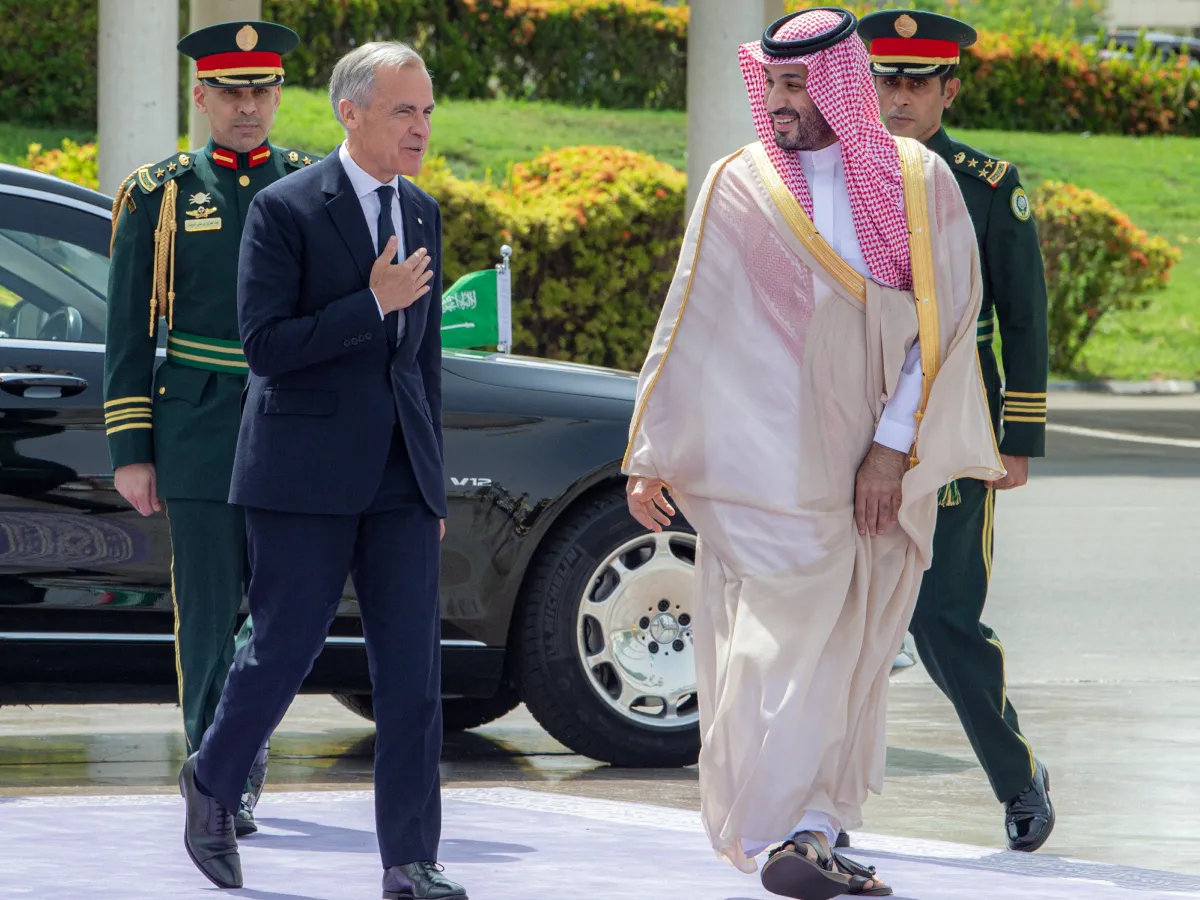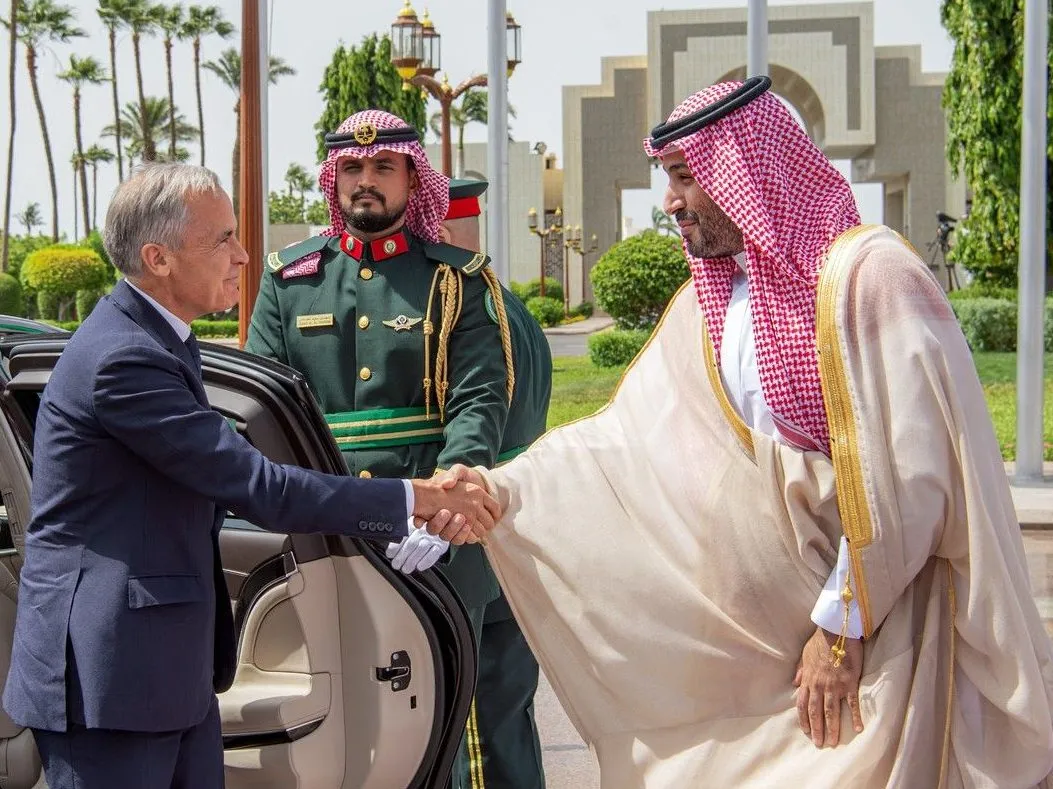
Skip to Content Subscribe Our Offers My Account Manage My Subscriptions FAQ Newsletters Canada Canadian True Crime Canadian Politics Health World Israel & Middle East Financial Post NP Comment Longreads Puzzmo Diversions Comics NP News Quiz New York Times Crossword Horoscopes Life Eating & Drinking Style Sponsored Play for Ontario Travel Travel Canada Travel USA Travel International Cruises Travel Essentials Culture Books Celebrity Movies Music Theatre Television Business Essentials Advice Lives Told Tails Told Shopping Buy Canadian Home Living Outdoor Living Kitchen & Dining Tech Style & Beauty Personal Care Entertainment & Hobbies Gift Guide Travel Guide Amazon Prime Day Deals Savings National Post Store More Sports Hockey Baseball Basketball Football Soccer Golf Tennis Driving Vehicle Research Reviews News Gear Guide Obituaries Place an Obituary Place an In Memoriam Classifieds Place an Ad Celebrations Working Business Ads Archives Healthing Epaper Manage Print Subscription Profile Settings My Subscriptions Saved Articles My Offers Newsletters Customer Service FAQ Newsletters Canada World Financial Post NP Comment Longreads Puzzmo Diversions Life Shopping Epaper Manage Print Subscription HomeNP CommentKelly McParland: Carney didn't go to Saudi Arabia to hold up Canada as a moral arbiterThe prime minister moves past finger waggingLast updated Jul 13, 2026 You can save this article by registering for free here. Or sign-in if you have an account.This handout picture released by the Saudi Ministry of Media shows Saudi Arabia's Crown Prince Mohammed bin Salman (R) welcoming Canada's Prime Minister Mark Carney during his official visit at Al-Salam Royal Palace in Jeddah on July 9, 2026. Photo by AFP Phot /Saudi Ministry of Media/AFP viaMark Carney has a finger issue.Enjoy the latest local, national and international news.Exclusive articles by Conrad Black, Barbara Kay and others. Plus, special edition NP Platformed and First Reading newsletters and virtual events.Unlimited online access to National Post.National Post ePaper, an electronic replica of the print edition to view on any device, share and comment on.Daily puzzles including the New York Times Crossword.Support local journalism.Enjoy the latest local, national and international news.Exclusive articles by Conrad Black, Barbara Kay and others. Plus, special edition NP Platformed and First Reading newsletters and virtual events.Unlimited online access to National Post.National Post ePaper, an electronic replica of the print edition to view on any device, share and comment on.Daily puzzles including the New York Times Crossword.Support local journalism.Create an account or sign in to continue with your reading experience.Access articles from across Canada with one account.Share your thoughts and join the conversation in the comments.Enjoy additional articles per month.Get email updates from your favourite authors.Create an account or sign in to continue with your reading experience.Access articles from across Canada with one accountShare your thoughts and join the conversation in the commentsEnjoy additional articles per monthGet email updates from your favourite authorsSign In or Create an AccountorHe doesn’t wag his.In the many images of the ever-travelling prime minister, there are few if any depicting him wagging a righteous digit at his hosts as he lectures them on their failure to live up to Canadian moral and behavioural standards.When the Carney aircraft touched down in Saudi Arabia last week, he noted he was the first prime minister in 26 years to visit one of the world’s most crucial energy suppliers, investment money-pots and western-friendly regional political powers. That’s because previous leaders were careful to be seen disapproving of official Saudi views, habits and activities.There was much to disapprove of. Riyadh’s treatment of women was medieval at best. The right to drive a car, hold a bank account, get a job or apply for a passport without the consent of a male “guardian” was considered too dangerous and revolutionary to be considered by the country’s all-male rulers. Saudis guilty of holding opinions displeasing to the government — which consisted of a swollen pack of privileged princelings whose great achievement in life was to be born into the ruling clan — were routinely jailed, beaten or mysteriously ended up dead. In the most notorious episode, journalist Jamal Khashoggi was lured to an ambush, murdered, dismembered and disposed of so effectively his parts have still yet to be found.The National Post newsletter that doesn’t hold back, giving readers the unvarnished truth on media, politics and culture.By signing up, you consent to receive the above newsletter from Postmedia Network Inc.A welcome email is on its way. If you don't see it, please check your junk folder.The next issue of Right? will soon be in your inbox.We encountered an issue signing you up. Please try againCarney, of course, knows all this. Yet there he was doing the grin-and-grip with Mohammed bin Salman, the current all-powerful royal, sharing a lavish lunch and batting away queries as to why he wasn’t berating the prince about the kingdom’s rotten record on human rights.“Engaging with the country doesn’t mean that we agree with everything that a country is doing,” he told questioners, another in his efforts to explain what he considers the painfully obvious. “I do see that lecturing countries from afar is an ineffective strategy. It’s satisfying, but it’s ineffective.”True enough, though when has the fact something didn’t work ever stopped a Canadian government from doing it anyway?Carney’s practice of keeping his finger under control is a sharp break from his immediate predecessor in prime ministering, who regularly let foreign dignitaries know when they had failed to meet his expectations. Someone in Justin Trudeau’s circle of advisors must have believed that holding up Ottawa as international arbiter of the acceptable was a winning strategy that would sell well with voters, even if it had no discernible impact on the lectured.It certainly did nothing to enhance our standing. Trudeau was snubbed in China, berated by India and treated as an annoying afterthought in Washington when he wasn’t being directly insulted (though in the U.S. case he wasn’t alone). Those happen to be three of the biggest markets for the goods and services Canada would like to sell, but by the end of Trudeau’s days in power relations consisted of little more than the mutual sharing of jibes and accusations. Even as an exercise in high-minded self-righteousness it seemed to have little point.Carney has taken a decidedly different approach, as he has in burying so much else of what Trudeau left behind. He apparently takes for granted that other populations are well aware of what Canadians believe in, and that in some very important areas our views differ from theirs. He also seems to accept that badgering them about it doesn’t do a lot to enhance our influence or bring about change. Often the only result is to produce a lot of bad feelings, and reminders that Canada’s history of treating minorities or the powerless is anything but perfect.There are times, of course, in which it’s important to stand up for the differences. Beijing’s slaughter of innocents in Tiananmen Square in 1989 produced a world-wide outrage which Canadians entirely shared. The trumped-up charges against Michael Spavor and Michael Kovrig set in motion a years-long freeze while Ottawa worked to reverse the injustice. The murder of Khashoggi saw Riyadh isolated and shunned despite implausible claims that nobody important had anything to do with it.In each instance the outraged reaction was deeply felt and entirely justified. And in each case it didn’t last. Just over five years after Tiananmen Square, Jean Chrétien led a Team Canada trade mission to China joined by dozens of business leaders keen in signing contracts and making sales. He was there again in 1996, 1998 and 2001, making clear all might not be forgiven or forgotten, but was old enough to be ignored. Paul Martin, Stephen Harper and Trudeau followed, until the Two Michaels affair disinterred the outrage.Carney’s trek to Saudi marks the official indication that Khashoggi’s death and human rights concerns can similarly be lived with if commerce and politics require. The prime minister has made it his mission to wean Canada off its economic over-reliance on the U.S., and the Saudi sovereign wealth fund taps in at about US$1.2 trillion, enough that it can afford to waste billions on a no-hope golf tour and a 100-mile long megacity, two wild schemes in the process of being abandoned just a few years after launch.If Riyadh is willing to toss away sums like that on dead-end ideas, why not introduce it to the many “major projects” on Ottawa’s must-do list? Considerable efforts at reform have been introduced since Mohammed bin Salman gained the reins of power, though the kingdom remains anything but an equal society.In official releases during the visit, Carney spoke of “unprecedented (Saudi) investments in infrastructure, dynamic growth in tourism, and advancements in health and technology.” A previous conversation with the Crown Prince included notice of “deepening the Canada-Saudi Arabia partnership in energy, agri-food, critical minerals, defence, and aerospace,” and the importance of having a regional bulwark against the regime in neighbouring Iran.Neither document mentioned human rights or dismembered bodies. That doesn’t mean they’ve been forgotten, but in this Liberal iteration they’re not all that count.National Post Join the Conversation This website uses cookies to personalize your content (including ads), and allows us to analyze our traffic. Read more about cookies here. By continuing to use our site, you agree to our Terms of Use and Privacy Policy.
Kelly McParland: Carney didn't go to Saudi Arabia to hold up Canada as a moral arbiter
The prime minister moves past finger wagging
1,539 words~7 min read