Serving tech enthusiasts for over 25 years.
TechSpot means tech analysis and advice you can trust.
The big picture: As with all things AI, the world of semiconductors has seen its rate of change increase dramatically over the last year or so. Big traditional players have been inspired to make meaningful advances to their roadmaps, driven in part by a surprisingly large number of smaller startups and new custom silicon entrants from other large tech companies. Most of these efforts have been driven by the sudden transition to agentic AI workloads and the new types of demands placed on computing devices, both on the edge and in the datacenter.
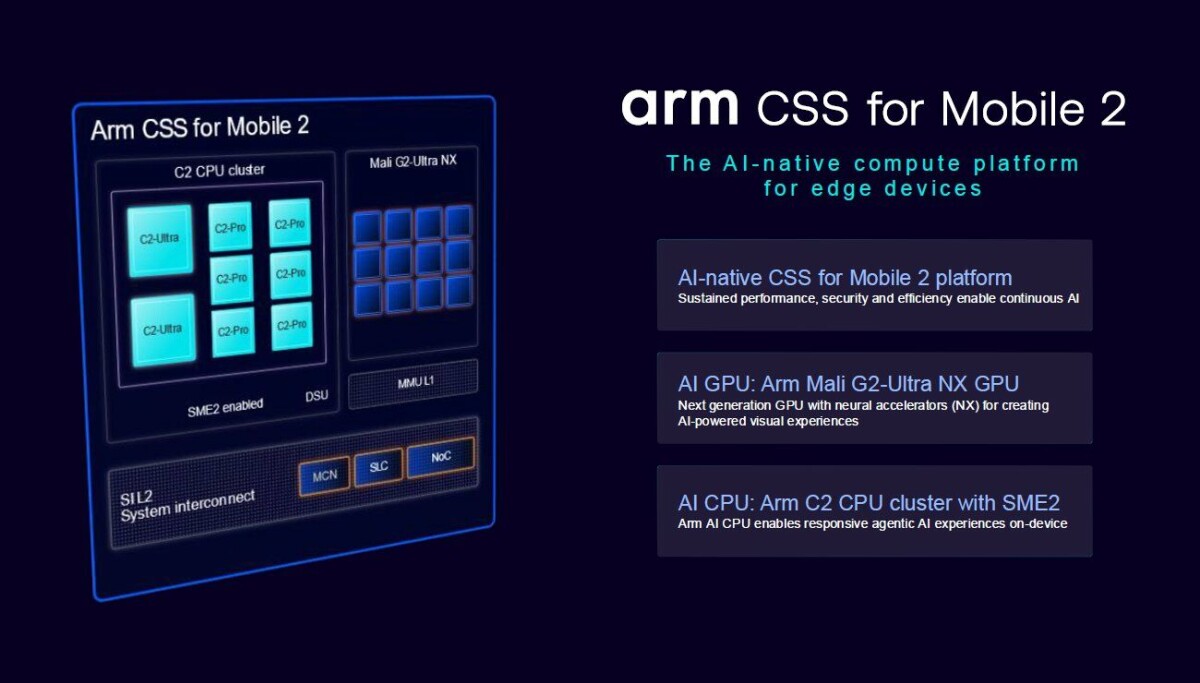
Not surprisingly, Arm just announced a series of agentic AI-focused enhancements to its range of IP offerings at its Arm Everywhere China event. The news encompasses mobile devices, physical AI and robotics, and AI infrastructure for the cloud and enterprise environments.
Unlike many others, however, Arm's technology is a critical enabler for many other companies' efforts as well. As a result, the impact of the changes that Arm announced has a significantly larger effect than those of other individual companies. As it likes to proudly point out, Arm has a massive developer base of 22 million people, creating software for billions of Arm-based devices in numerous product categories around the world.