(Image credit: Getty Images/Vitaly Gariev)
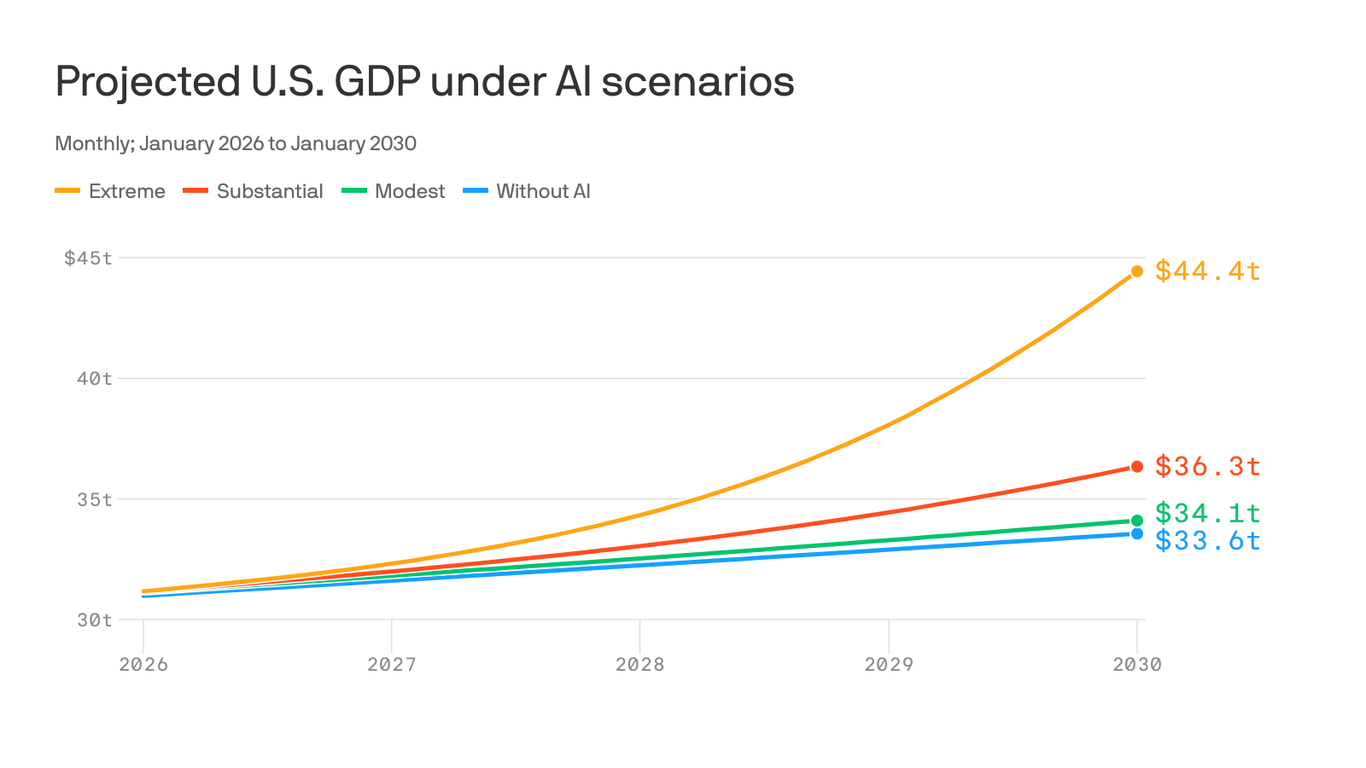
We recently asked AI to rank which jobs would be taken by AI first. Now, Anthropic, the company behind Claude is trying to answer the question we are all asking: what happens if AI keeps getting better?The company's new economic model explores what happens the more AI grows, specifically, how it could affect jobs, wages and the U.S. economy through 2030. Some of the results are striking.Under one set of assumptions, the economy grows significantly while wages for "knowledge workers" barely move. The phrase was first coined by management theorist Peter Drucker in 1959 to describe a growing shift in the global economy away from traditional manual labor and toward intellectual and information-based work. A knowledge worker is essentially a professional whose main capital is their expertise, critical thinking and specialized knowledge.When those assumptions were pushed further, the divide becomes even more dramatic, with the economy growing 32.4% larger than it otherwise would have while knowledge-worker wages fall more than 10%.To be clear, Anthropic isn't predicting either outcome. The company is just trying to show how factors including AI adoption, automation and workers' ability to change careers could determine who actually benefits if AI delivers the productivity boom its developers have been promising.Anthropic modeled three different AI futures