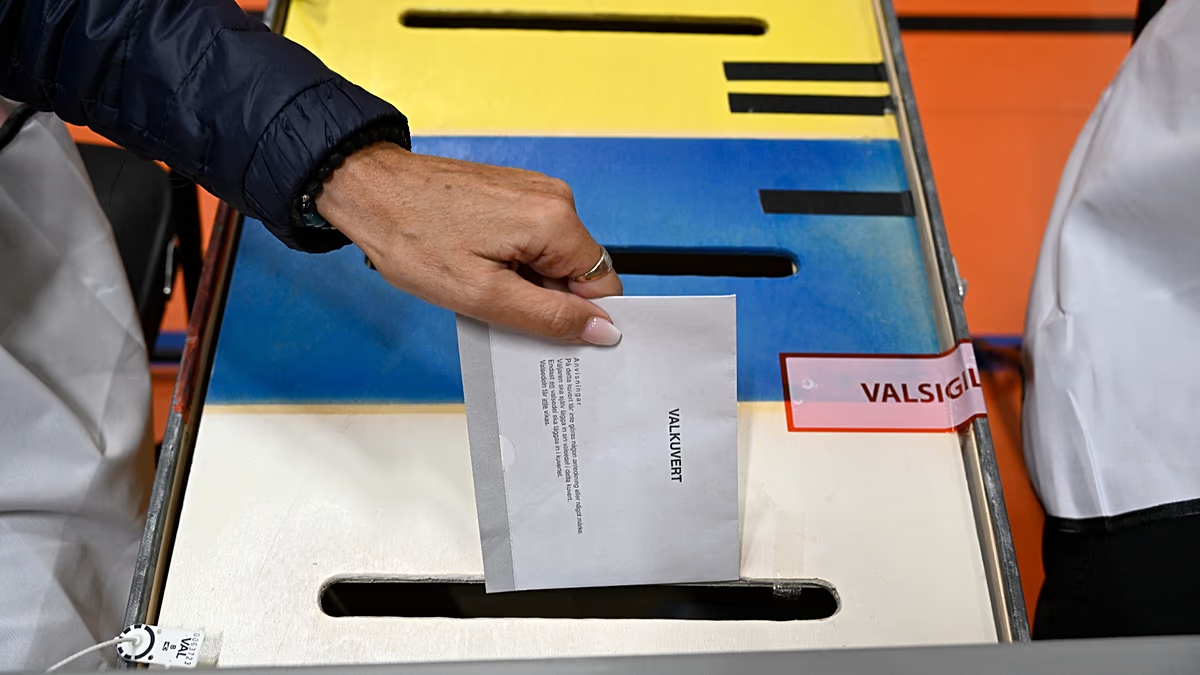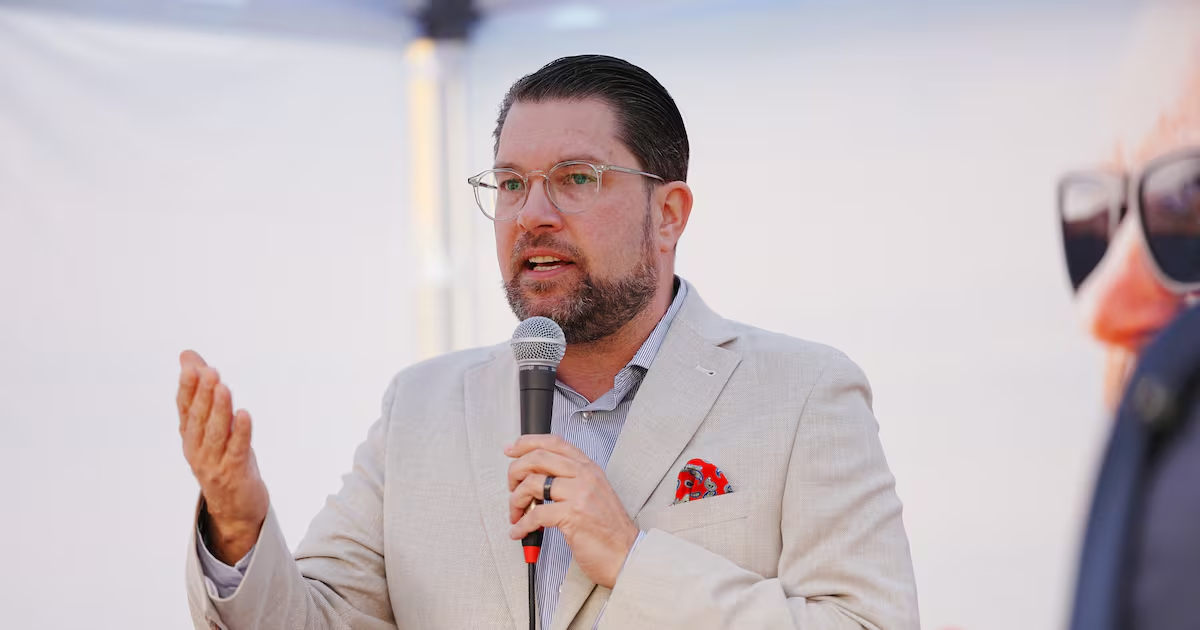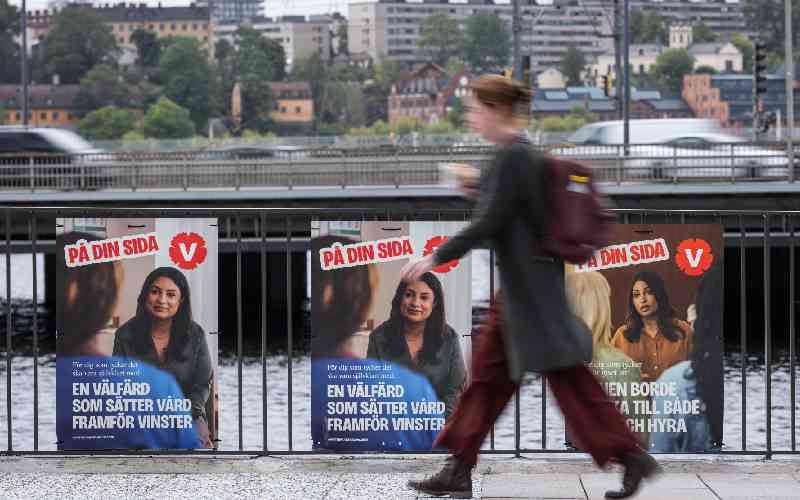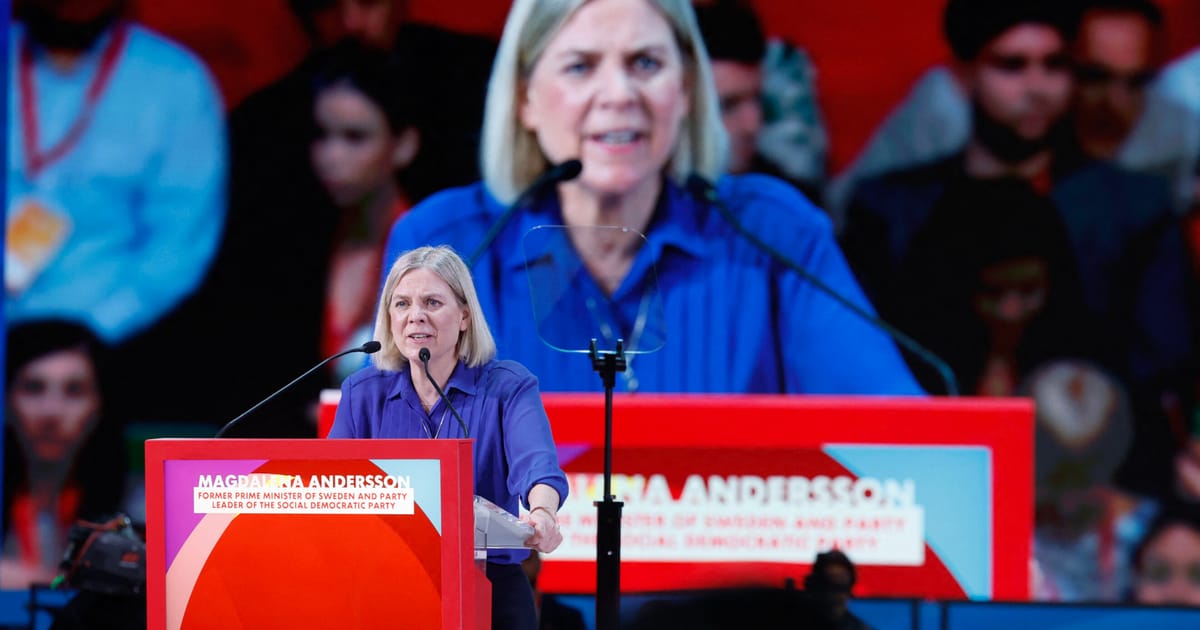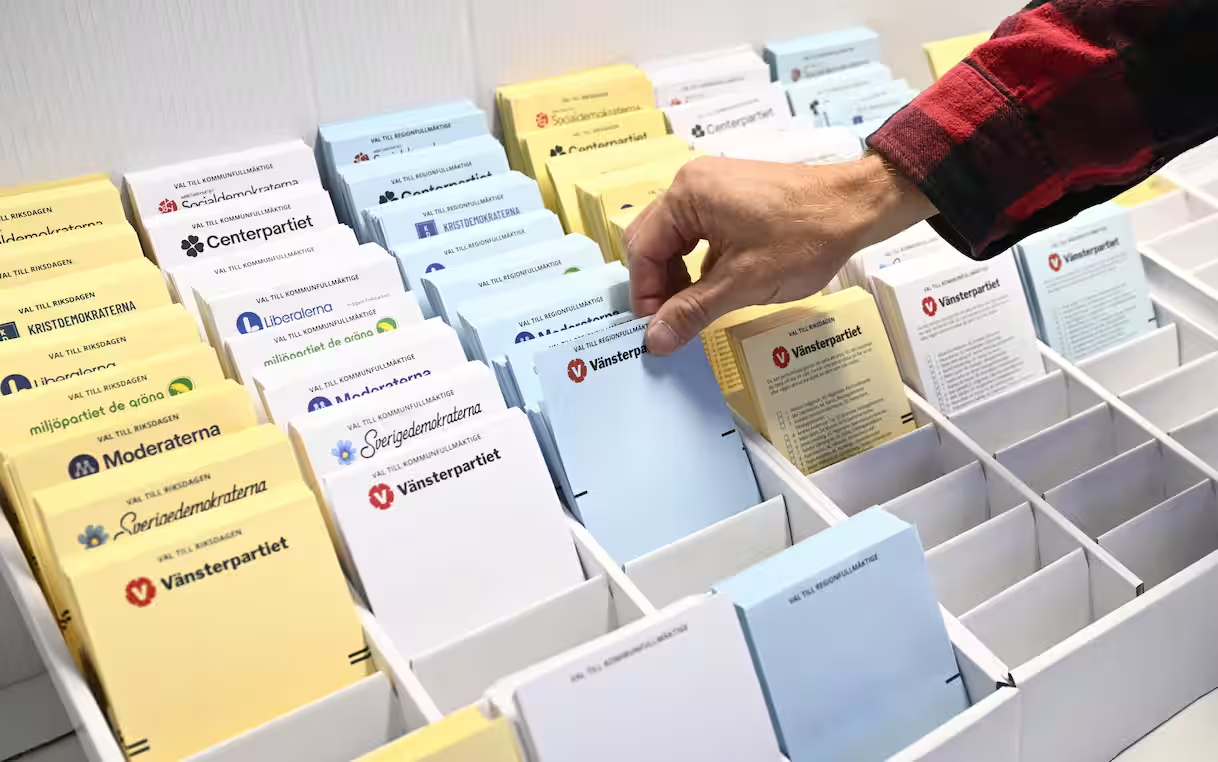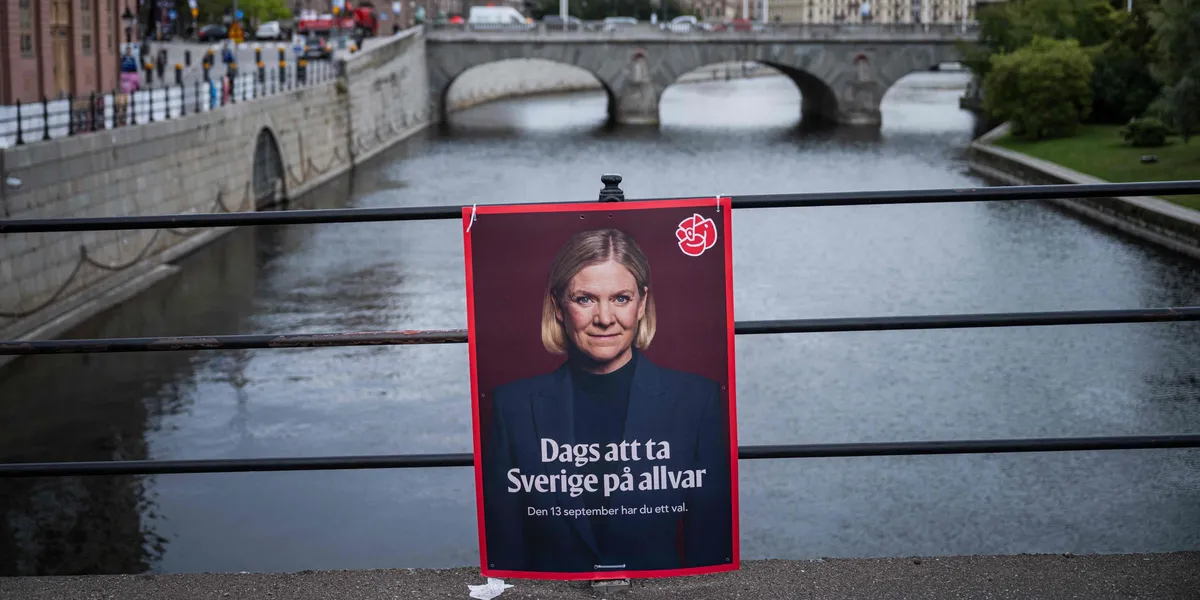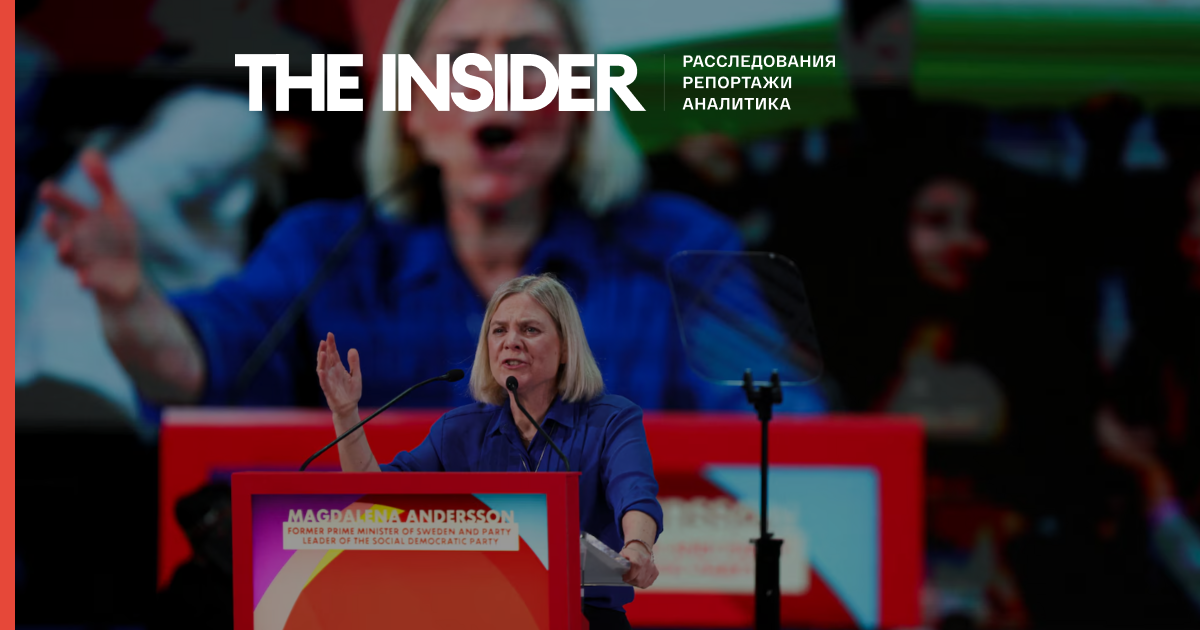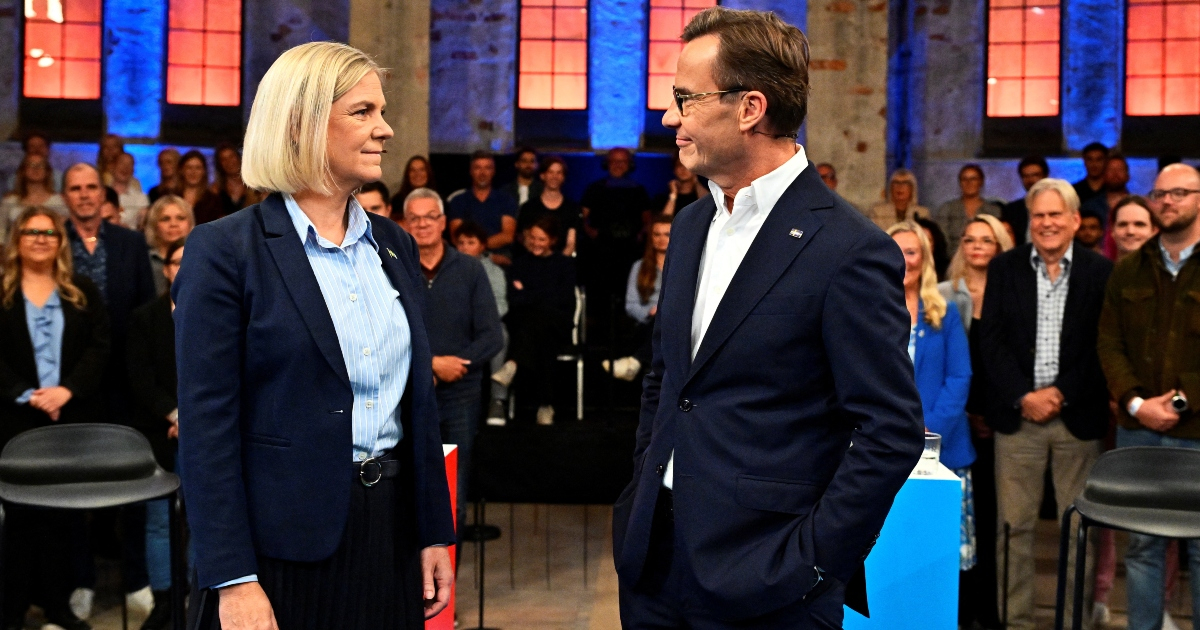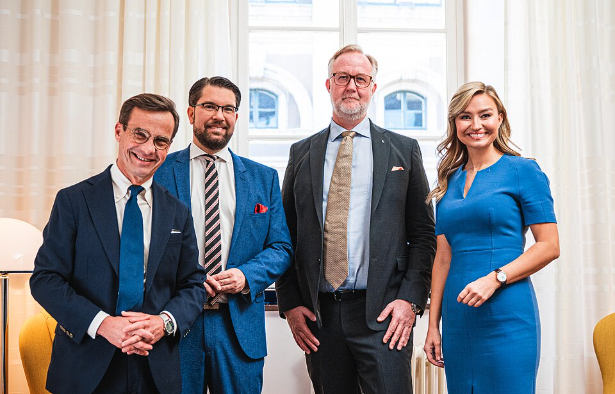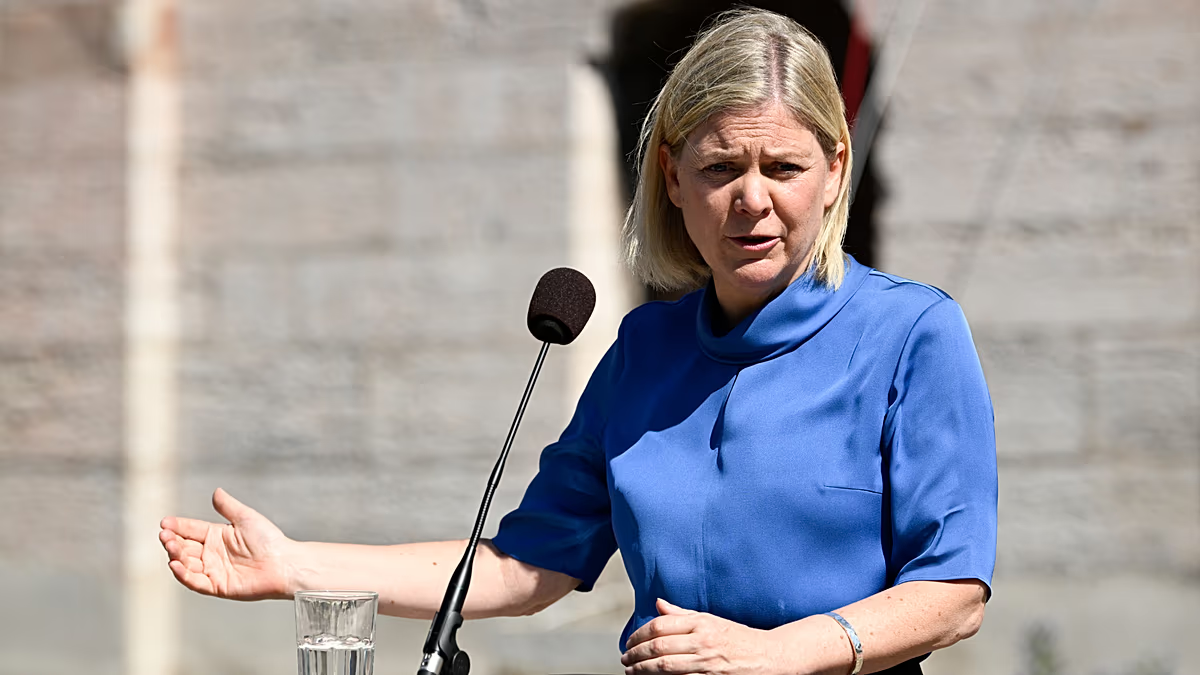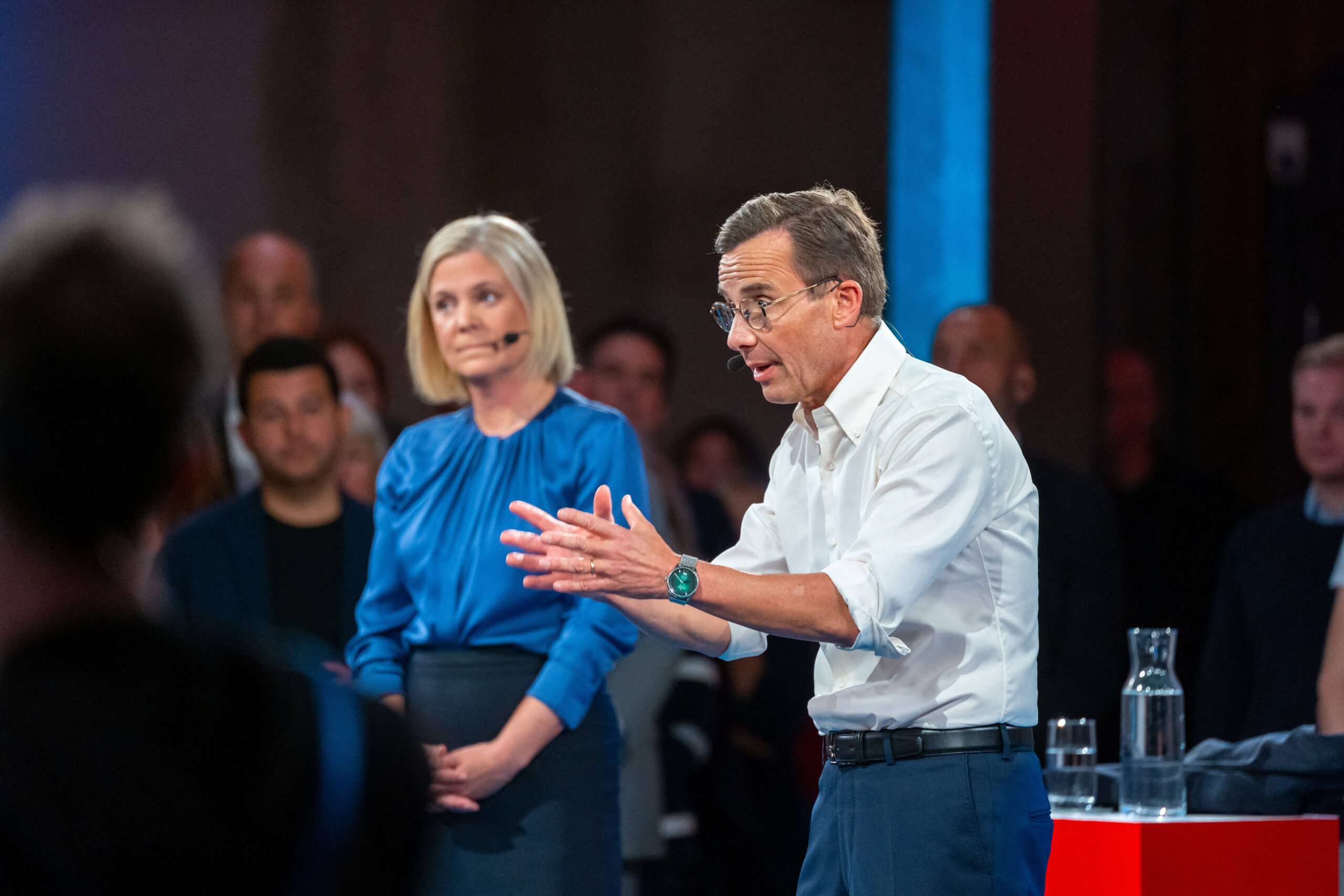
Swedes will head to the polls on September 13 in an election that could return Social Democratic leader Magdalena Andersson to office and unseat Prime Minister Ulf Kristersson’s liberal-right government after one term. Polling has favored a change of government for much of the past year and a half, but the race appears to be tightening in the final week.
Kristersson’s Moderate Party is seeking another term with its current partners on the right, while Andersson is the clear contender to replace him. But Sweden’s fragmented political landscape means that securing a parliamentary majority and forming a viable government are two different challenges.
What’s the state of play?
The latest Novus/TV4 poll placed the four opposition parties—the Social Democrats, the Center Party, the Green Party, and the Left Party—collectively at 50.3 percent of the vote. The three government parties—the Moderates, Christian Democrats, and the Liberals—together with the supporting far-right Sweden Democrats, stood at 47.7 percent. The resulting 2.6 percentage-point gap is considerably smaller than the opposition leads recorded by Novus and SVT/Verian two weeks earlier—6.9 and 10 points, respectively—suggesting a tightening race.