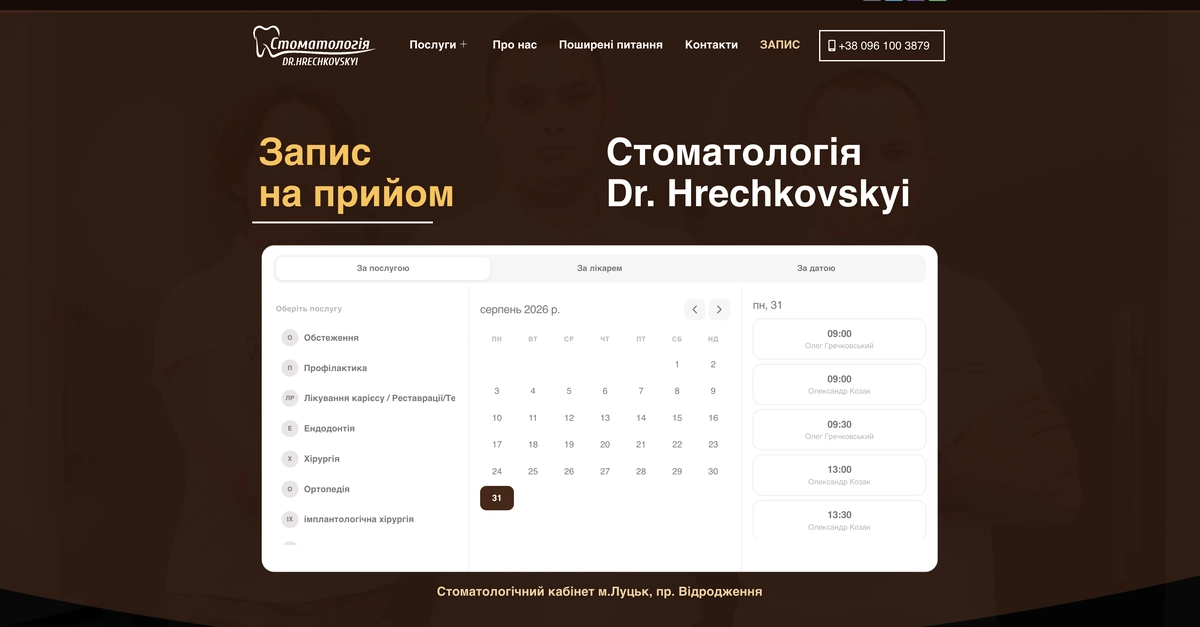
Let's use a real case — a dental clinic and its appointment booking — to walk through what client-centricity, domain thinking, and scalability actually look like in WordPress development.
Let's dive into WordPress development — domain first, integration second.
Most WordPress booking plugins start the same way: a client needs to connect their site to a specific tool, so a developer wires up that one API and ships it. It works — until the second client shows up with a different calendar system, and the "quick integration" has to be rebuilt from scratch.
4WP-Booking started from exactly that kind of request — a dental practice that needed native, on-site appointment scheduling connected to Clinic Cards, the CRM it already ran on. But instead of shipping a "Clinic Cards plugin," we treated the request as a design problem first and an integration second. This article walks through why, using Domain-Driven Design and a lightweight Software Design Document process — the same methodologies we apply across every plugin built on 4wp-bundle.
The request behind the plugin