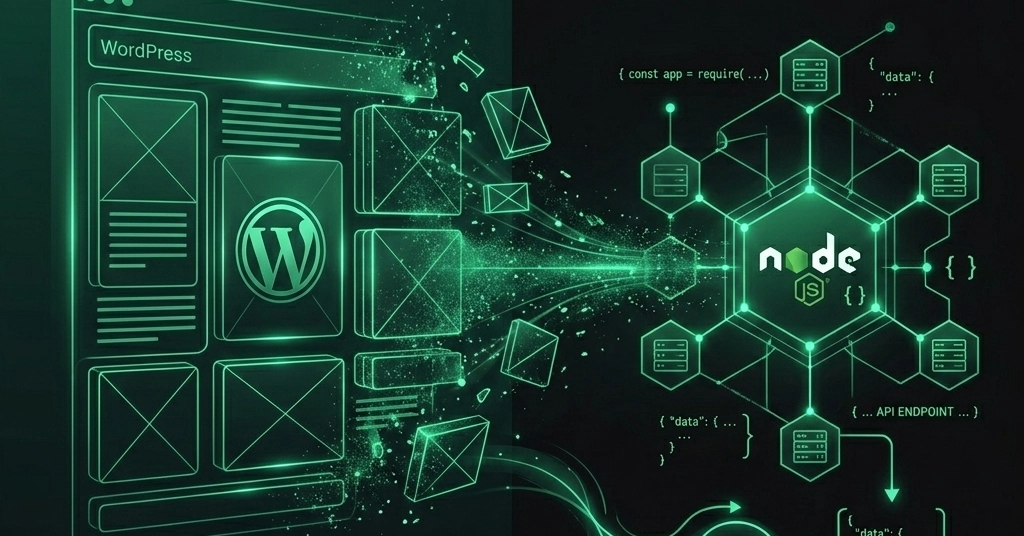
Every headless WordPress conversation starts the same way — someone draws an architecture diagram with arrows pointing from a REST API to a shiny Next.js frontend, and it looks clean. Too clean.
This is a post about what happens when you close the whiteboard and open the actual codebase.
The Stack Decision: GraphQL vs. REST vs. Direct MySQL
This is usually the first fork in the road. For this build, the client already had a well-indexed WooCommerce site. The product catalog, slugs, and taxonomy structure were already doing heavy SEO work. So the constraint was simple: nothing about the data layer changes, only how we consume it.
WPGraphQL was a real option — but it meant adding a plugin dependency to a WordPress install we were actively trying to slim down. The WP REST API was already there, no installation required, and exposed exactly what we needed: products, categories, pages, and media — all queryable by slug.