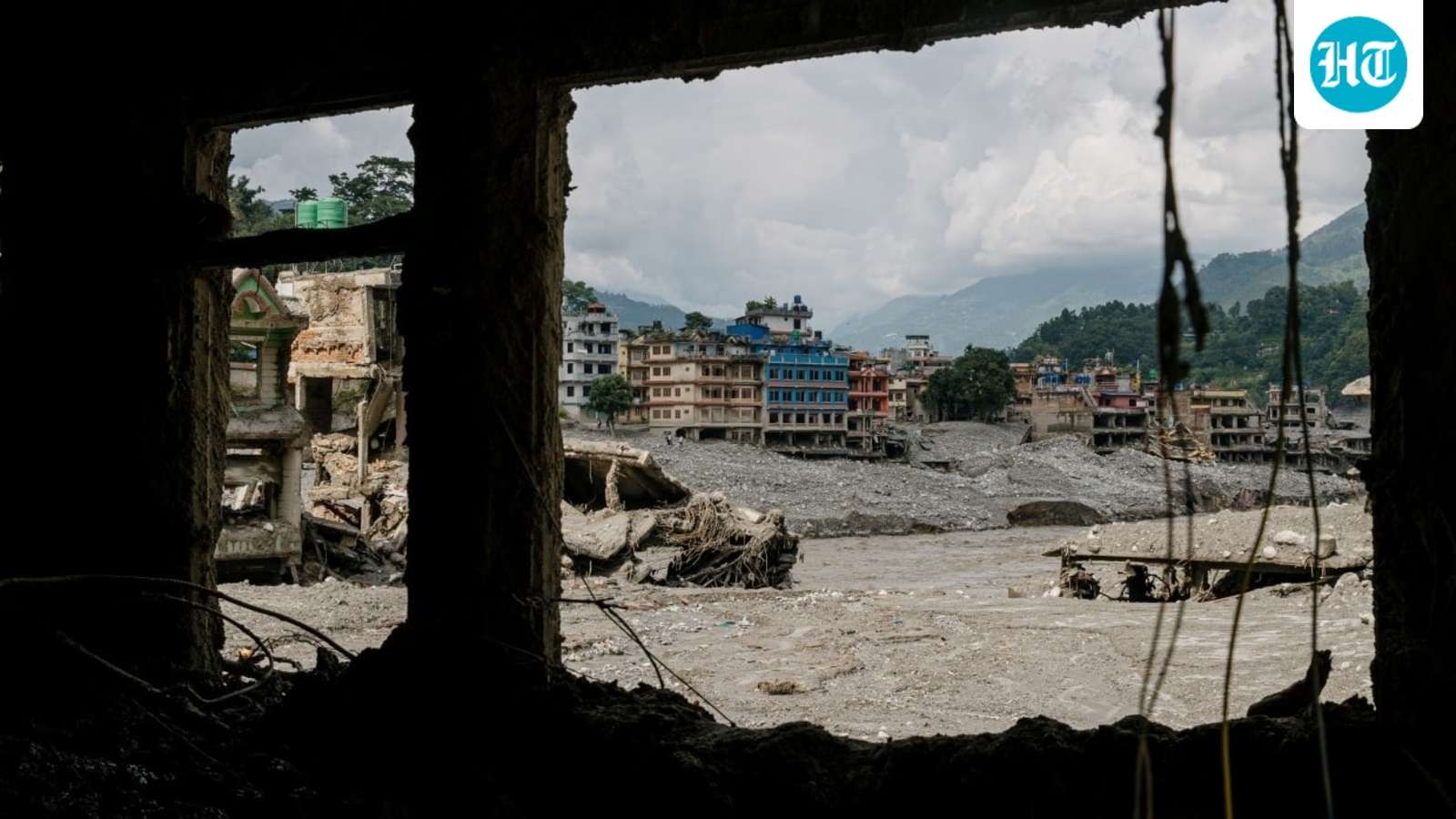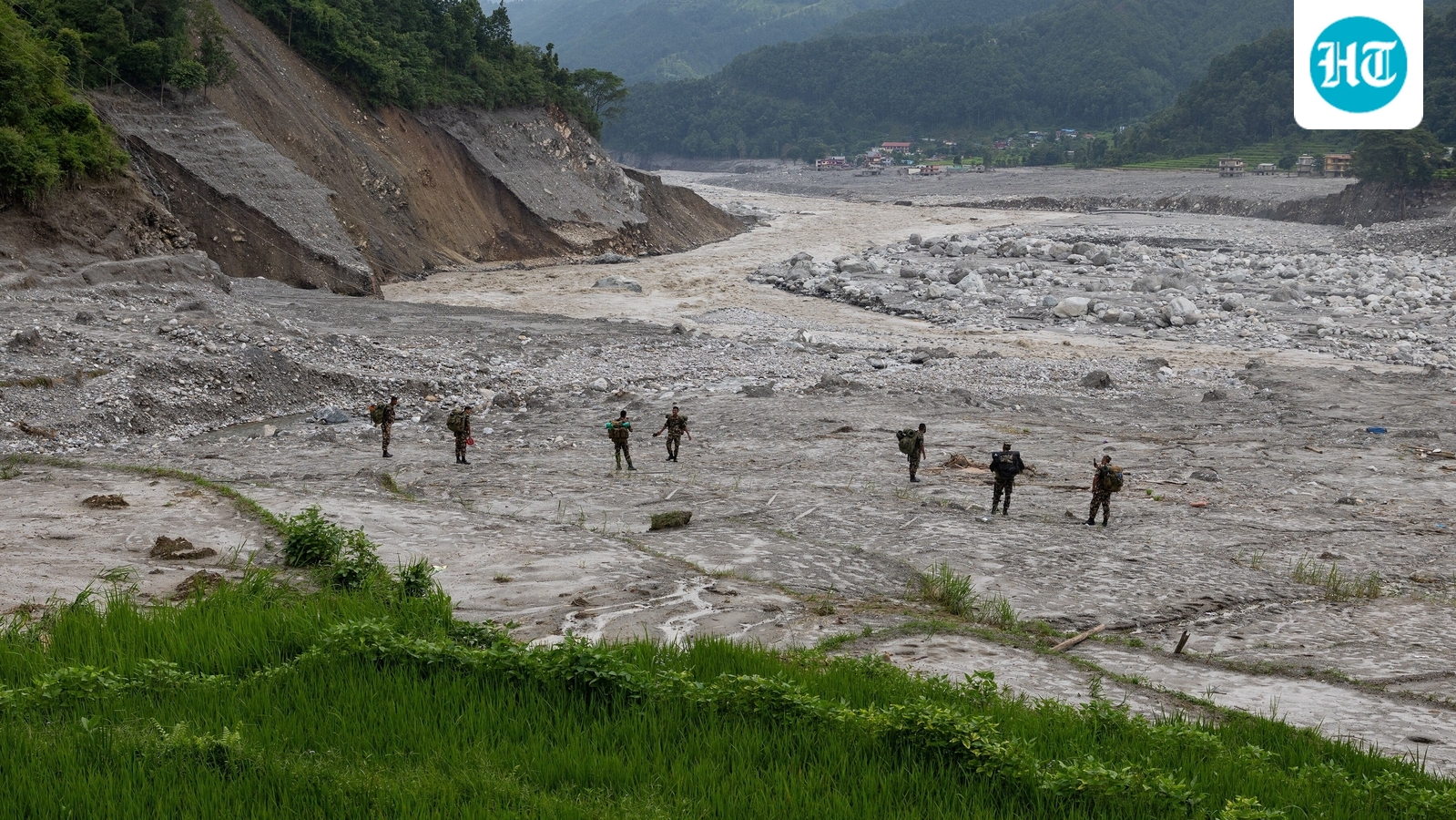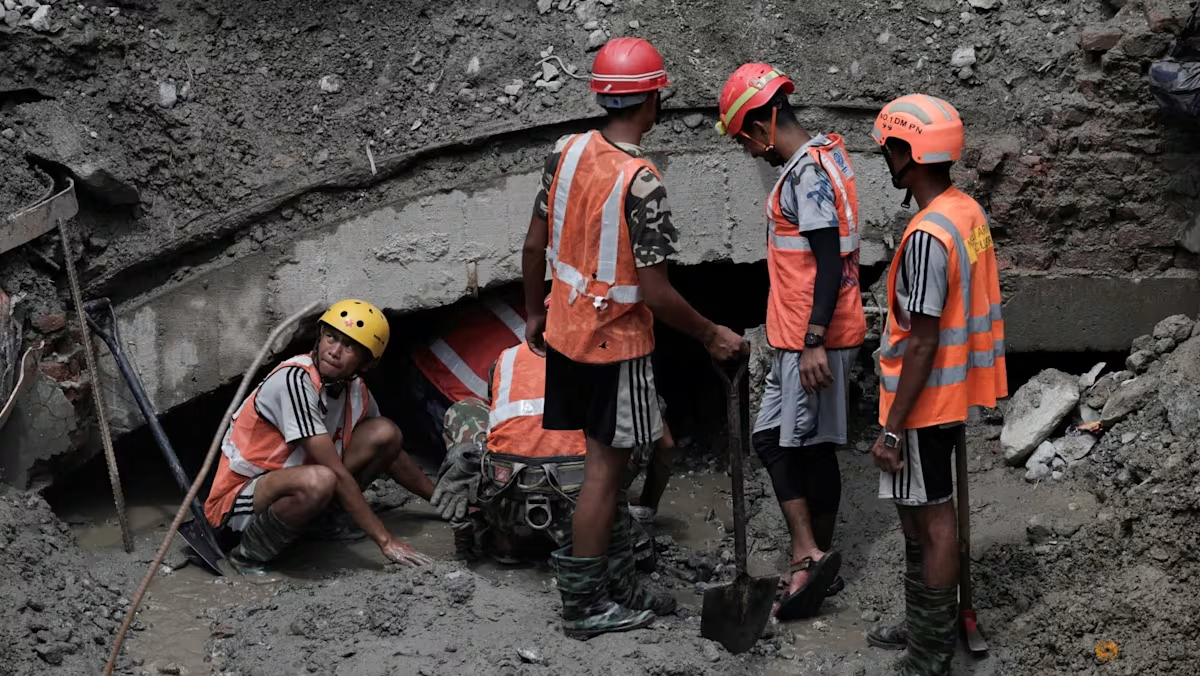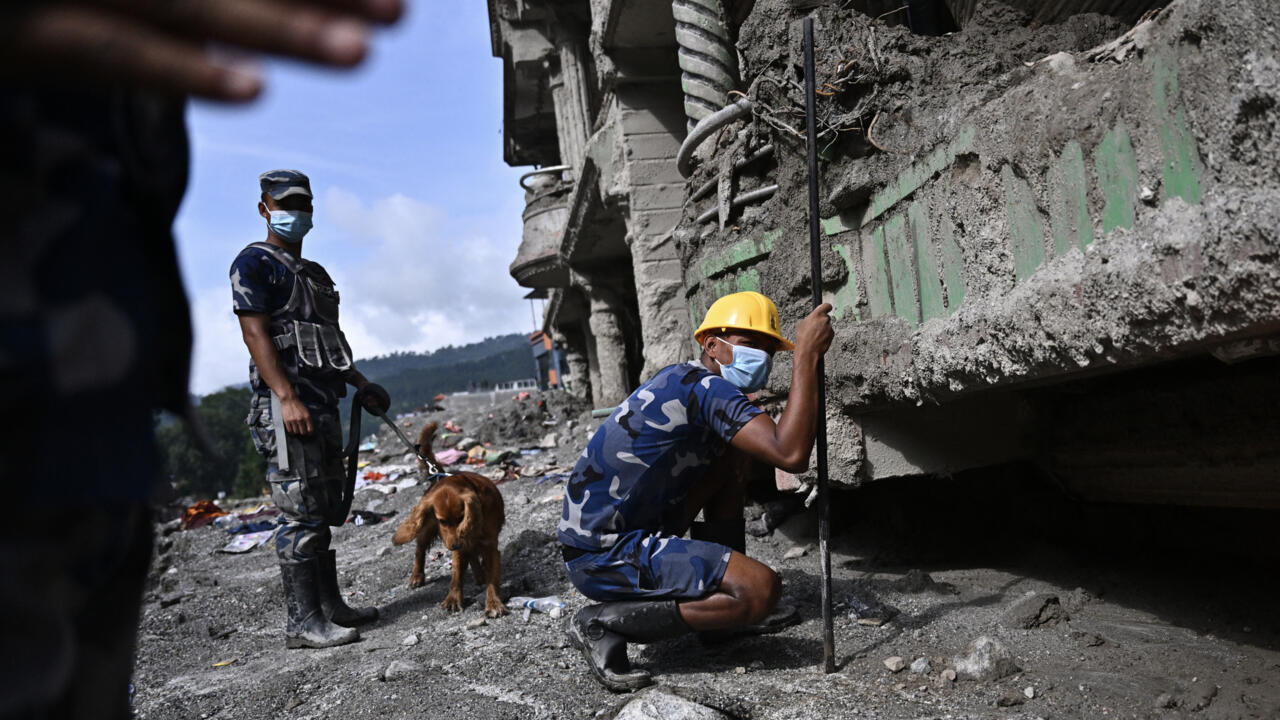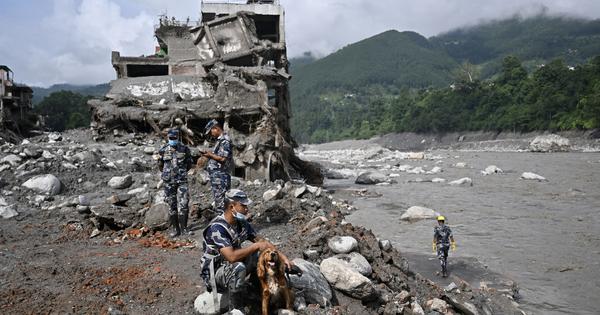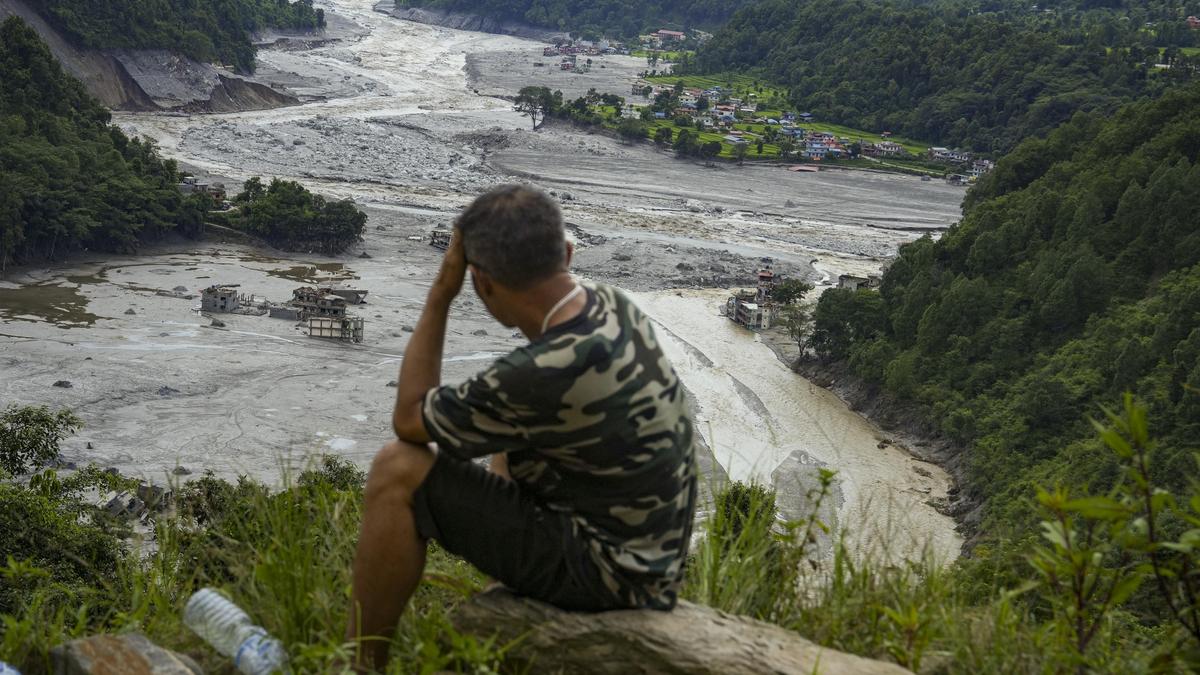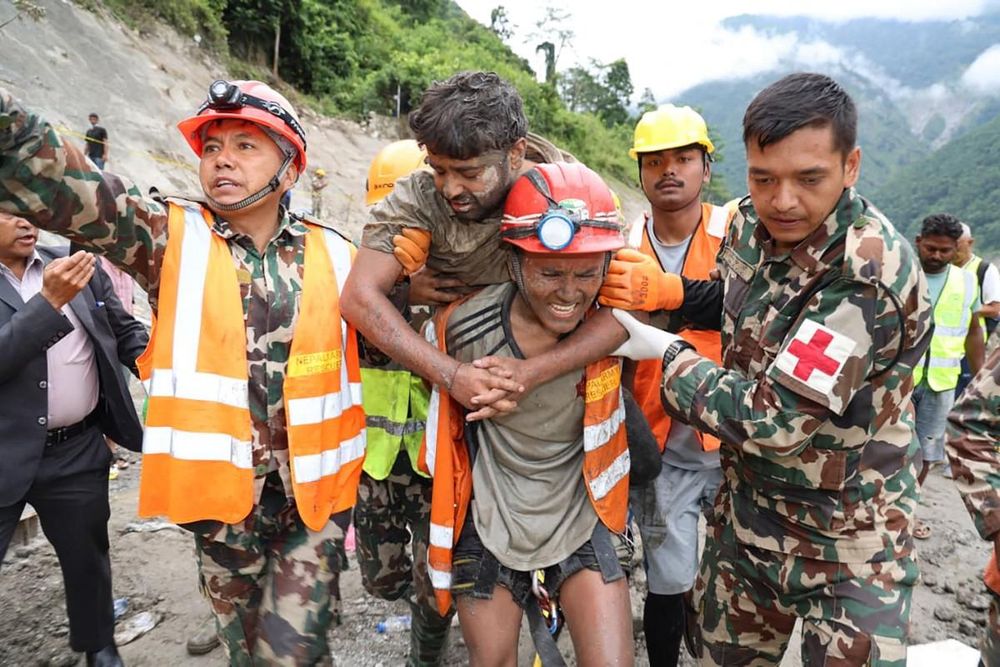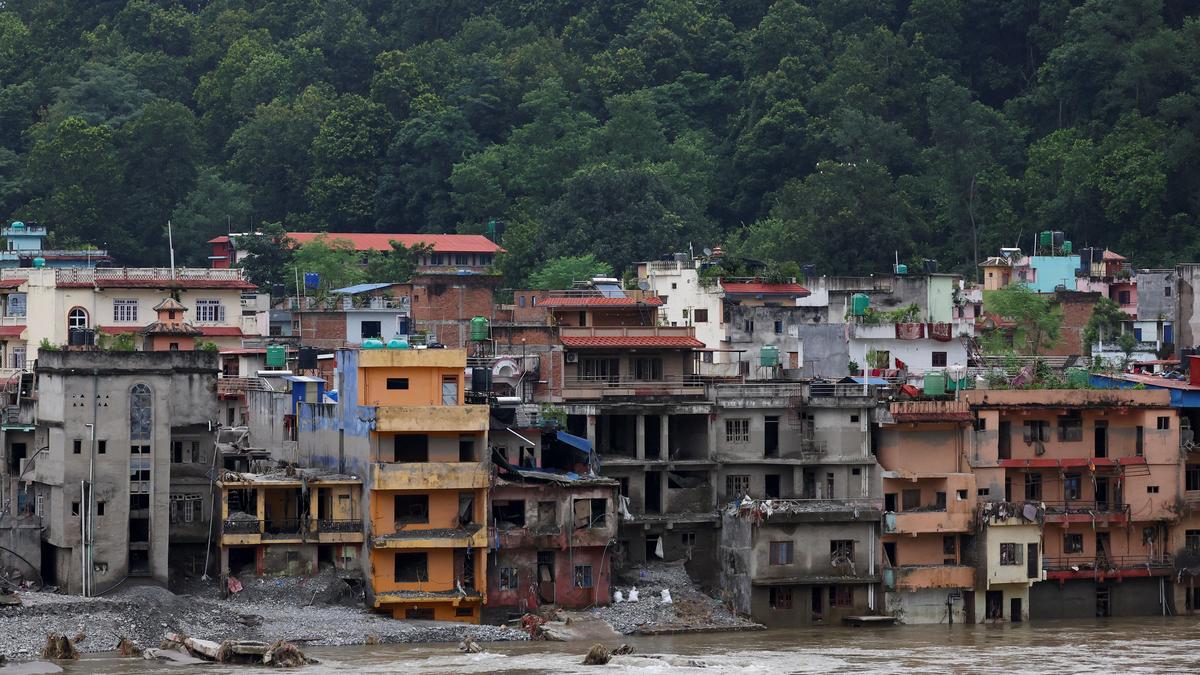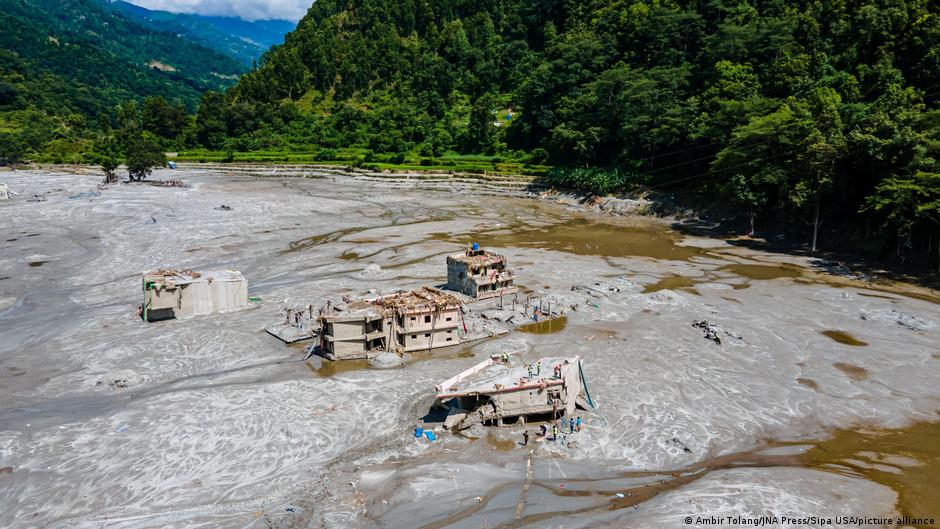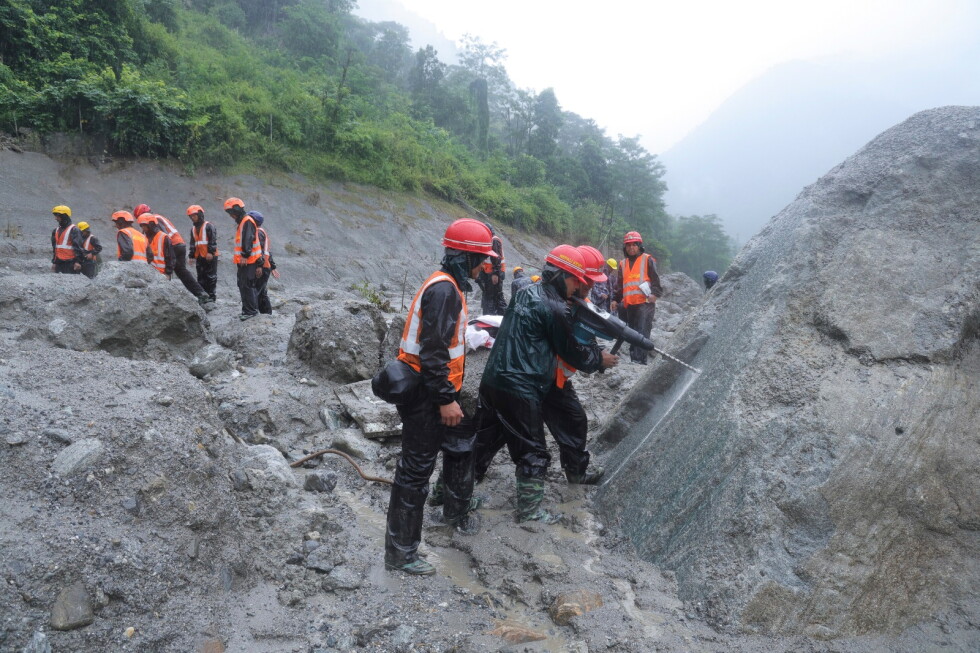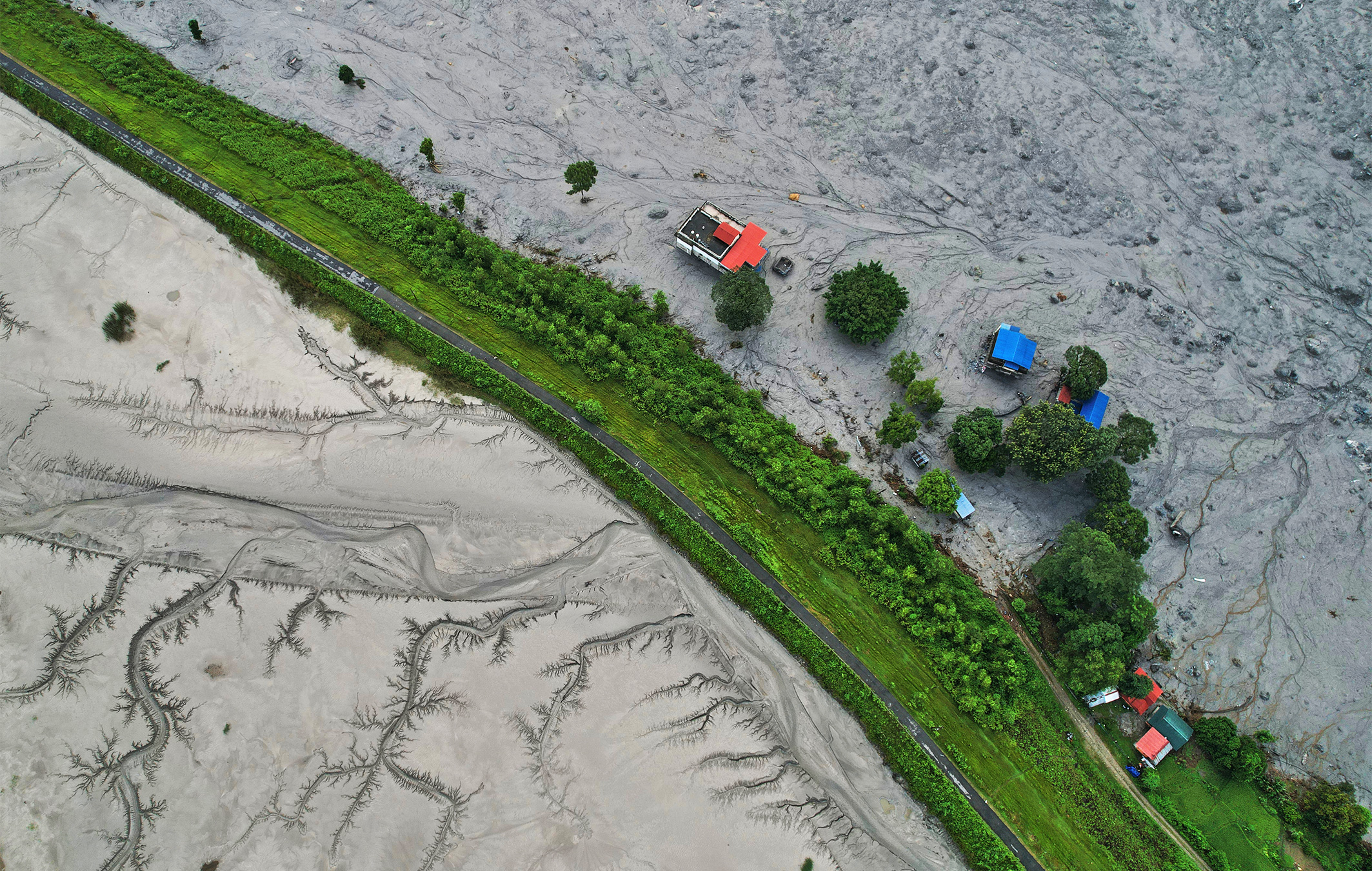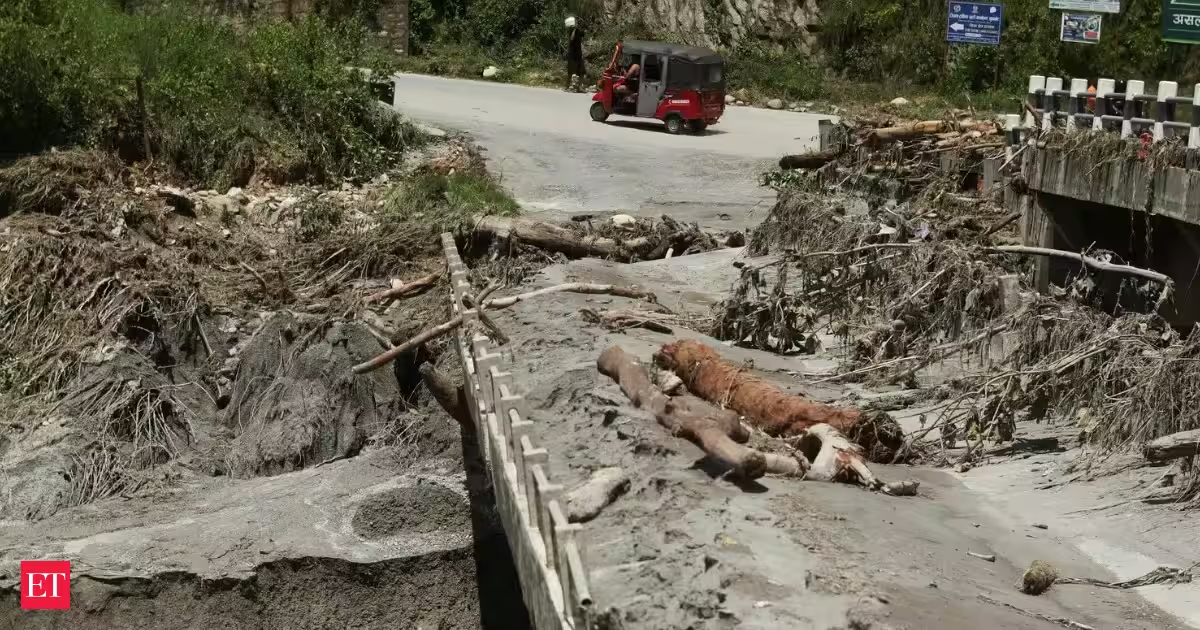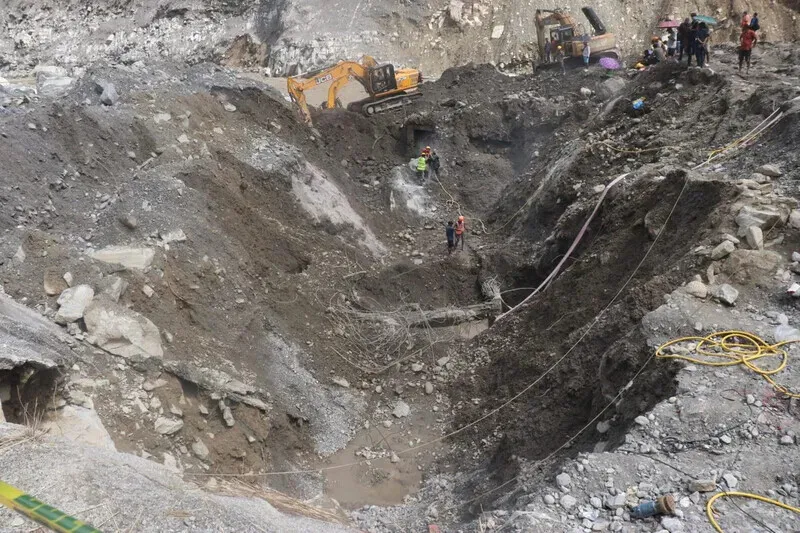
People work during a search and rescue operation near the Hydropower Project sites, following deadly flash floods and mudslides that hit parts of Nepal, in this handout provided by the Nepal army. (Reuters/Yonhap)
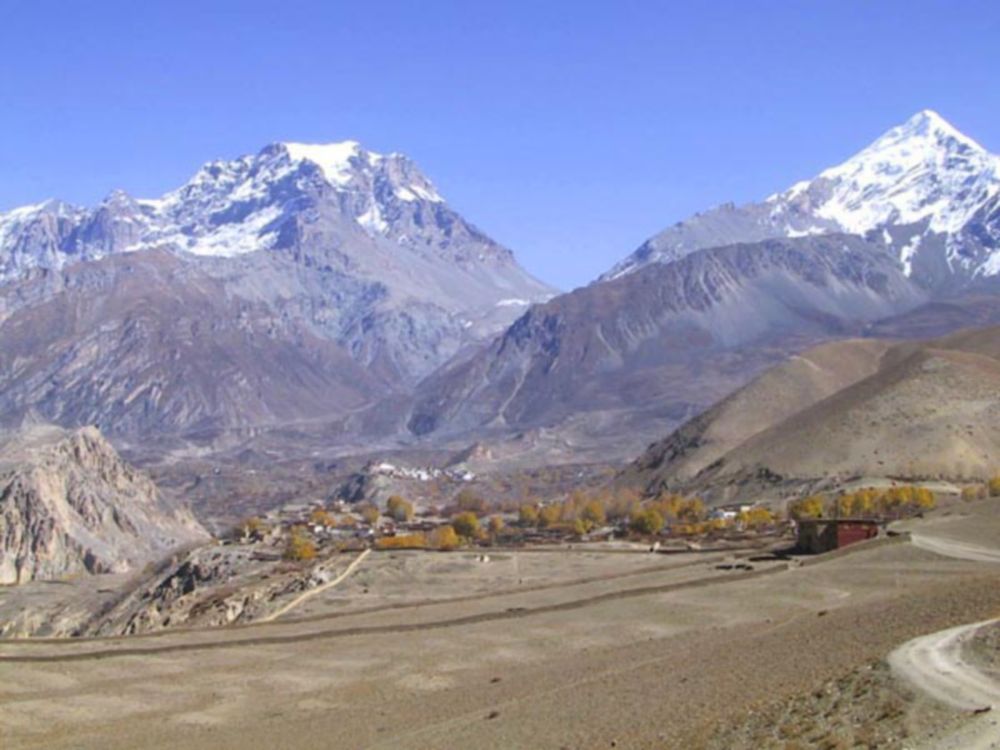
Following catastrophic flooding and landslides in Nepal, experts say the destruction may have been exacerbated by the concentration of hydropower development in the Himalayas, including Korea South-East Power’s Upper Trishuli-1 project, which was heavily damaged in the flooding. That necessitates a careful examination of the potential issues that can arise at the junction of the intensifying climate crisis and the proliferation of hydropower plants seeking to harness the region’s abundant water resources.More than 1,100 hydropower projects are being planned, built or operated across the “Asian Water Tower,” the source of water for 11 major rivers originating in the Hindu Kush Himalaya and the Tibetan Plateau.Nepal is particularly focused on hydropower development. It currently generates 3,167 megawatts of electricity at 166 plants, with plans to eventually generate 10,265 megawatts at 538 plants.But amid recurring disasters such as earthquakes, floods and landslides due to glacier loss, concerns are mounting that dense clusters of small hydropower plants could increase landslide risks, degrade the catchment area and reduce water availability.The International Finance Corporation (IFC), a World Bank affiliate that led private investment in Upper Trishuli-1, published an assessment back in 2020 about the cumulative impact on the Trishuli River Basin not of individual power plants, but of hydropower development as a whole.The report warned that under a business-as-usual approach, the river basin’s “ecological integrity is predicted to decline to seriously/critically modified due to the combined impact of hydropower projects and resource extraction.”Critics say, however, that appropriate measures were never taken. Ideal conditions for high-altitude hydropowerThe floods and landslides that struck the Himalayas on the Nepal-China border on Aug. 26 have killed more than 1,000 people to date and underscored numerous problems that had long been overlooked.One of those issues is the high concentration of hydropower plants in the region.Given how numerous such facilities are, hydropower damage is almost always mentioned after the floods and landslides that commonly occur in the Himalayas during the monsoon season, running from June to September.Considering that the two basic requirements for hydropower generation are an abundant water supply and substantial differences in elevation, the jagged, ice-capped Himalayas are considered an ideal environment.The problem is that there are now too many hydropower development projects.The collapse of glacier ice and rock in Chamoli District in northern India’s Uttarakhand in 2021 triggered floods and landslides, severely damaging four hydropower plants, including one on the Rishiganga River.A glacial lake outburst flood (GLOF) in the northeastern Indian state of Sikkim in October 2023 claimed more than 170 lives and completely destroyed the 1,200-megawatt Teesta-III hydropower plant, the largest in the region.A magnitude 7.8 earthquake in Nepal’s Gorkha District in 2015 had a death toll of about 9,000 and knocked out 30% of the country’s hydropower generation.The Hindu Kush Himalaya, the Tibetan Plateau and surrounding areas form the headwaters of 11 major rivers. The region provides water resources to as many as 3 billion people and supports global biodiversity, earning the moniker of the “Asian Water Tower.”Analysts say that more than 1,100 hydropower plants have been planned or are being built or operated in the Asian Water Tower since 2000.Although many of these plants are part of large-scale projects in China and India, countries such as Nepal and Bhutan have also invested in hydropower as a vehicle for national development or a source of export revenue.“Economic viability, along with water volume and hydrostatic head, is an essential prerequisite for hydropower development,” said Hwang Seok-hwan, the head of the department of hydro science and engineering research at the Korea Institute of Civil Engineering and Building Technology.“That’s why mountainous countries facing resource scarcity in other areas have built large numbers of small hydropower plants in confined areas.”Notably, Nepal has built numerous small hydropower plants (Upper Trishuli-1 being one of them) that divert part of a river’s flow through tunnels to exploit a difference in elevation.But even minor projects can cause major problems when crammed into a small space.“A small project by itself is unlikely to have a significant impact on the surrounding environment. But when multiple projects are concentrated in one area, they can collectively push the environment past a critical threshold,” Hwang said.Yadu Pokhrel, a professor of civil and environmental engineering at Michigan State University, wrote in a recent paper analyzing the threats facing the Asian Water Tower that “dense networks of small and diversion-type hydropower projects can cumulatively dewater or inundate river reaches, fragment habitats, alter flow regimes, and affect conservation lands.”