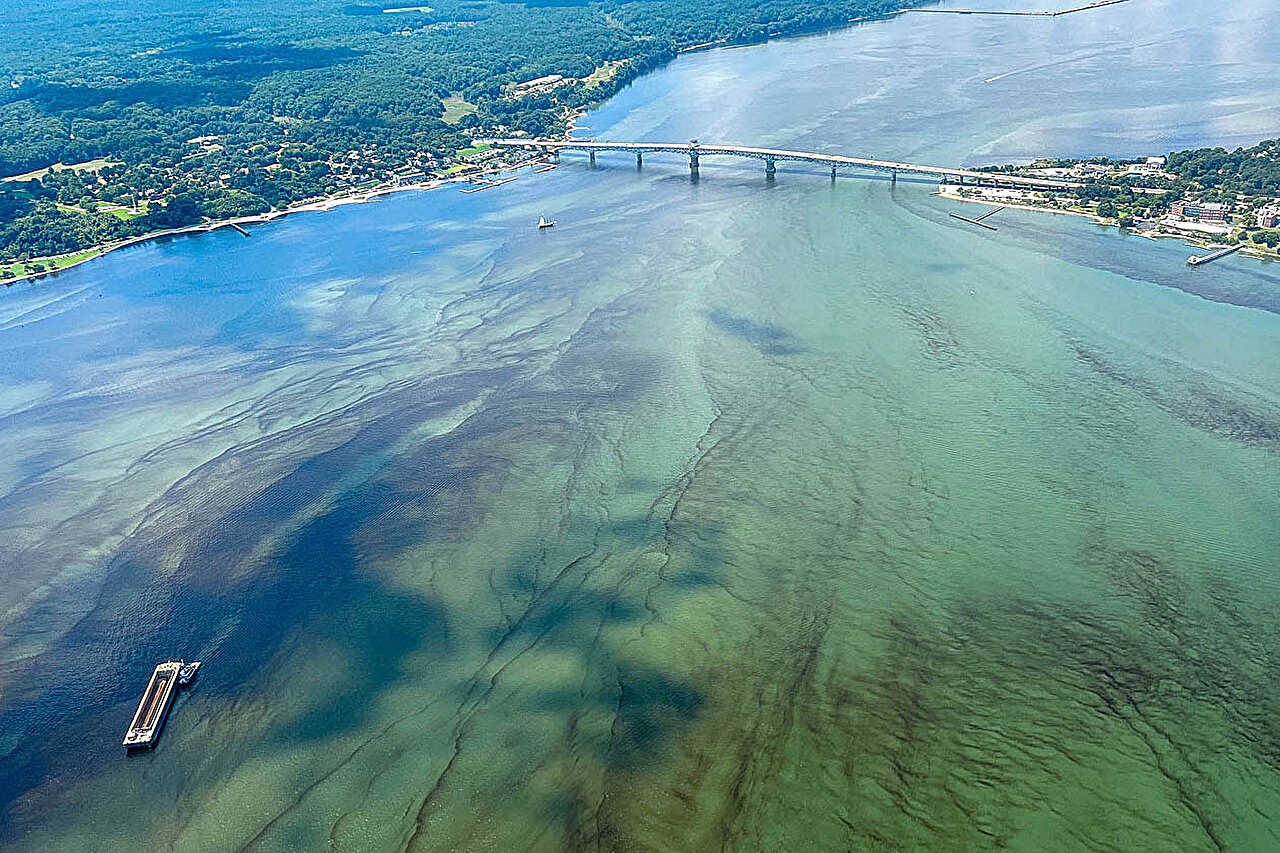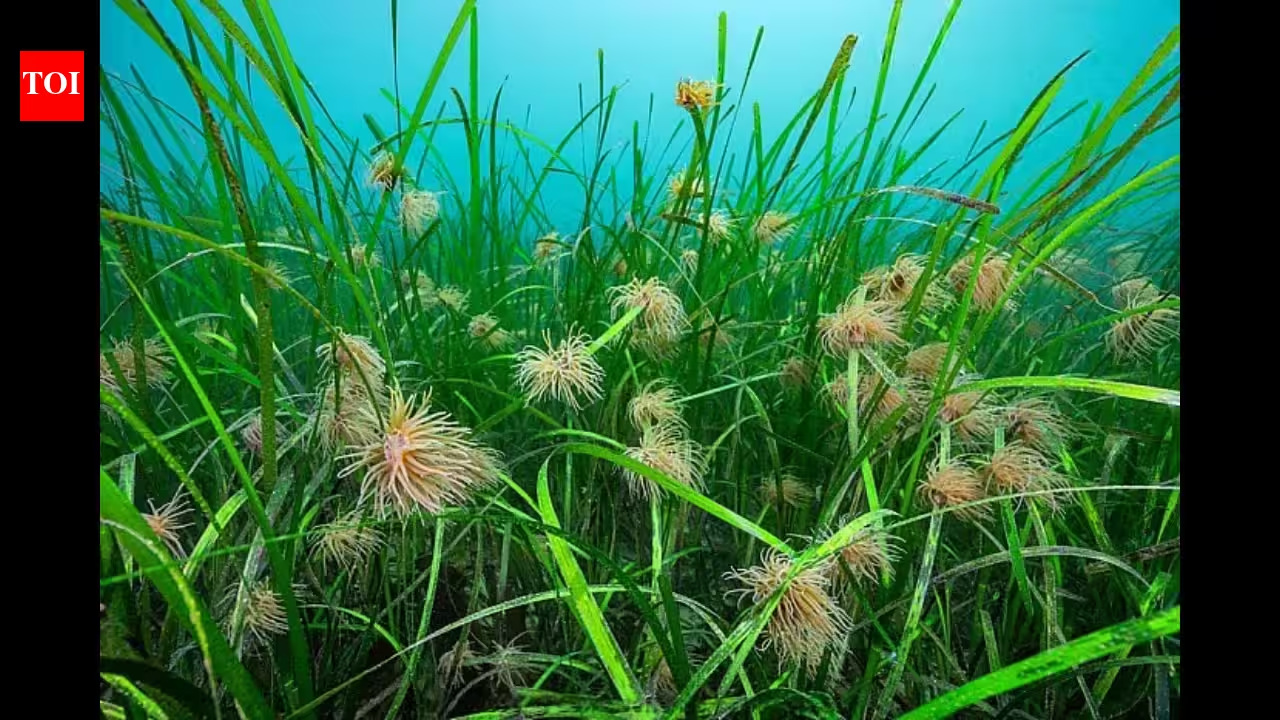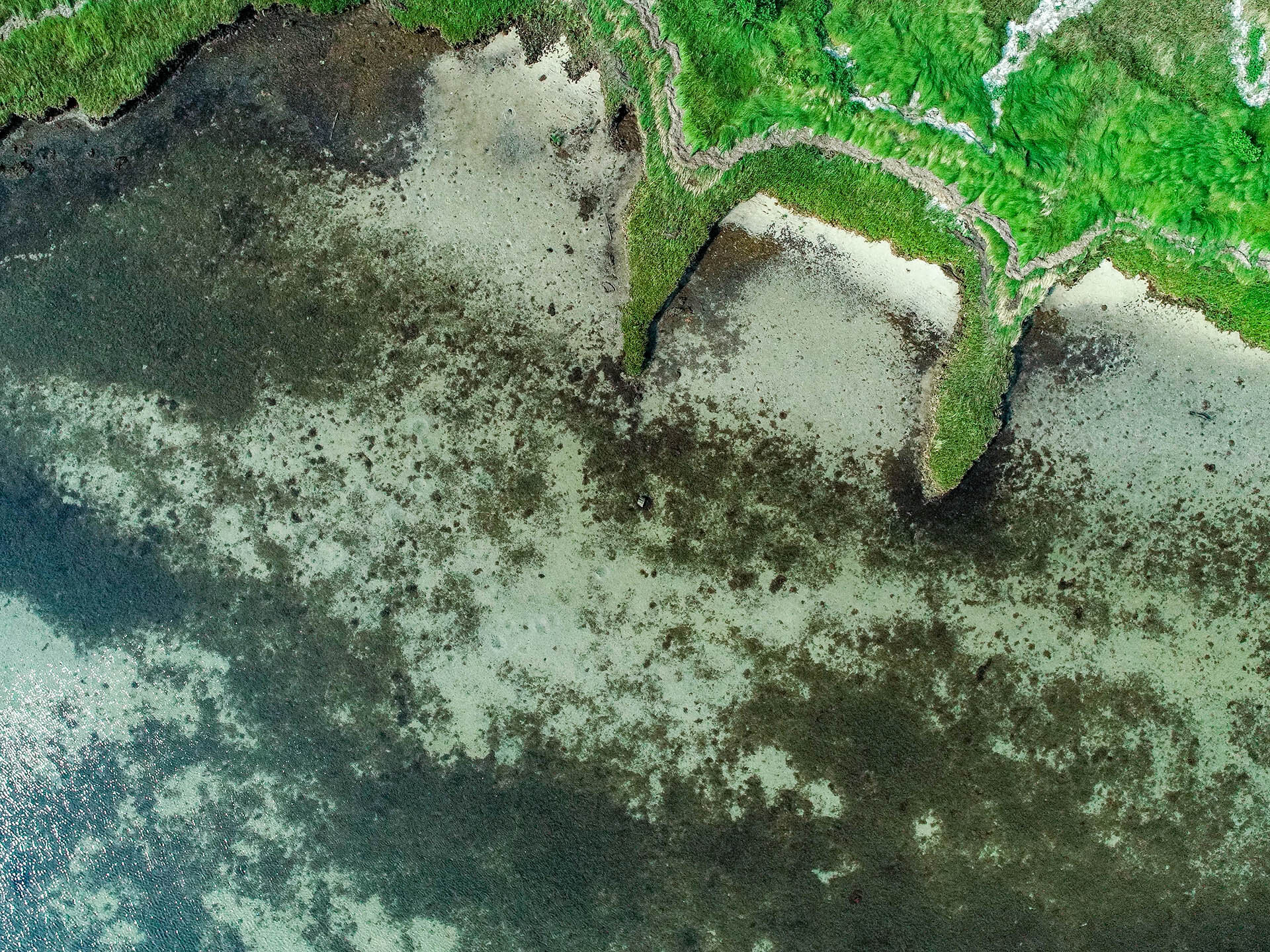
Submerged aquatic vegetation near the coast in Mobjack Bay, Virginia. Credit: Mickie Edwards
Submerged aquatic vegetation (SAV), one of the Chesapeake Bay's most important indicators of ecosystem health, increased by 7% in 2025, according to researchers at William & Mary's VIMS & Batten School.
The annual Baywide aerial survey reported a total of 89,385 acres (140 square miles) of underwater grasses in the Chesapeake Bay and its tidal tributaries, an increase of 6,134 acres (9.6 square miles) from 2024. The results represent the highest Baywide acreage recorded since 2018. The total is just shy of the Chesapeake Bay Watershed Agreement's 2030 interim goal of 90,000 acres (141 square miles) and represents approximately 45% of the 196,600-acre (307-square-mile) long-term goal.
The results highlight the substantial progress made since underwater grass coverage reached historic lows in the 1980s and the challenges that remain to fully restore one of the Bay's most valuable habitats.
"This year's survey demonstrates both that we're moving in the right direction and that there is a lot of complexity in Chesapeake Bay underwater grass communities," said Christopher J. Patrick, associate professor and director of the SAV Program at VIMS & the Batten School of Coastal & Marine Sciences.