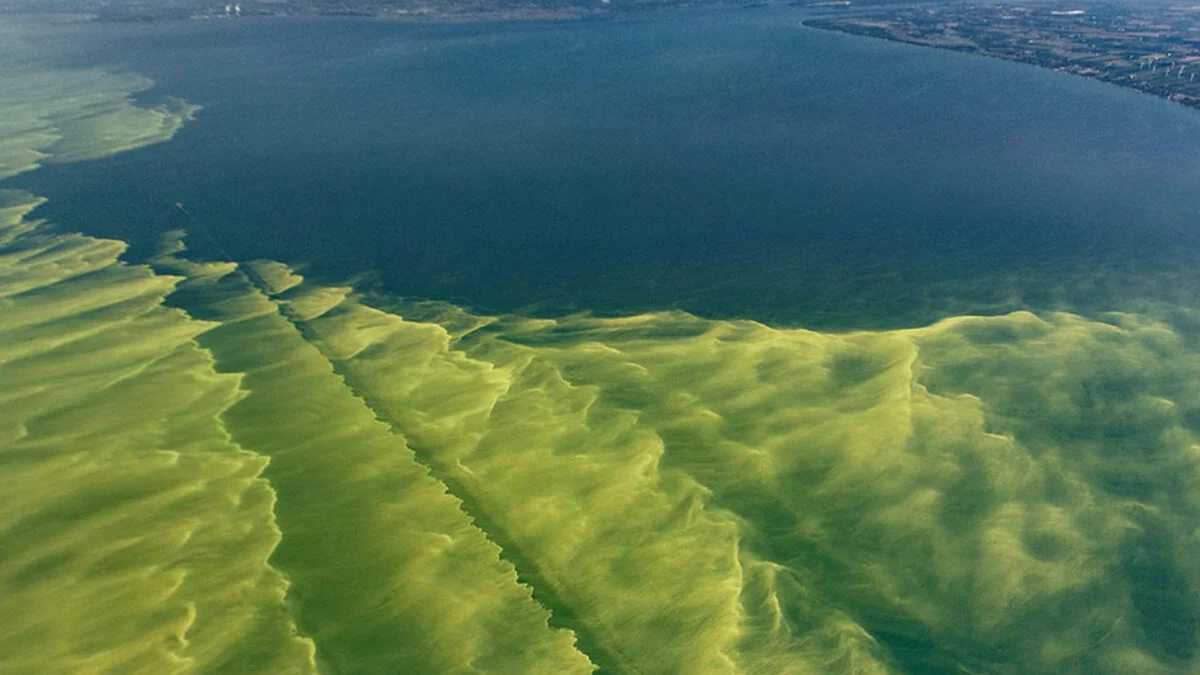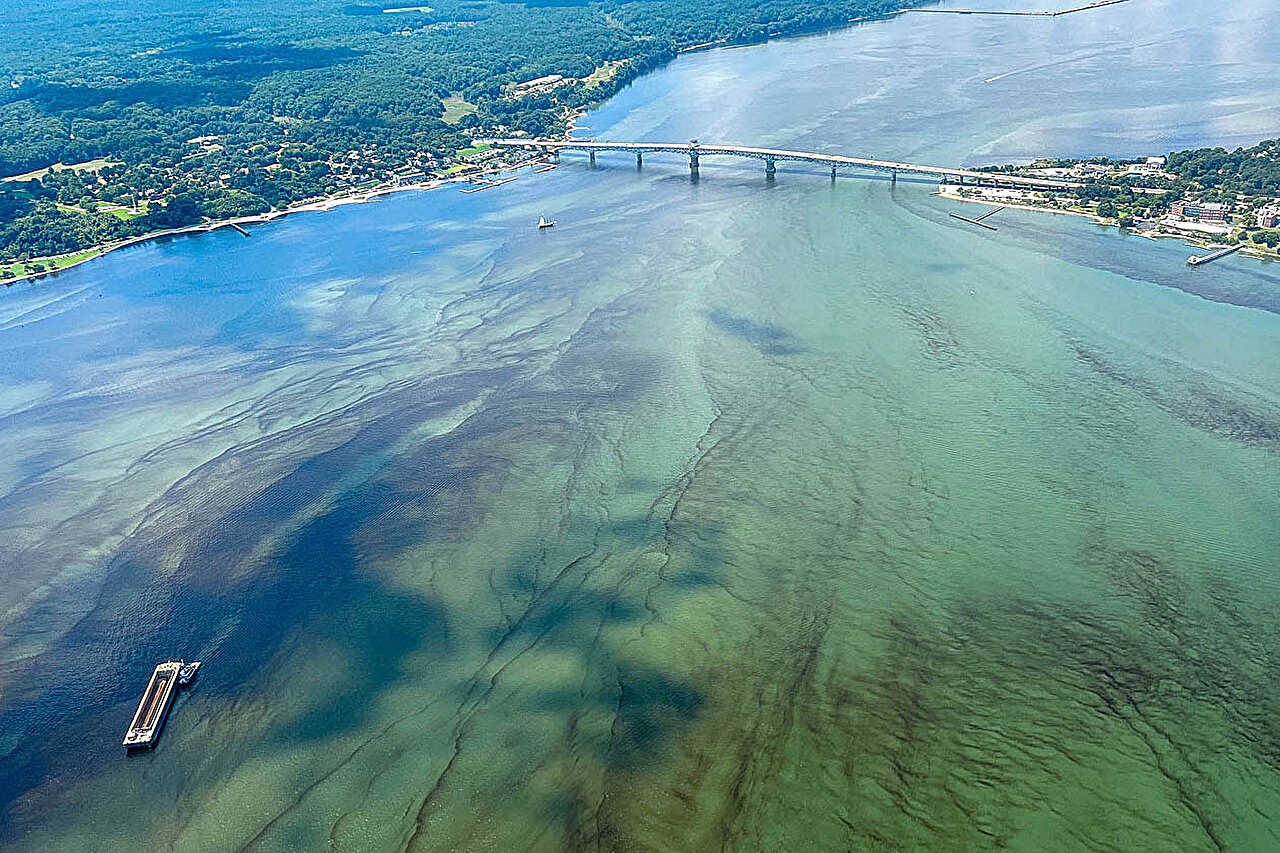
A harmful algal bloom at the mouth of the Chesapeake Bay near Yorktown, Virginia. Fueled by nitrogen pollution, algal blooms eventually die and consume oxygen as they decompose, contributing to low-oxygen “dead zones” in the bay. Credit: Savannah Mapes
Scientists at William & Mary's Batten School & VIMS, FlowWest and the University of Maryland Center for Environmental Science recently announced that the Chesapeake Bay's annual "dead zone" is expected to be relatively mild this summer.
According to the newly released Chesapeake Bay 2026 Hypoxia Forecast, dead zone severity is predicted to rank among the lowest 10% of years since extensive monitoring began in 1985 and to be about 31% below the long-term average.
This forecast complements the annual Chesapeake Bay Dead Zone Report Card produced by the Batten School & VIMS and FlowWest each fall and marks a return to the annual spring forecast that began in 2007 using a model developed by the University of Michigan. Batten School & VIMS research scientist Dante Horemans worked to update the model and plans to integrate additional improvements moving forward.
"This year's forecast suggests that the Chesapeake Bay may experience one of its milder dead zones in recent decades," said Aaron Bever, senior environmental scientist with FlowWest. "Lower nitrogen loads entering the bay this spring are expected to translate into better oxygen conditions for fish, crabs, oysters and other bay life this summer."