July 31 (UPI) -- The Gulf of Mexico "dead zone" -- an area deprived of oxygen -- is smaller than previous measurements and forecasts, scientists supported by the National Oceanic and Atmospheric Administration announced Thursday.
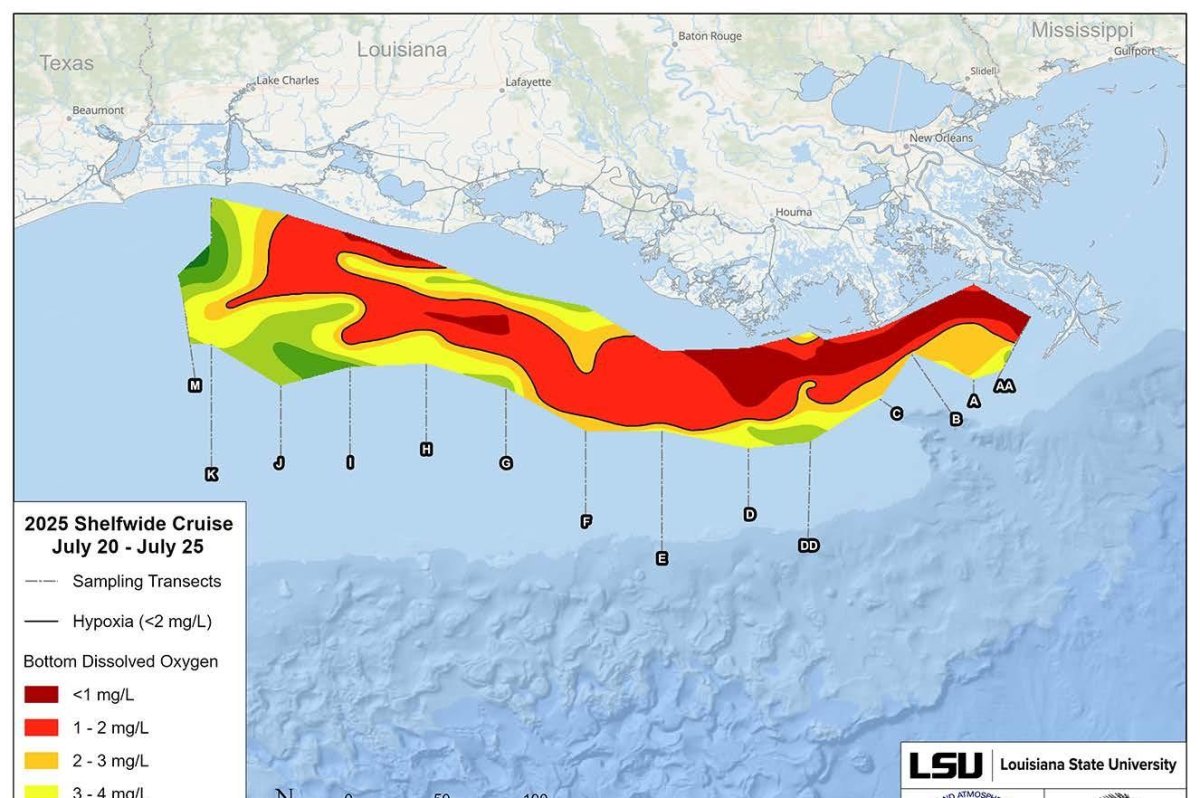
The dead zone in the gulf is 4,402 square miles, 21% smaller than estimates from June. It's the 15th smallest measurement on record.
That means that there are about 2.8 million acres of habitat in the gulf that is unavailable to fish and bottom-dwelling species. That's about 30% smaller than last year, according to a press release from NOAA.
Each summer, the dead zone develops off the coast of the Texas-Louisiana shelf when nutrient-laden fresh water spills into the gulf. The nutrients typically come from crops that need the nutrients to grow. Nutrients brought in from the river contribute to the formation of a low-oxygen area along parts of the gulf's seafloor. Mobile fish and marine mammals can swim away from the low-oxygen area. But weaker swimming organisms can be trapped and die.
Related