A major AI-assisted math result has set off a fight over credit, citations, and private chats.
gorodenkoff/Getty Images
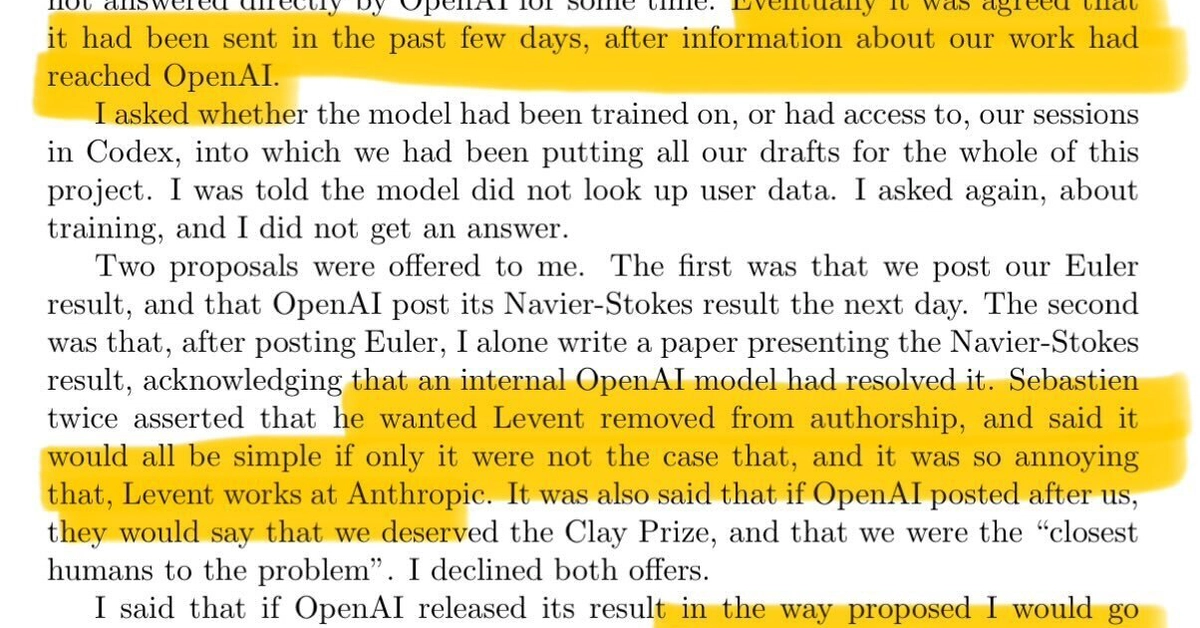
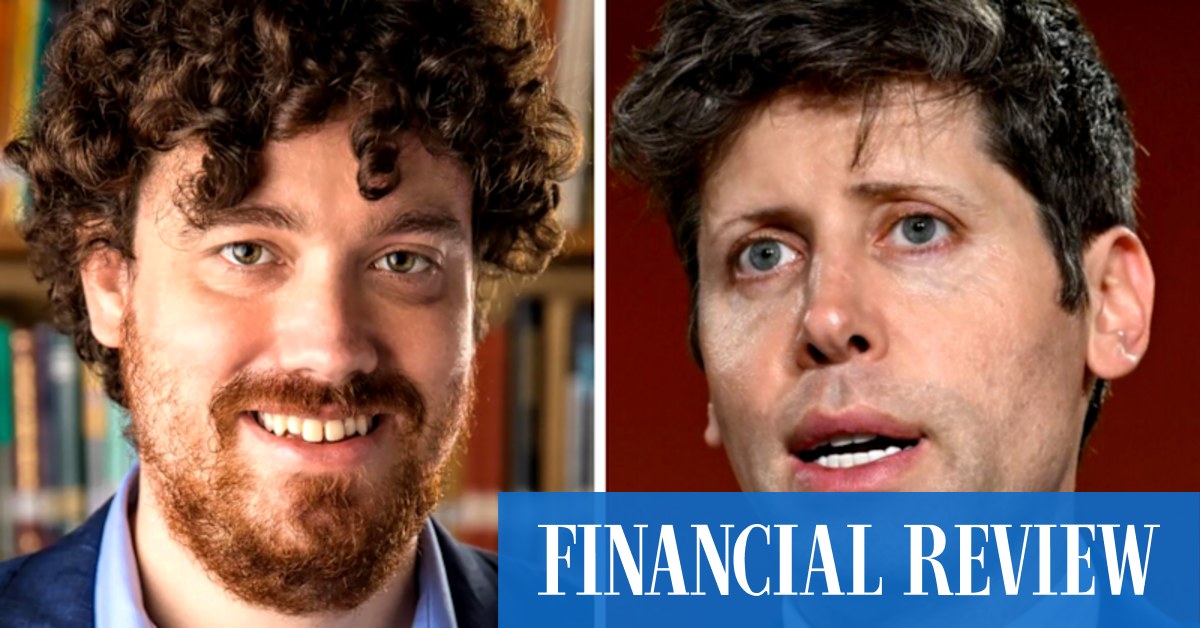
The big drama in AI land today is decidedly nerdy stuff.But the hubbub highlights a concern everyone should care about: Can what you type into AI help train a machine that one day beats you at your own game?On Monday, Tristan Buckmaster, an NYU mathematician, and Levent Alpöge, a mathematician who works at Anthropic, released papers claiming new results related to a famously thorny scientific question: Can the math used to predict the movement of water and air suddenly hit a breaking point?Solving that problem could lead to a $1 million prize from the Clay Mathematics Institute. While the pair didn't claim to have achieved that particular breakthrough, Terence Tao, a well-known mathematician, called the work "remarkable" in a Mastodon post.But it was the four-page statement that Buckmaster published alongside the findings, which included some explosive allegations involving OpenAI, that captured people's attention. He alleged that OpenAI learned of the pair's findings — and told him an internal AI model had made progress on solving the $1 million question.On Tuesday, OpenAI formally claimed it had achieved a solution to the Navier-Stokes Millennium Prize Problem — "one of the deepest problems at the frontier of mathematics."Buckmaster — who said that he and Alpöge used AI models from OpenAI and Anthropic to assist in their research — said he does not know whether OpenAI used the pair's data or chats. OpenAI said "no specific user data was accessed in order to solve this problem," but said it couldn't rule out that "de-identified data derived from their usage of our products helped improve our models."The episode has set off a dispute over scientific credit, AI training data, and the paper trail behind an AI-assisted discovery. Scientific American said the drama has set up the "biggest day in math in at least two decades."What is Buckmaster alleging about OpenAI?Buckmaster and Alpöge concluded that they found examples where today's math doesn't accurately describe smooth air and water flows. They used several AI models, including Claude and Codex, throughout their work.