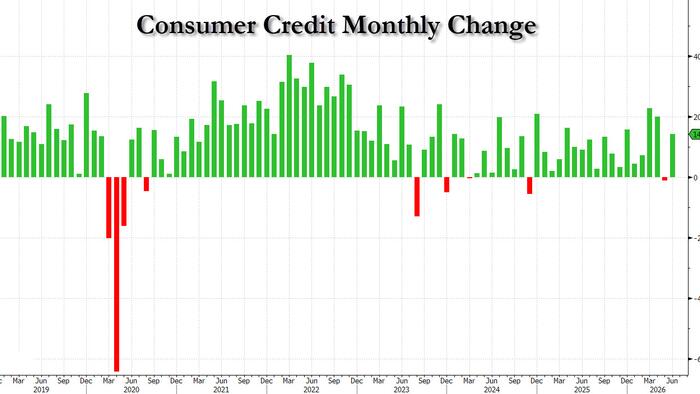
US consumer credit expanded by $18.06 billion in July, blowing past analyst expectations that ranged from $11.7 billion to $16 billion. The Federal Reserve’s G.19 report, which tracks non-mortgage household borrowing, showed Americans reaching for their credit cards and auto loans at a pace that caught forecasters off guard.
The July figure represents a meaningful acceleration from June’s $14.17 billion increase and a sharp reversal from May, when consumer credit growth was essentially flat.
The numbers in context
Total outstanding consumer credit stood at roughly $5.17 trillion as of June, split between approximately $1.35 trillion in revolving credit (think credit cards and lines of credit) and $3.82 trillion in nonrevolving credit (auto loans, student loans, personal loans). The July increase pushes that total even higher.
The G.19 release specifically excludes mortgage debt, so these numbers reflect the borrowing Americans do for everything else in their financial lives.