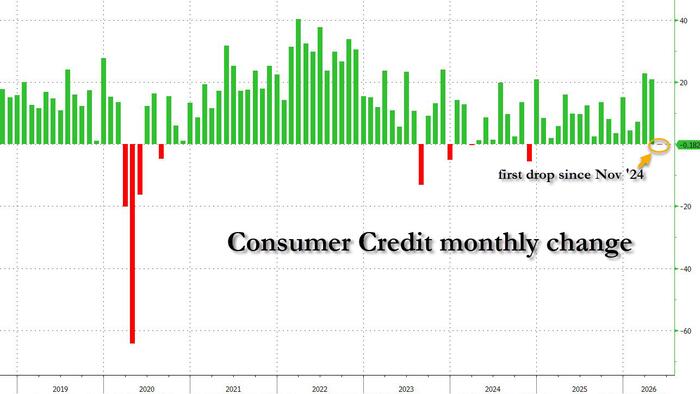
Americans just did something they haven’t done since late 2024: they collectively paid down more debt than they took on. Total US consumer credit, excluding mortgages, fell by $182 million in May, according to the Federal Reserve’s latest G.19 report released on July 8.
To put that in context, economists had expected a gain somewhere in the neighborhood of $17.1 billion to $17.5 billion. Missing expectations by that margin isn’t a rounding error. It’s a signal.
The credit card retreat
Revolving credit, which is mostly credit card balances, contracted at an annualized rate of 4.7%. That translates to a $5.3 billion reduction in revolving balances, marking the largest such drop in roughly two years.
In English: consumers are actively paying down their credit cards rather than swiping for new purchases. That’s a meaningful behavioral shift from the prior month, when total consumer credit surged by an upwardly revised $20.82 billion in April.