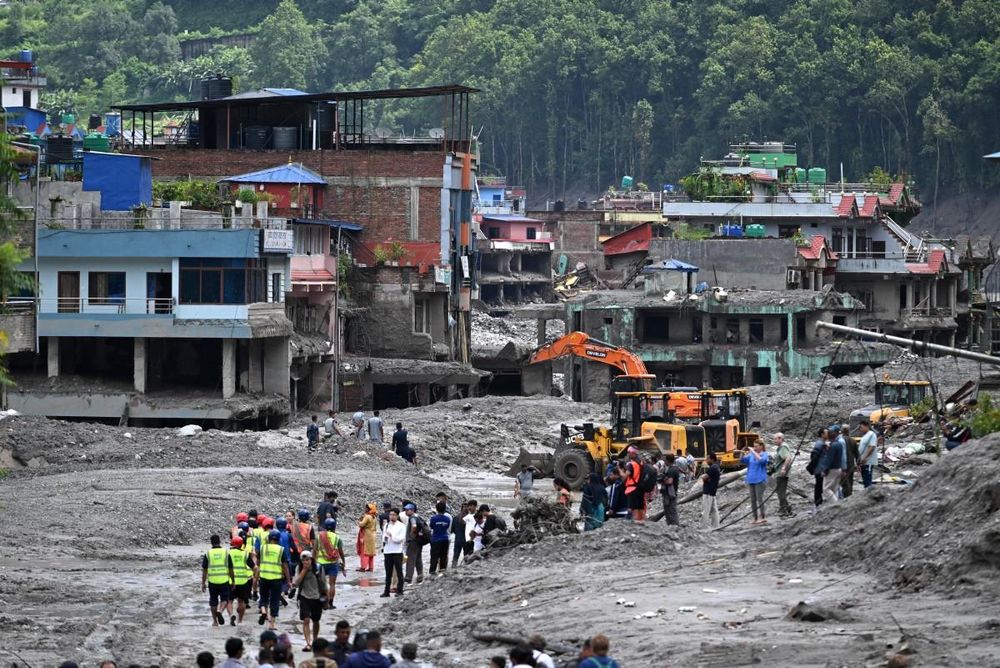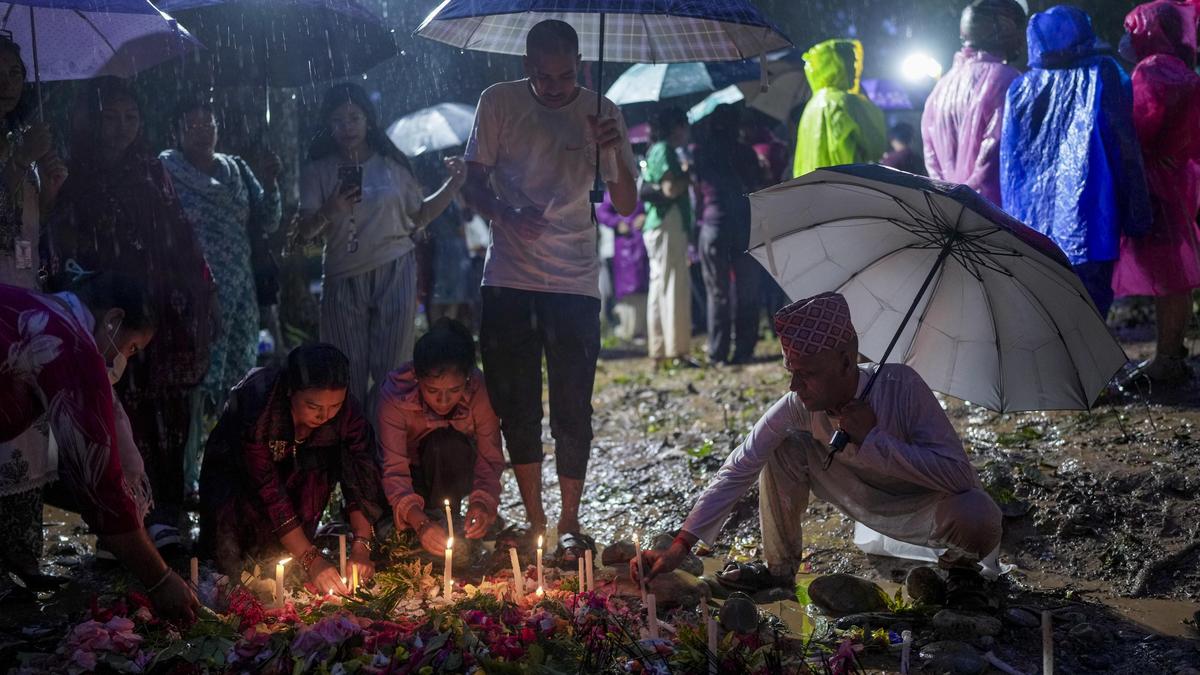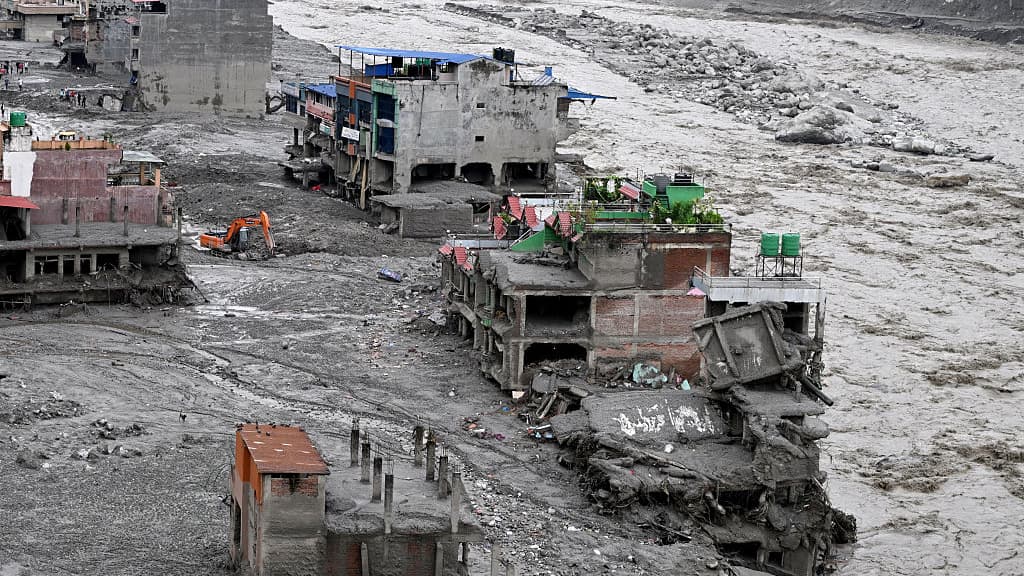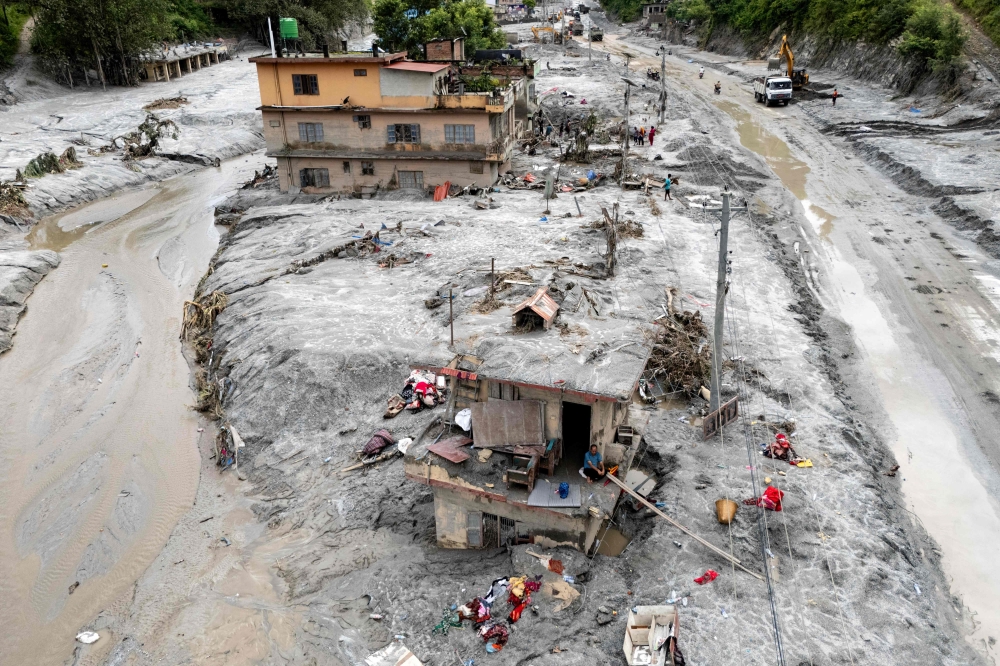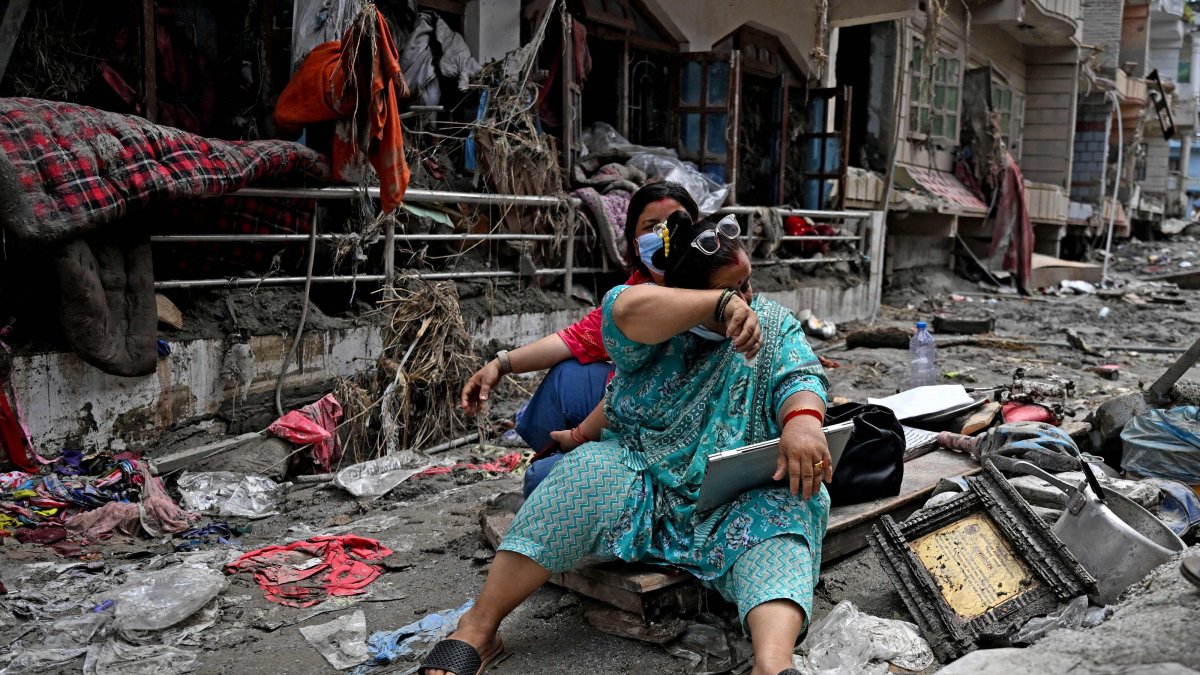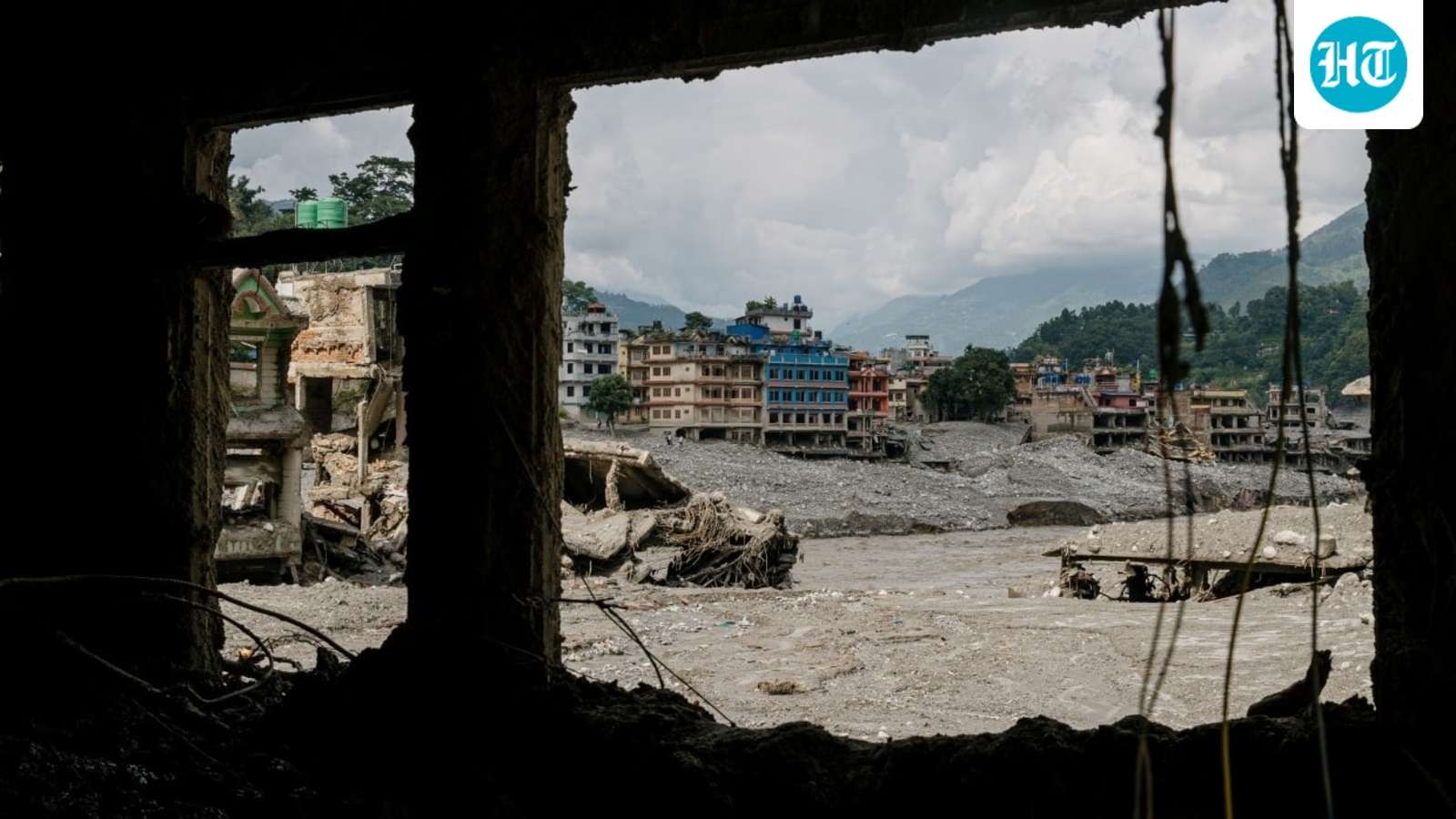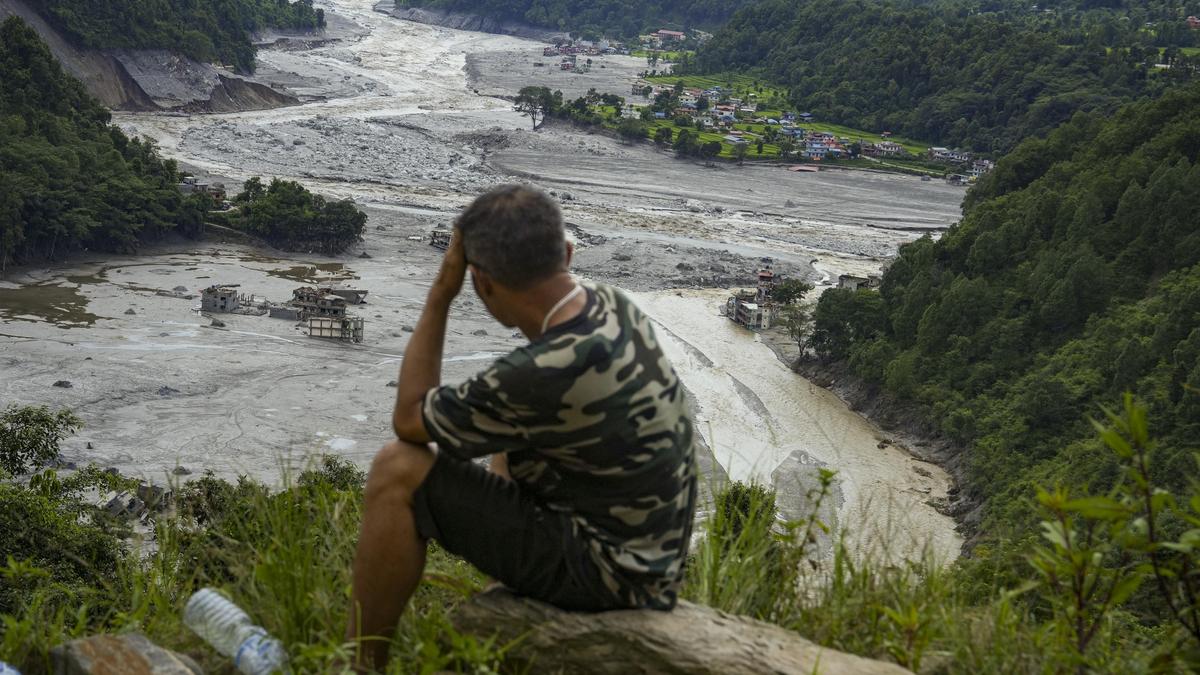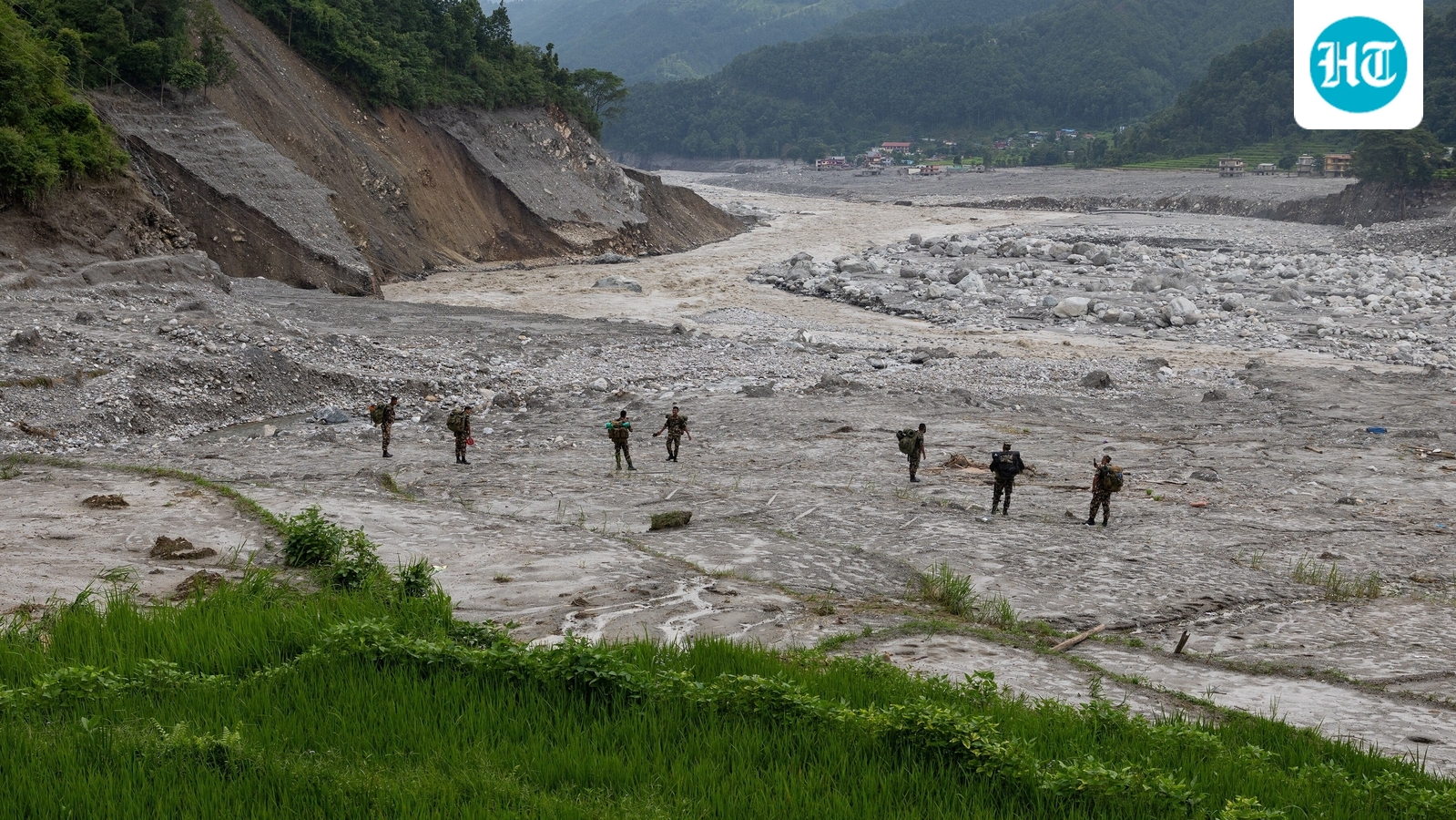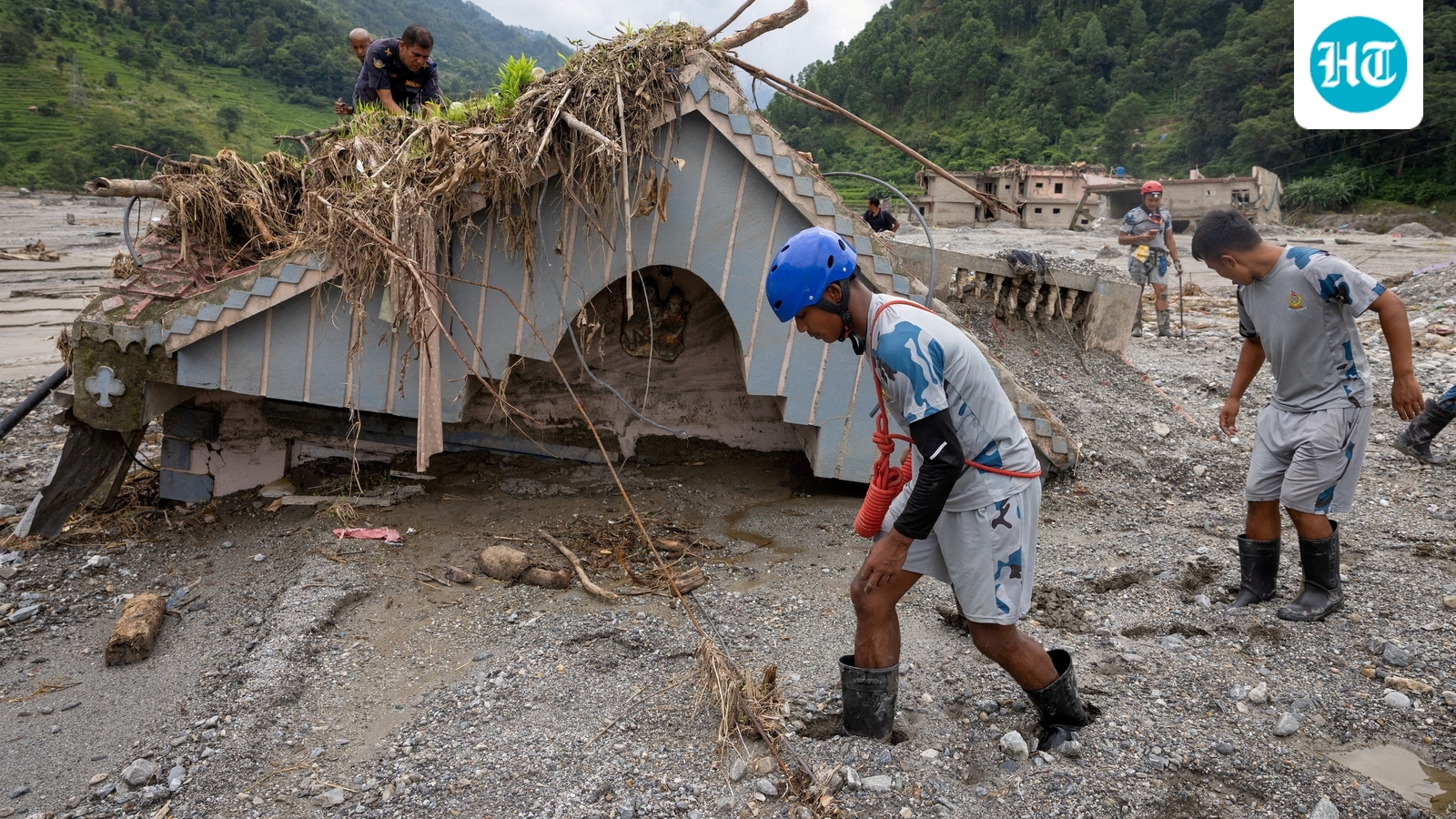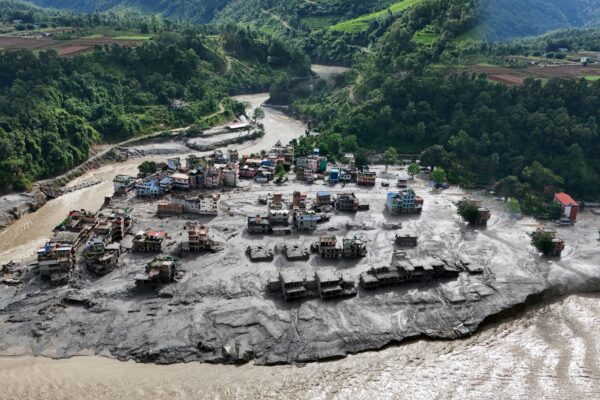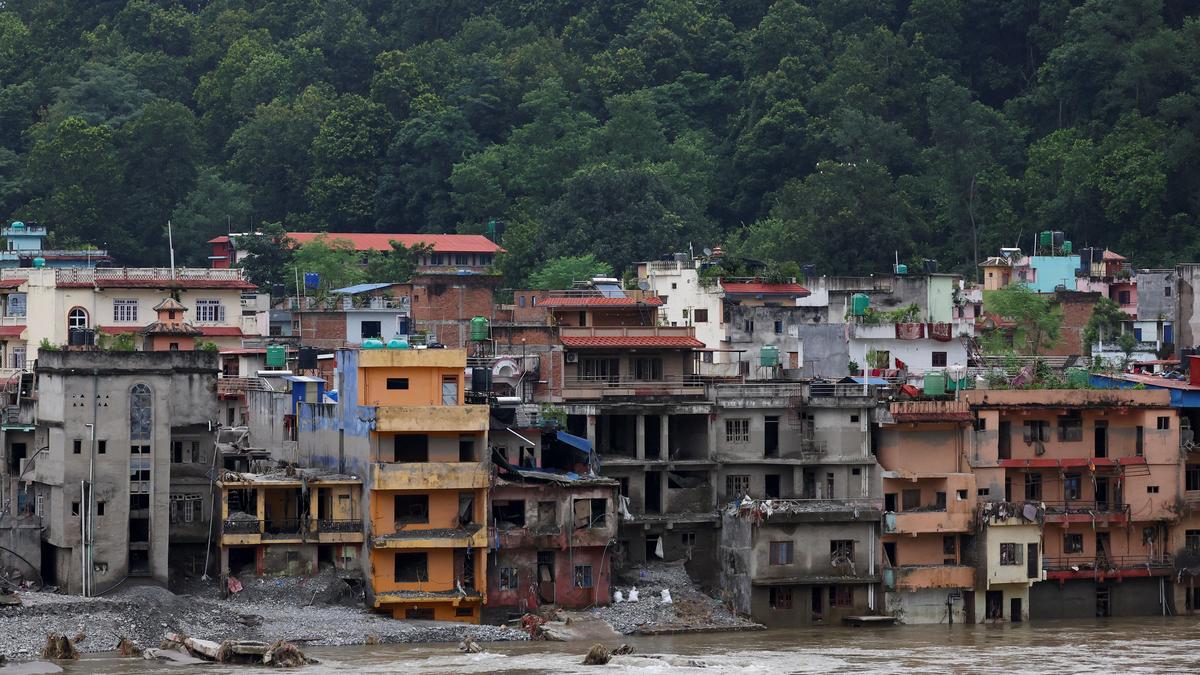
A man holds a candle during a vigil at the premises of the UNESCO World Heritage Site, Basantapur Durbar Square, marking the 13th day since flash floods and a mudslide in the country, in Kathmandu on Monday
| Photo Credit:
Abhishek Maharjan
The recent disaster in the wake of a flash flood in Nepal’s Rasuwa has shaken up the world to the dangers arising from glacial lake outbursts and hanging glaciers. Should a similar incident unfold across any of India’s Himalayan States, the damage would be catastrophic.Disasters in India’s own Chamoli in 2021 and the recent Rasuwa floods have demonstrated the nature of this dual, looming threat from large swathes of fragile ice. With climate change, these glacial implosions can no longer be regarded as localised flood events. Indeed, in Nepal’s case there was no real rainfall trigger. Instead, such extreme events must be seen in terms of the high-altitude cryosphere itself going through rapid flux — with retreating glaciers, degrading permafrost, and volatile moraines. Steep hanging glaciers — suspended ice masses that sit on rock walls — and exposed rockfaces undergo freeze-thaw cycles that trigger abrupt slope failures. Recent research has helped earmark 219 high-risk hanging glaciers in the central Himalayas, proving that spatial modelling and ice-avalanche flow mapping are feasible. The research provides a proven software framework and mapping manual that States and disaster management agencies must leverage to map these risks across States such as Uttarakhand, Himachal Pradesh, and Sikkim. It is time to adapt to the dynamic impact on existing and new infrastructure, livelihoods and settlements. Current assessments only focus on how new infrastructure projects affect the environment.Early warning systems must move beyond basic weather monitoring to tracking pre-collapse physical indicators — such as micro-seismic tremors, quickening of ice-surface velocity, and changes in turbidity. Integrating satellite monitoring with automated downstream sirens can help buy authorities crucial minutes for evacuation. The government must establish a central Himalayan Regulatory Zone that curtails development in vulnerable regions. Mandatory buffer zones within high-risk corridors near glacial origins and unstable hanging slopes are imperative. Data sharing on hydrological flows with neighbouring countries must improve — now it is irregular, a hostage to the ebb and flow in ties with China, and largely confined to the Brahmaputra. India must leverage its renewed engagement with China to create a multilateral framework that includes Nepal and the ‘water tower’ that is Tibet.Energy priorities too require a relook. Constructing hydel projects in tight succession along main river trunks creates compounding vulnerability; the failure of one upstream dam flows downstream to impact sequential projects (as was seen in Chamoli and Teesta). Smaller-scale installations on river tributaries rather than multiple units along main river channels could help de-risk power generating units. Commercial and tourism activity in these fragile zones have amplified climate change risks for upstream and downstream populations. Finally, it would be a bigger tragedy, if preventive steps are not taken.Published on September 8, 2026