Story audio is generated using AI
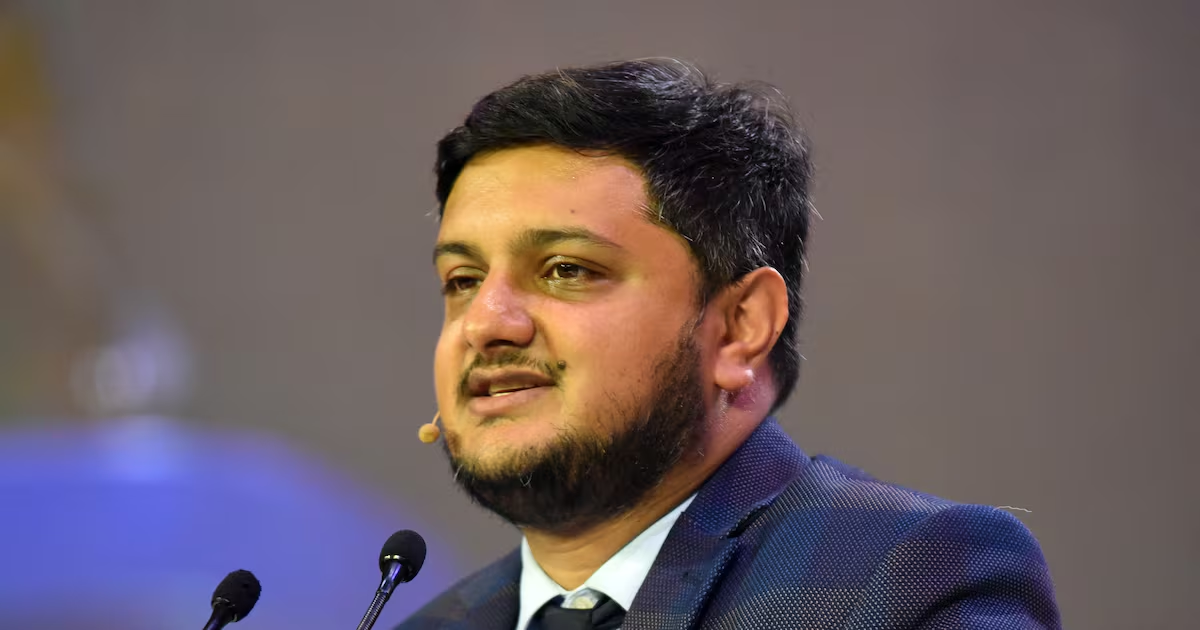
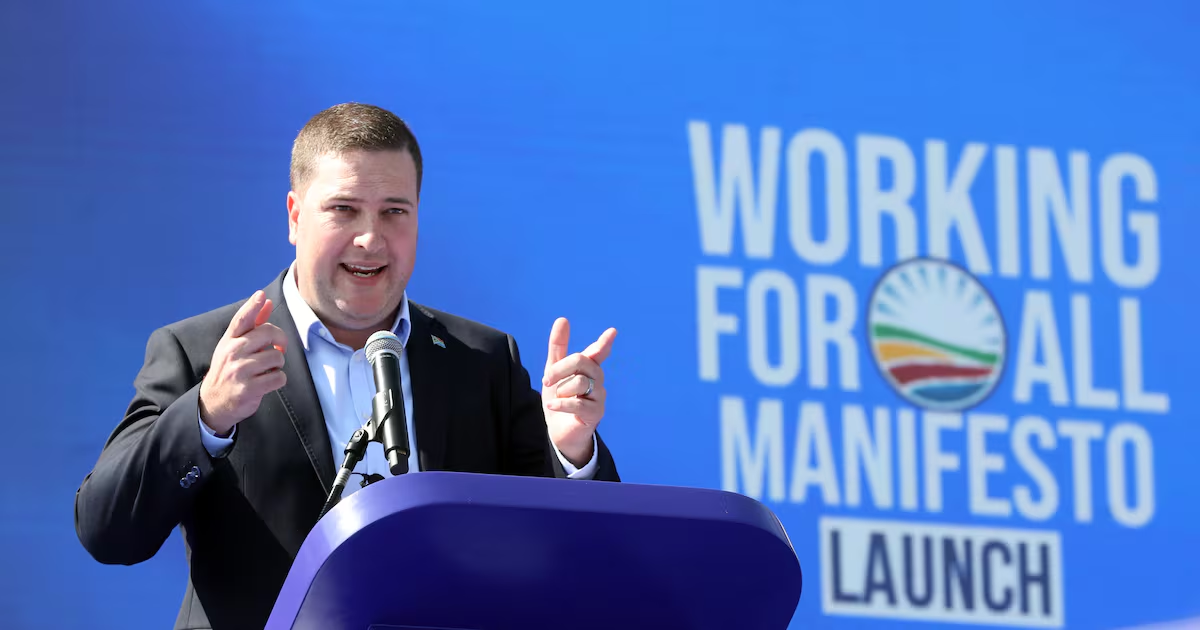
The DA risks losing its majority control of the City of Cape Town unless it intensifies its campaigning ahead of the November 4 municipal elections, according to the latest Ipsos electoral survey.The DA has 46% of voter support, while parties such as the Patriotic Alliance (PA) are eating into its base in Cape Flats coloured communities while the ANC is marginally clawing back support in African communities.The latest Ipsos municipal election survey, based on 3,600 randomly selected South Africans, places the ANC in Cape Town at 26%, the EFF at 11%, and the PA at 8%.In the last municipal elections in 2021, the PA garnered only 1.49% of the votes, gaining four out of the 231 seats in the Cape Town City Council.But this time around, it may grow electoral support in the City of Cape Town although not enough to completely dislodge the DA, which is likely to remain the dominant party even in the event of its majority being reduced.The party of Gayton McKenzie has lately been snatching wards from the DA and the ANC in areas such as Kensington in Cape Town and Stellenbosch, as well as Garden Route towns. It also defeated the ANC in other Western Cape towns such as Oudtshoorn during by-elections.We will work harder than all our opponents and we will never take our position for granted.— Geordin Hill-Lewis, Cape Town mayor and DA leader McKenzie previously served as the mayor of Beaufort West in a coalition with the ANC following the 2021 municipal elections.“We are making serious inroads in the Western Cape, especially in areas which were traditionally strong bases for the DA,” said PA spokesperson Steve Motale.“We have won several by-elections in the Western Cape and shows that we are making inroads.“We are confident that we will do well in the Western Cape especially in the City of Cape Town. That we are growing in the Western Cape does not come from us, the numbers are there, and there’s also the Ipsos survey that came out this week. It’s the reality on the ground. We know we are doing well.”Motale said the PA would be contesting all the wards in the City of Cape Town.Asked if they would form a coalition government with the DA or other parties, Motale responded that “we’ll cross that bridge when we get there. But we have previously co-governed with the DA in the Western Cape.”Last Friday, Cape Town mayor and DA leader Geordin Hill-Lewis admitted he was worried about his party retaining outright control of the city given the increasing number of parties contesting the municipal elections.Hill-Lewis said yesterday that he was leaving nothing to chance and would not be complacent.“I never feel complacent. Politics is hyper competitive in SA right now,” he said.“We will work harder than all our opponents and we will never take our position for granted. But I am quite confident that a large majority of Capetonians recognise the progress made in the city these last years and would like to take it forward.”What stands out is that there is no single metropolitan story unfolding across South Africa. Different parties are competing from very different positions of strength depending on the metro. While some cities appear headed for closely contested ANC-DA races, others show strong support for regional or smaller parties— Mari Harris, Ipsos political analyst For its part, the ANC says it is confident of regaining the support it has been losing in previous elections in Cape Town. ANC Western Cape spokesperson Sifiso Mtsweni said: “The message is clear, the DA is below 50% and Cape Town is politically wide open. Ipsos says the PA is a growing factor in the Western Cape.”Mtsweni said the party would be intensifying its campaigning in Cape Town. “We are encouraged that the Ipsos polling has already placed the DA below 50% and increased ANC from 18% to 26%. However, we will push hard to be close to the late 30s and early 40s.”The survey reported that the ANC and DA remain the leading parties in most metros, including Johannesburg and Ekurhuleni in Gauteng, as well as Nelson Mandela Bay and Buffalo City in the Eastern Cape.The MK Party dominates in eThekwini, where it has recorded a majority-level support of 55%.Although support for the EFF varies across metros, it recorded 27% in Buffalo City, substantially higher than elsewhere. This places the party in a strong competitive position in the metro. ActionSA’s strongest support remains in Gauteng, with double-digit support in Johannesburg, Tshwane and Ekurhuleni.“What stands out is that there is no single metropolitan story unfolding across South Africa,” says Ipsos political analyst Mari Harris. “Different parties are competing from very different positions of strength depending on the metro. While some cities appear headed for closely contested ANC-DA races, others show strong support for regional or smaller parties.”