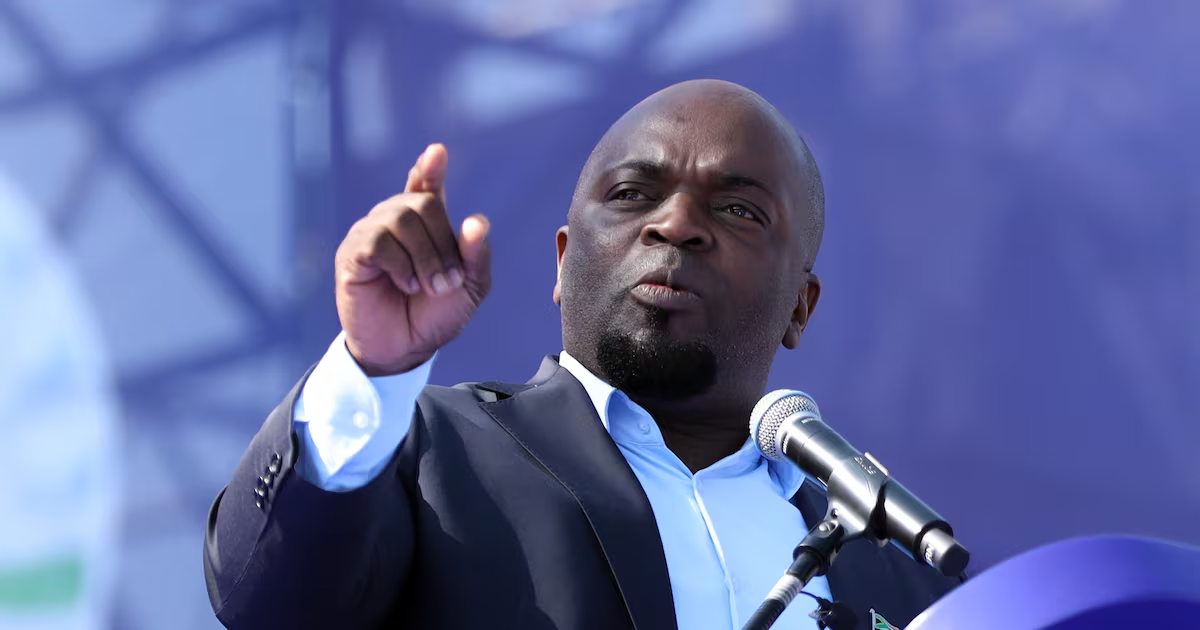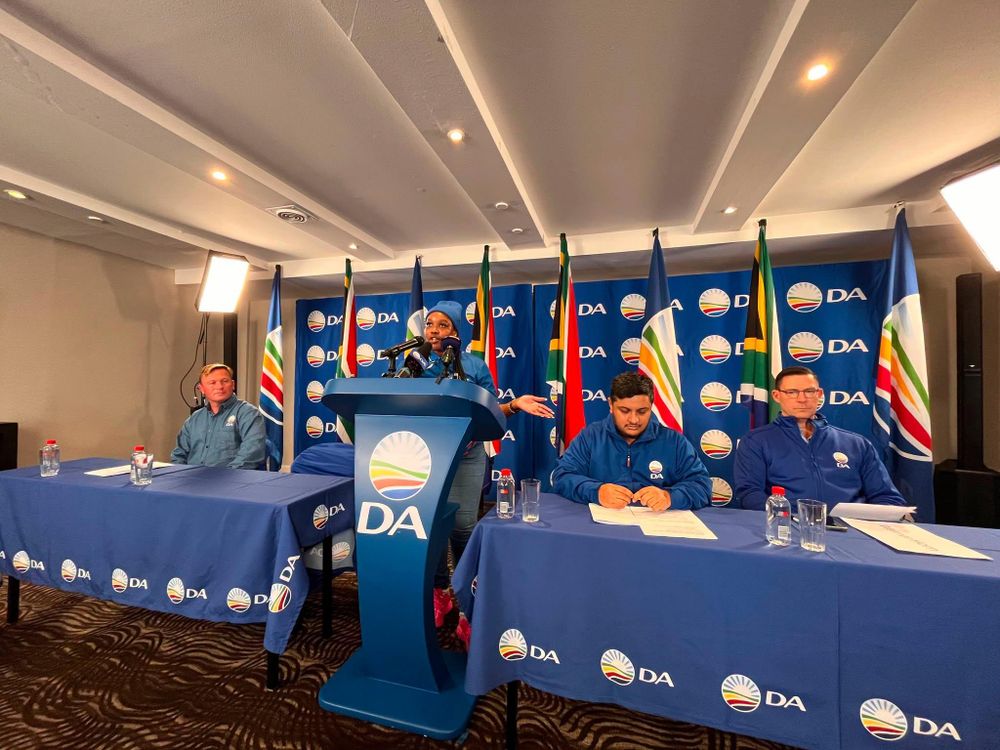
The DA is targeting 60 of South Africa’s 257 municipalities as it seeks to more than double its governing footprint in the local government elections set for November 4, according to Ashor Sarupen, the party’s campaign manager and deputy finance minister.Sarupen said the campaign’s core strategy rests on converting ANC voters rather than simply retaining the DA’s existing base. He said internal readings suggest a swing is under way, citing recent by-elections as evidence.The DA governs 27 municipalities, and Sarupen said the party’s internal forecasts show it could emerge as the largest party by a significant margin in every major metro in the country, though he cautioned turnout will determine whether the DA converts that advantage into outright wins.“It’s entirely possible the DA will emerge by a significant margin as the largest party in every major metro, and the DA is targeting 60 municipalities as strategic targets to double our governance footprints,” he told Business Day. “If turnouts in DA strongholds are high, which I believe they will be — we’ve seen this before in 2016, when our voters were highly motivated to pitch up to vote — we can do very, very well.”Sarupen’s target of more than doubling the DA’s governed municipalities to 60 would mark a considerably larger swing than the party has recorded in any national or local poll over the past decade. The 2024 baseline put the DA at 21.81% of the national ballot, a modest recovery from the 2021 local government elections when the party’s support fell to 21.6%Deputy finance minister Ashor Sarupen (Freddy Mavunda) “If we could vote right now, I’d say it would be pretty decent among ANC voters switching to the DA, and that would give us the boost we need, but it’s a long time from now to November, so keeping up the enthusiasm among our voters up is going to be important.”He pointed to a jump from 1% to 25% for the DA in a by-election in Makhanda in the Eastern Cape and a similar move into the 30 percents in Govan Mbeki, both wards he described as historically 80% to 90% ANC. The party also won a recent by-election in Emfuleni in Gauteng, he said, while acknowledging the DA has struggled to gain traction in other areas.Sarupen said polling conducted since the formation of the national coalition government points to DA support now being structurally higher than that baseline.The DA has changed its approach to coalition negotiations after what he described as difficult experiences following the 2024 elections and in earlier local government coalitions.The party has learned to identify which potential partners are reliable and which have used their leverage to extract concessions by playing larger parties against each other, a dynamic he said often plays out over control of positions such as the speakership.“We’ve grown much wiser to those kinds of tactics as we’ve learnt from the extortionist nature of some parties in coalition politics.”Stability over a full five-year term is the party’s central demand in the talks, he said. He cited Johannesburg as the clearest cautionary example, describing early progress under former mayor Mpho Phalatse after 2021 that reversed once she left office, with the city since falling into what he called “severe decay”. The DA’s aim, he said, is to secure mayoral positions in the metros it targets while also locking in coalition terms that prevent the kind of collapse Johannesburg experienced.The DA intends to put its conditions in writing and seek signed coalition agreements from partners, modelled on the compact underpinning the 2024 government of national unity. He said the party is hoping for swift passage of amendments to the Municipal Structures Act currently before parliament, which he said could help stabilise coalition arrangements in local government more broadly once in effect.“We’ve learned a lot from coalitions. We’ve learned about the reliability of different parties. We’ve also learnt how opportunistic some of them can be in playing parties off against each other, so we’re much wiser to the tactics and to the bidding war certain parties engage in.”“We’ve grown much wiser to those kinds of tactics as we’ve learnt from the extortionist nature of some parties in coalition politics, and we’re wise to their tricks, so we are evaluating our options at the moment, and we are looking very closely at what would be viable, stable governments.”Business Day
WATCH | DA targets ANC defections in push to control 60 municipalities
By-election gains fuel hopes for doubling governance footprint
723 words~3 min read