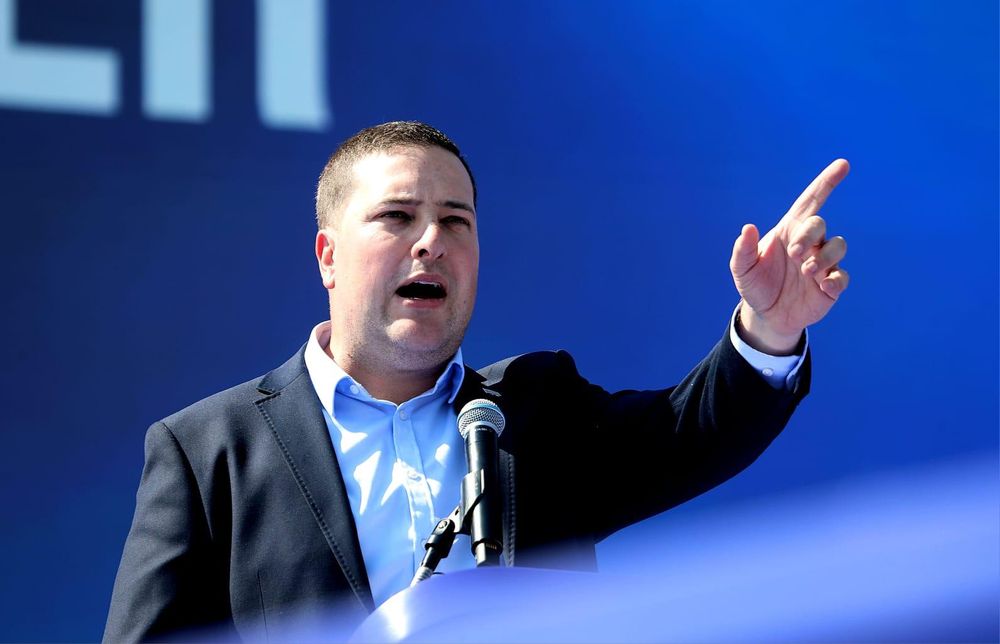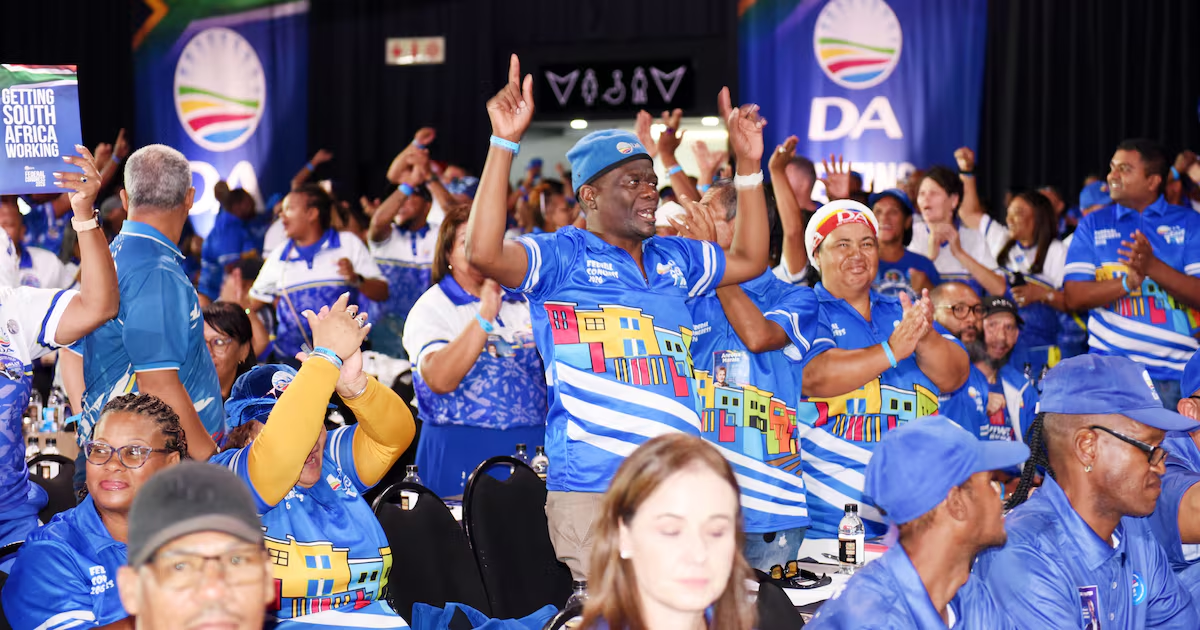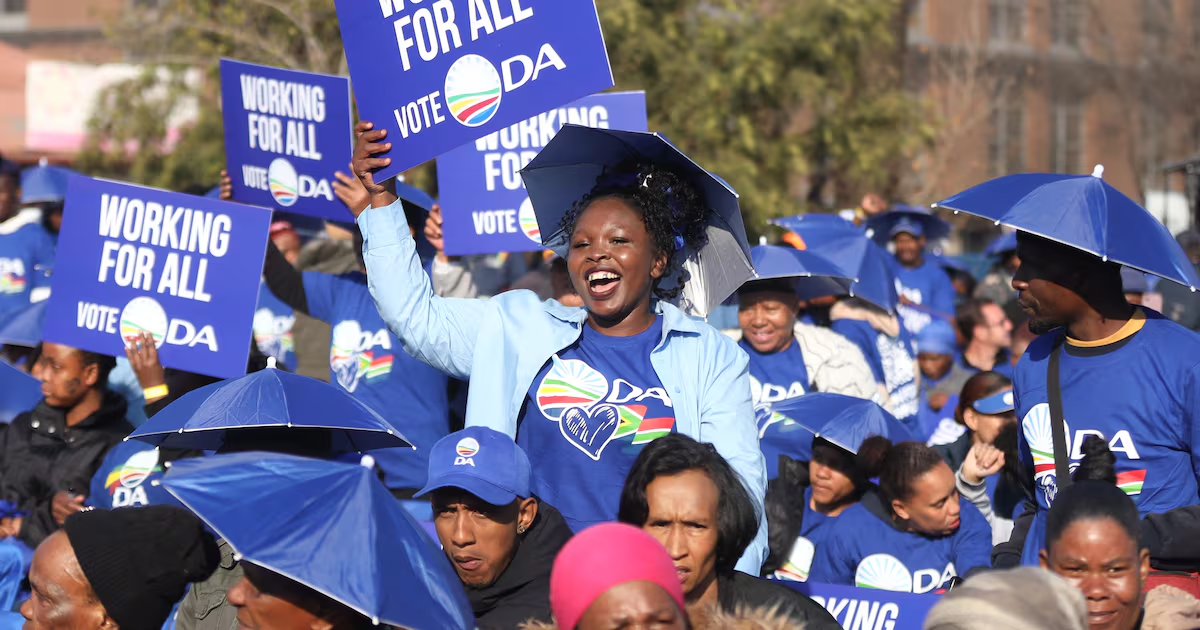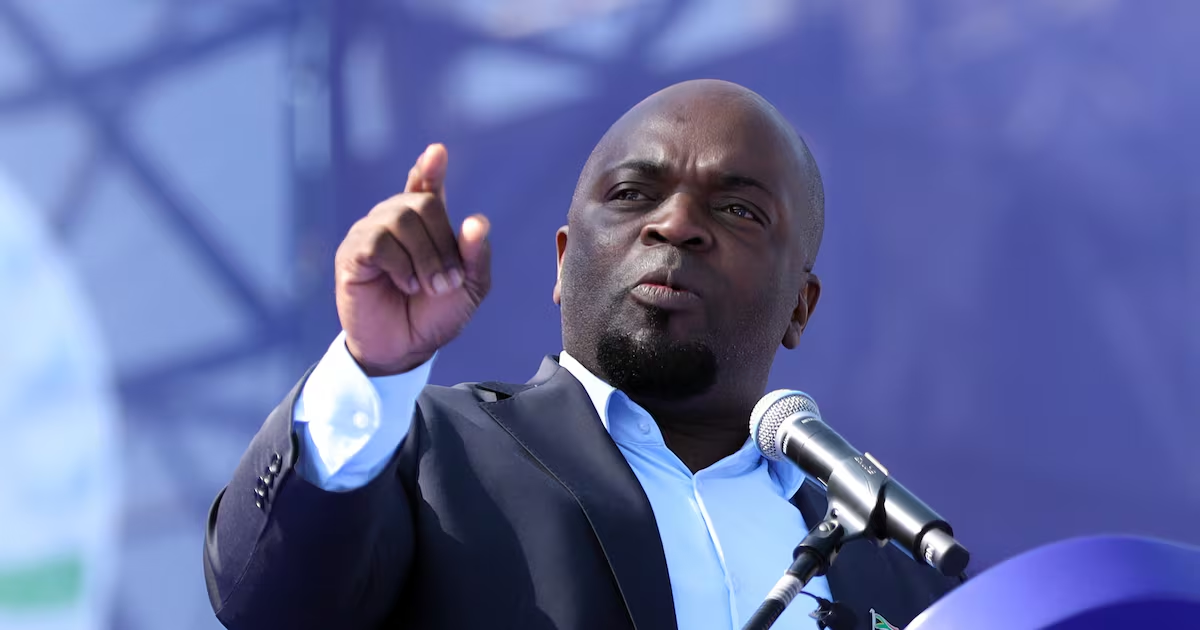
The DA has vowed to use the November local government elections to expand its control of municipalities, with party leaders saying the DA is no longer content with governing in selected parts of the country. DA federal chairperson and Gauteng leader Solly Msimanga made the declaration at the party’s manifesto launch at Mary Fitzgerald Square in Johannesburg on Saturday, where the DA unveiled its plans for municipalities before the November 4 elections. Msimanga said the party’s growth from a small opposition party to a major political force had been driven by its opposition to corruption and poor service delivery. “I want to tell you a little: there was a time when the DA was small and everybody was laughing when we said we would be the biggest party in South Africa. There was a time when we started and said that the DA will not be a party of opposition forever.” He said the party had positioned itself as an alternative to the ANC by challenging government decisions it believed were not in the interests of ordinary South Africans. “When the president wanted to buy a jet, we said, ‘But no, people are waiting for jobs.’ When they wanted to get involved in corruption, we said, ‘No, let’s make sure that we stop the corruption and ensure that ultimately you have services that go to the people’.” Msimanga said the party’s focus was ultimately on creating an environment in which people could access jobs and live better lives. “When services go to the people, there are more jobs that are created. When jobs are created, people are able to live a comfortable life that they so wish.” He challenged voters to consider the legacy they wanted to leave for future generations and said this was central to the DA’s campaign to become the country’s biggest party. “Today I want to ask you a question. What kind of country, what kind of city, what kind of ward, what kind of municipality will you leave the generation that comes after you when you’re no longer here?” Msimanga said DA leader Geordin Hill-Lewis’s ambition for the party to become the biggest in South Africa was driven by its desire to improve governance and service delivery. DA leader Geordin Hill-Lewis arrives as supporters welcome him at the manifesto launch of the DA at Mary Fitzgerald Square in Newtown, Johannesburg. Picture: (Thapelo Morebudi) “The mission is to ensure that we don’t fail the people of South Africa. The mission is to make sure that we become the biggest party and rescue South Africa from the corruption clause, from those that are not able to deliver for everybody,” he said. He also accused politicians of exploiting desperate job seekers. “We are saying no. Jobs must go to everybody who deserves a job. Water must go to everybody who deserves water. Services must reach everybody that deserves services. That’s the kind of DA we have been building up to this stage.” The party’s role was shifting from opposition to government. “We are here to say, ‘We are no longer a party of opposition. We are a party in government.’ “In all the urban centres of South Africa, we are the biggest party. And that comes with responsibilities,” he said. He described the manifesto as a contract between the party and voters, saying DA-led municipalities should be judged against the promises made during the election campaign. “This is what the DA promises you. You will hold us to this, and we will deliver, and we will know that we should deliver because there’s one thing we want to make very clear, and that is we cannot fail the people of South Africa.” Msimanga said the party wanted political debate to focus less on divisive issues and more on economic growth, jobs and effective municipalities. “We cannot fail the people of our municipalities because as we hear people making noise and people are wanting, you know, certain nations to be driven out of South Africa, we are saying we need to then grow the economy so that we don’t have to be dealing with side issues. “The issue we need to be dealing with is how do our young people get into jobs?” He said the DA wanted South Africa to measure progress through improvements in employment, poverty reduction, housing and municipal finances. “The issues we need to be dealing with are how do we stop corruption, and how do we then ensure that in five or 10 years’ time we don’t have another Madlanga commission? In five or 10 years’ time what we should be having is a celebration of halving poverty in South Africa. It’s a celebration where more and more young people are finding themselves in jobs. It’s a celebration where more and more people are finding themselves living in decent accommodation.” Msimanga said municipalities should also be financially sustainable and accountable. “It’s a celebration where more and more municipalities are getting clean audits and have finances that are able to sustain themselves. That is what we need to be celebrating, and that’s what we now need to be concentrating on.” With the November elections approaching, Msimanga said the DA’s next challenge was to expand its footprint beyond the municipalities where it currently governs. “As we concentrate on building the biggest party in South Africa, the job is simple, democrats. We now need to move from just governing in small places to governing everywhere.” He singled out Johannesburg as an example of where the party believed voters wanted a change in leadership and improved municipal services. “We now need to move into ensuring that Johannesburg doesn’t have a mayor that buys the ball pen and gets thousands of rand, but you have potholes that are filled, you have water that is coming out of the taps, you have jobs that are created, and Johannesburg is called the city of gold again.” He said the DA’s ambition extended beyond individual municipalities, saying it wanted to position itself as a credible alternative to the ANC at the national level. Msimanga also pointed to Ekurhuleni as an example of the sort of municipal governance the DA wanted to promote. “When you find yourself where the young lady from Venda, who is now a resident and a young person in Ekurhuleni, is saying, ‘We are building a city, a city that works for everybody,’ you would know that the DA is in charge.” He urged party supporters to take the manifesto into communities and use it to make the case for DA governance. “When we go out of here, we are going to be carrying that manifesto and say to the people of South Africa, ‘Let’s do a comparison. There are others who are dreaming about what needs to be done, but there are others who are already in government and showing the way’.” Msimanga said the party would be judged by its ability to deliver services and stay accountable to voters. “The answer is simple. We build a DA, the blue machine that is moving, that is in government, that is controlling municipalities in 2029, that is going to be controlling government there, that is going to ensure that South Africa is a place that we can again proudly call home, municipalities where services are being delivered and a political party that is accountable to the masses and not to the few.” He concluded by calling on DA supporters to campaign on the party’s record and manifesto. “There is a government that is ready to deliver. Democrats, stand up and ready yourself as we go and we march, and we say, ‘Enough is enough. Let’s turn our municipalities around. Let’s get services going. Let’s get jobs for our people because we cannot fail the people of South Africa’.” TimesLIVE
WATCH | DA vows to move from opposition to governing municipalities across SA
The DA has vowed to use the November local government elections to expand its control of municipalities, with party leaders saying the DA is no longer content with governing in selected parts of the country
1,300 words~6 min read