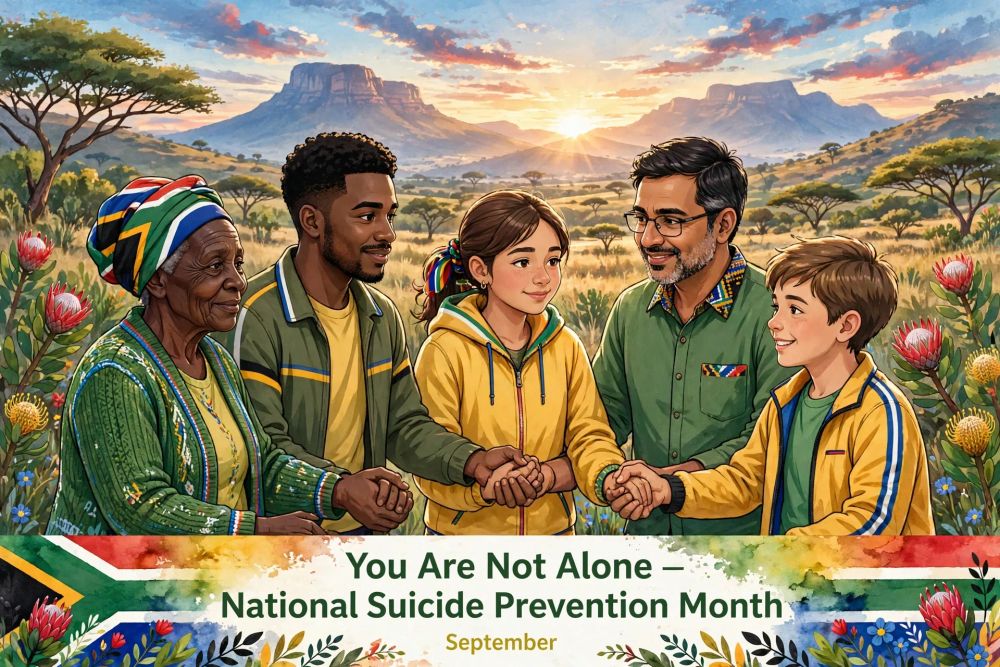
As September serves as National Suicide Prevention Awareness Month in South Africa, it's time we shift the conversation from personal resilience to addressing the structural issues crippling our society's mental health.
September is our National Suicide Prevention Awareness Month in South Africa.
Yet, it seems all we do is telling people to “speak up” and “take care of themselves”, and that’s exactly where we have missed the point. Because people cannot literally breathe their way out of poverty. They cannot meditate their way out of unemployment. They cannot positive-think their way out of violence, grief, hunger, discrimination, substance abuse or a society that demands resilience from people it has repeatedly failed.
We cannot keep breaking people and then handing them the responsibility of fixing themselves. If poverty, violence, unemployment, inequality and hopelessness are shaping people’s mental health, then our response cannot begin and end with telling individuals to cope. Some of what is making South Africans sick is structural — and structural pain requires structural change.
The numbers should force us to confront the scale of what we are dealing with. The National Department of Health has cited a 12-month prevalence of mental disorders of 15.9% in South Africa — with depression, anxiety and alcohol and other drug-use disorders among the most common. It has also warned that child and adolescent mental health services remain dreadfully lacking.