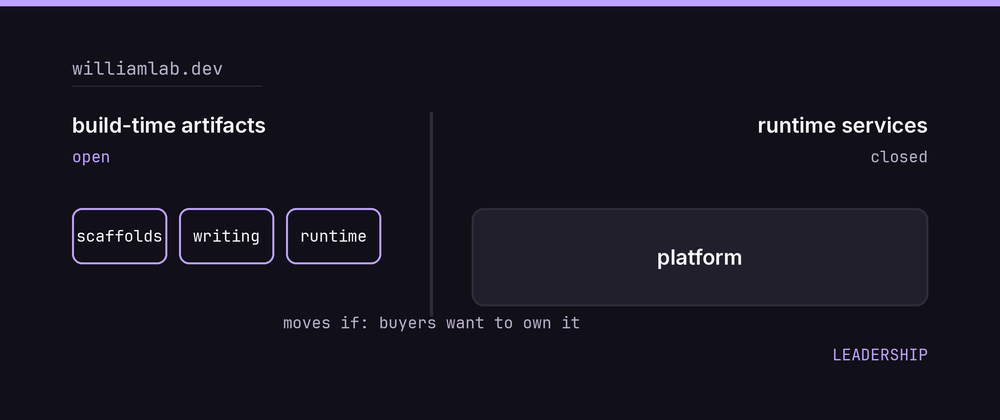
I've published a schema for organizations and a runtime for containing agents, and neither one's defensibility comes from secrecy. Orvena's source has been public the whole time. I think the instinct to keep things closed and call the secrecy a moat is one of the more common mistakes I see people make when they're deciding what to build.
A head start erodes on someone else's timeline
Dynamic-schema platforms, sandboxed agent runtimes, spec-driven generators — these are known patterns. Someone can rebuild most of what I've described here without ever reading my source. If "nobody can see it" is doing the load-bearing work in your defensibility story, you don't have a moat, you have a head start, and head starts erode on a timeline set by everyone else's model, not yours.
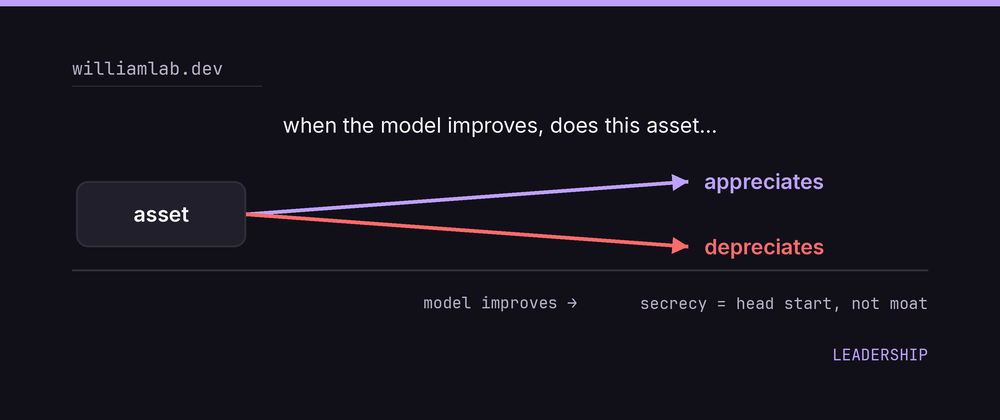
Does the asset gain or lose value when the model improves?
So I run a different filter now, and I run it on myself before I run it on anything else: when the underlying model gets better, does this asset get more valuable or less? An intermediate layer that exists to make code generation cheaper — templates, scaffolding, an IR that turns plain language into an app faster — gets less valuable every time the frontier model improves, because the model is closing the gap the layer was built to bridge. A layer that exists to make a human's intent checkable — versioned, diffable, something you can hold someone accountable for — gets more valuable on the same timeline, because a more capable, more autonomous agent makes "can I verify what it actually did" a harder question, not an easier one.