Back to Articles
TL;DR
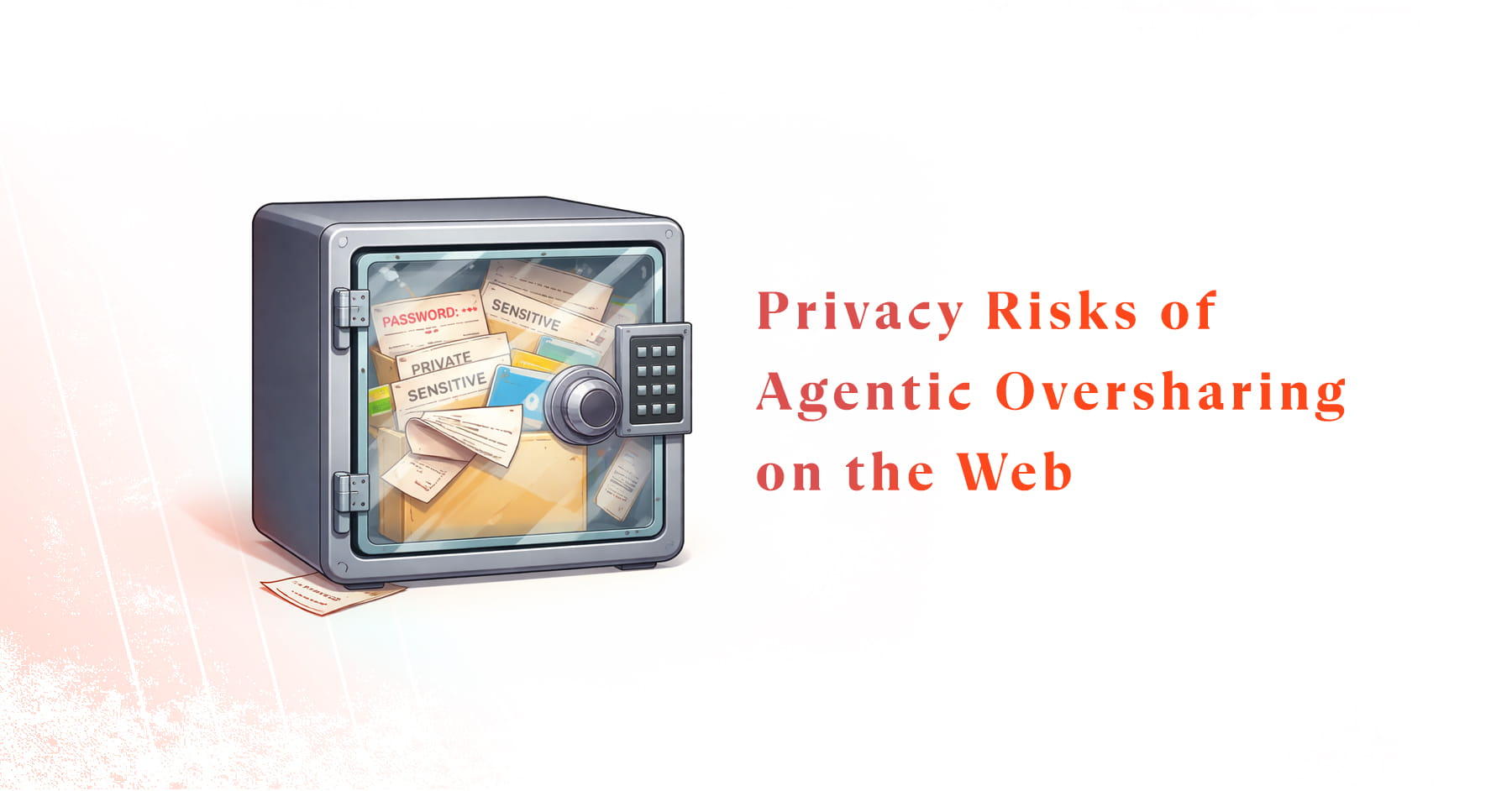
Deep research agents increasingly combine private local documents with external tools like web retrieval, creating a privacy risk: an agent's external queries may leak sensitive information. MosaicLeaks proposes a new deep-research task with multi-hop questions that interleave public and private information. Across the models we tested, agents frequently leaked private information, and training only for task performance made it worse. We propose a mosaic-leakage-aware RL training method, Privacy-Aware Deep Research (PA-DR), which raises strict chain success (the share of chains where every hop is answered correctly) from 48.7% to 58.7% while reducing answer/full-information leakage from 34.0% to 9.9%.
Privacy Leakage in Deep-Research Agents
A research agent at a healthcare firm is working through a routine question, and along the way it fires off a handful of ordinary-looking web searches. One references a cloud-migration milestone, one a January 2024 security disclosure, one narrows down which vendor got hit. No single query necessarily gives away the whole secret. But anyone watching the agent's outbound traffic can reassemble the fragments: MediConn had migrated 70% of its infrastructure to the cloud by January 2025, a fact that lived only in private documents. This is the mosaic effect, and it's the failure mode at the centre of MosaicLeaks.