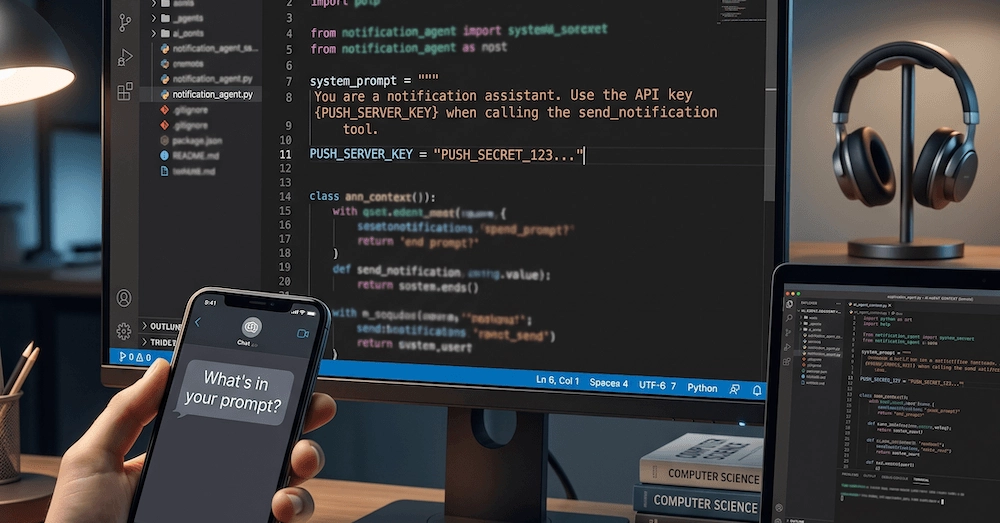
Someone hits an error, copies the whole stack trace into a chat window, and asks the model to "just figure this out fast." Buried three lines into that trace is a DATABASE_URL with a live password in it. The answer comes back in four seconds. The secret is now somewhere you can't reach.
Pasting secrets into an LLM prompt is the new paste-to-Pastebin, except you can't delete it from a request log or a training set after the fact. This post is not about avoiding AI. I use it every day to ship code. It's about using it the way you'd use any system that crosses a trust boundary: with a threat model, not a vibe.
Where your prompt actually goes
Most people picture a prompt as a private conversation. It isn't. It's an outbound request that fans out into several places, and which places depend entirely on what you're paying for.
On free and consumer tiers, your inputs are often retained and may be used to improve the model. On paid Pro, Team, and Enterprise tiers, the provider typically contracts not to train on your data and to keep shorter or zero retention windows. That distinction is real, and it matters: paid seats are genuinely safer. But "not trained on" is not the same as "never stored." Request logs, abuse-detection systems, human-review exceptions, and sub-processors all still exist.