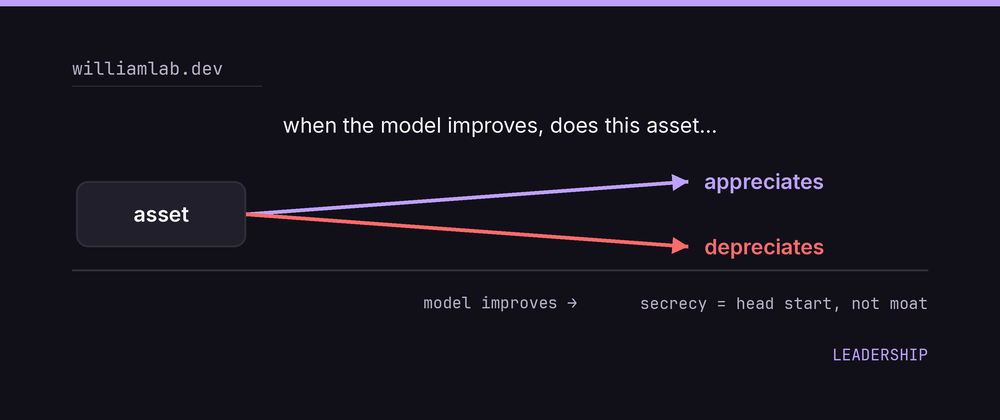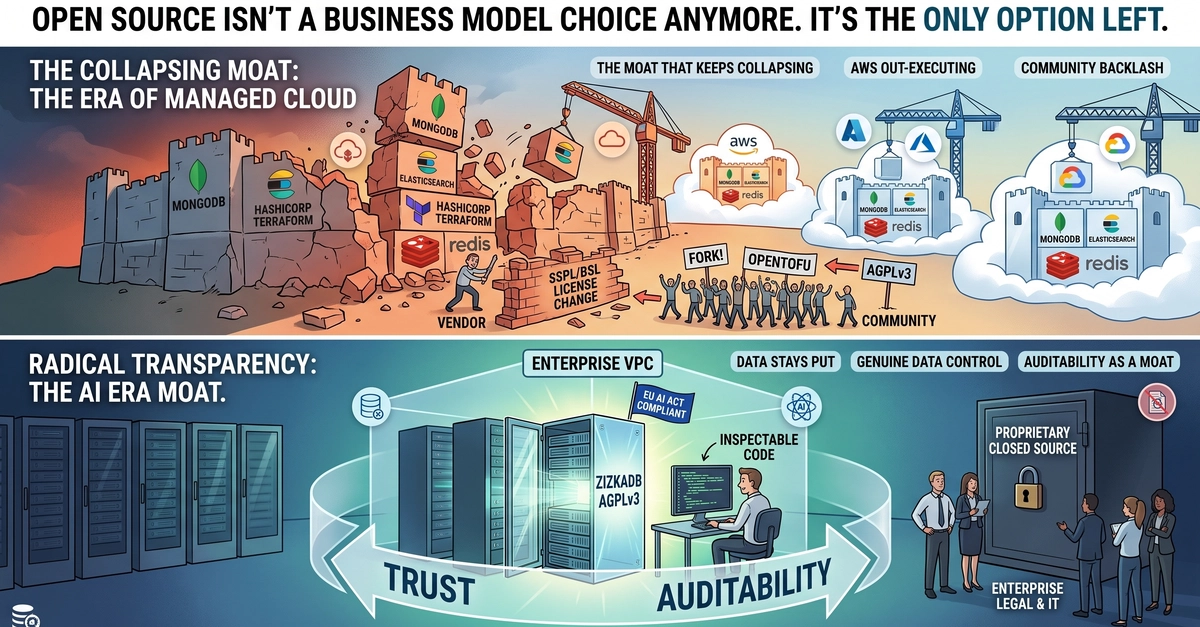
If secrecy is doing the load-bearing work in your defensibility story, you don't have a moat, you have a head start. A fair reader would turn that around on me: then why is half of what I build closed? Orvena's source is public. The writing is public. The multi-tenant platform I'm building underneath — the part designed to make money — is not. If closed source isn't a moat, what exactly am I doing?
The answer is a rule, and I think the rule is more useful than any individual call it produces.
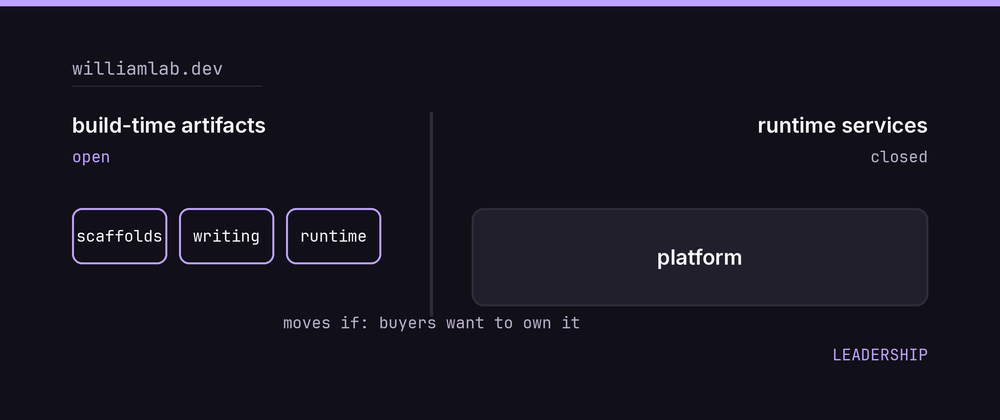
Build-time artifacts go public, runtime services stay closed
Everything I build gets sorted by one question: is this a build-time artifact or a runtime service? Build-time artifacts — reference skeletons, scaffolds, the worldview writing, a containment runtime you run on your own machine — get more valuable by being public. Their whole job is to be seen, argued with, and trusted, and you can't earn trust with a repo nobody can read. Runtime services are different in kind: a platform where a tenant's schema is stored as data, where their records accumulate, where the APIs grow at execution time around what they've built — that's where someone else's working life ends up living. Anything with that runtime smell goes on the closed side. Not because the code is precious, but because the business, if it ever works, works there.