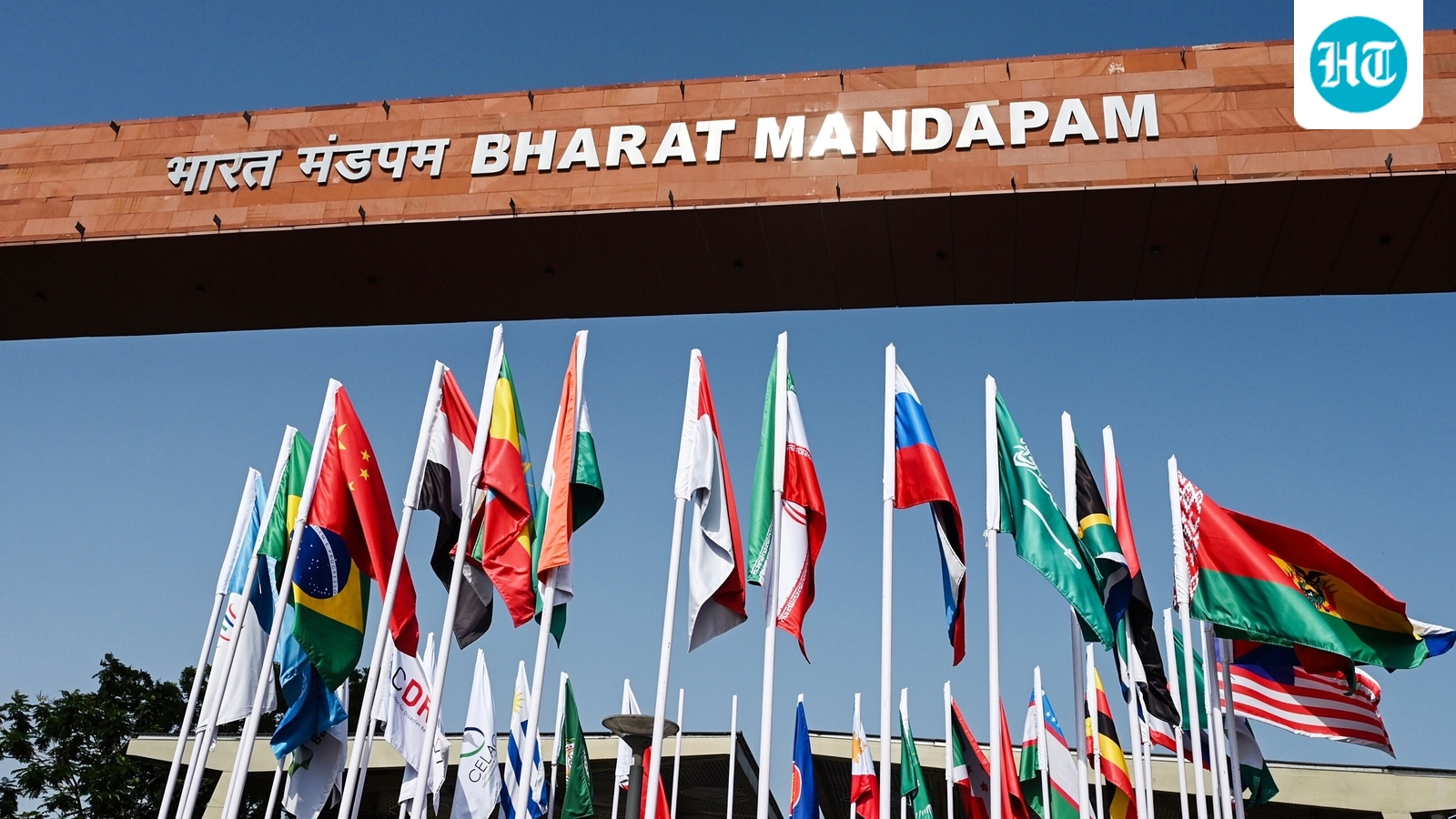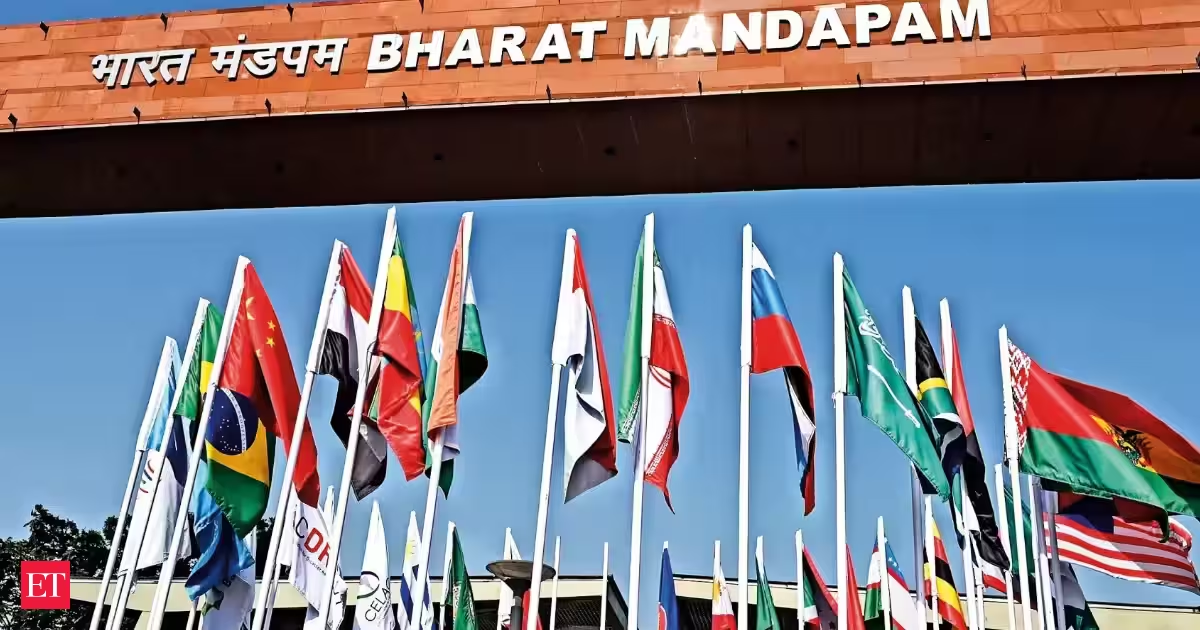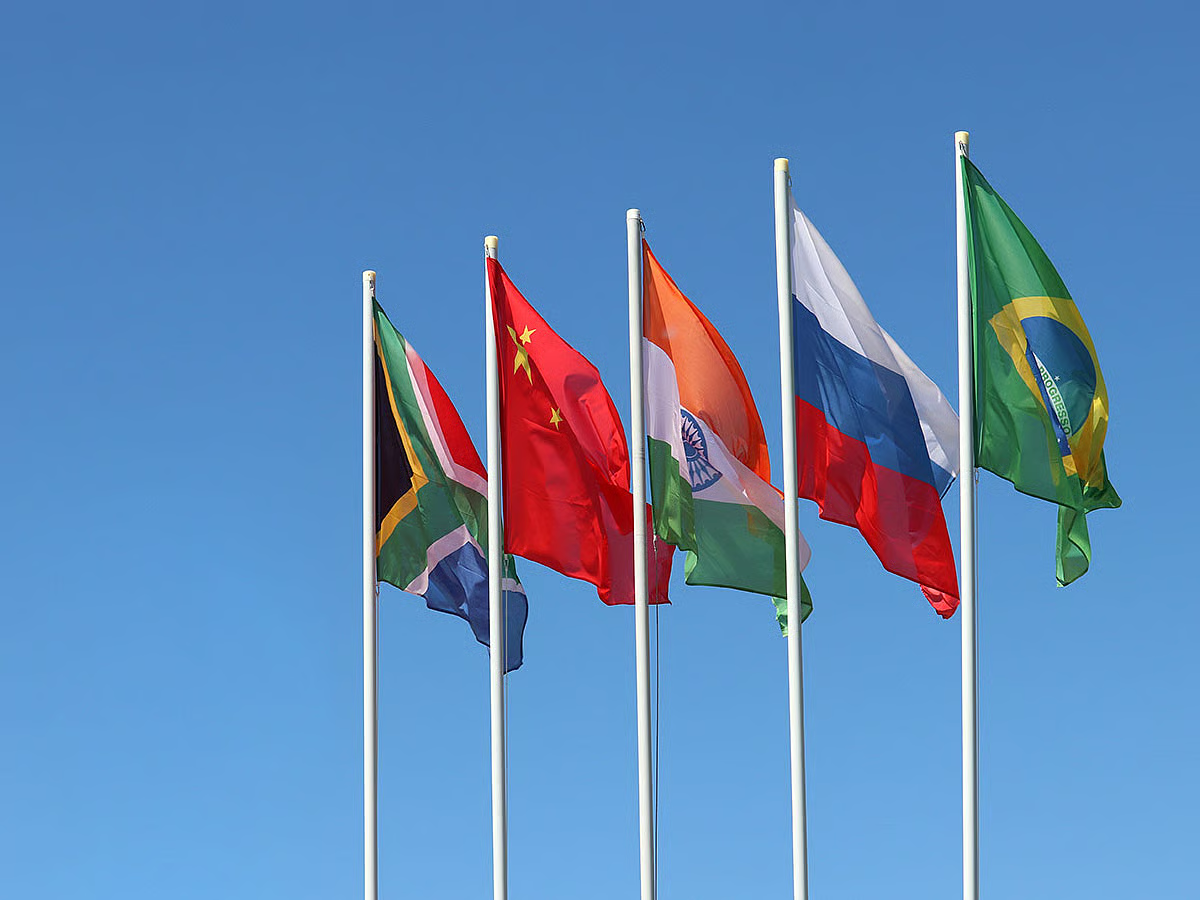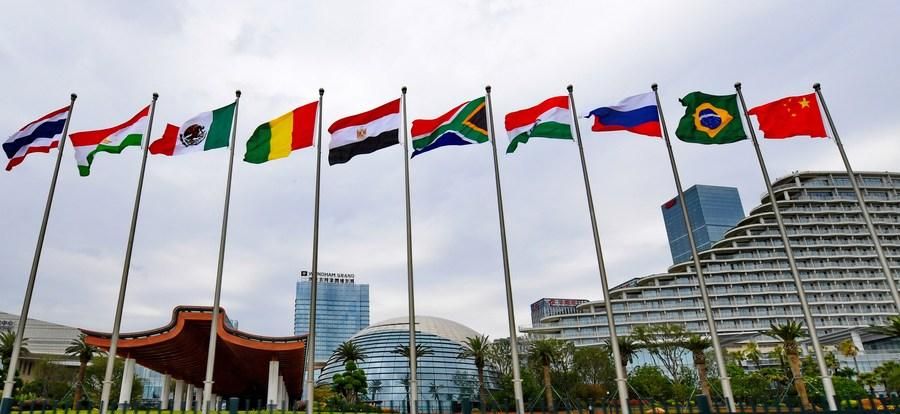
Photo taken on Sept. 2, 2017 shows flags in front of the Xiamen International Conference Center in Xiamen, southeast China's Fujian Province. The 9th BRICS Summit will be held in Xiamen
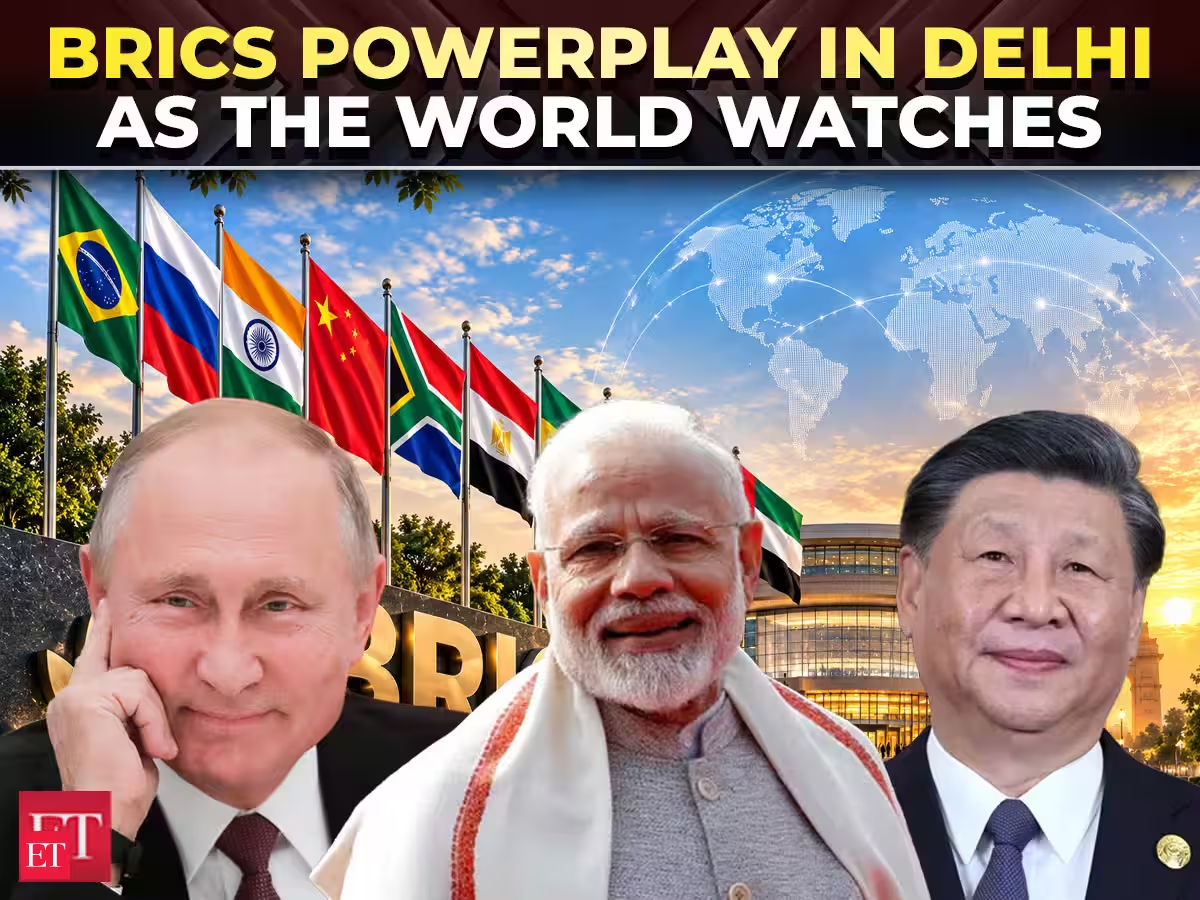
For decades, the G7 was treated as shorthand for the world's economic centre of gravity. That assumption is now being challenged by the numbers. According to recent figures cited by BRICS officials and reported across several outlets, the combined economic output of the BRICS bloc, measured in purchasing power parity terms, has moved ahead of the G7's. It's not a brand-new development; BRICS first edged past the G7 on this measure back between 2019-2020, depending on which dataset you look at. But the gap has kept widening, and it's now being talked about openly by BRICS leaders as proof that the world is shifting towards a more multipolar order.
Russian President Vladimir Putin recently pointed to IMF figures putting BRICS' combined GDP, adjusted for purchasing power, at around $77 trillion, against roughly $57 trillion for the G7. Other analysts have put BRICS' share of global GDP on this basis at somewhere between 32% - 35%, compared with the high-20s to low-30s for the G7. Whichever exact figures you use, the trend line is the same: BRICS has been climbing steadily while the G7's share has been sliding, down from something like 45 per cent of global output in the early 1990s.