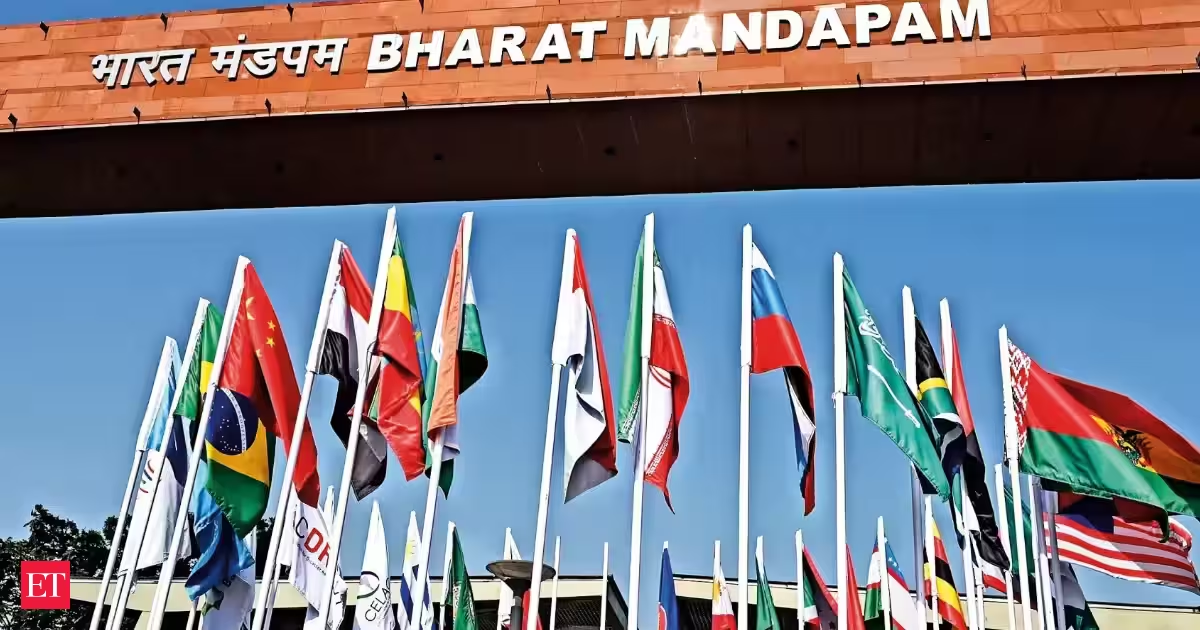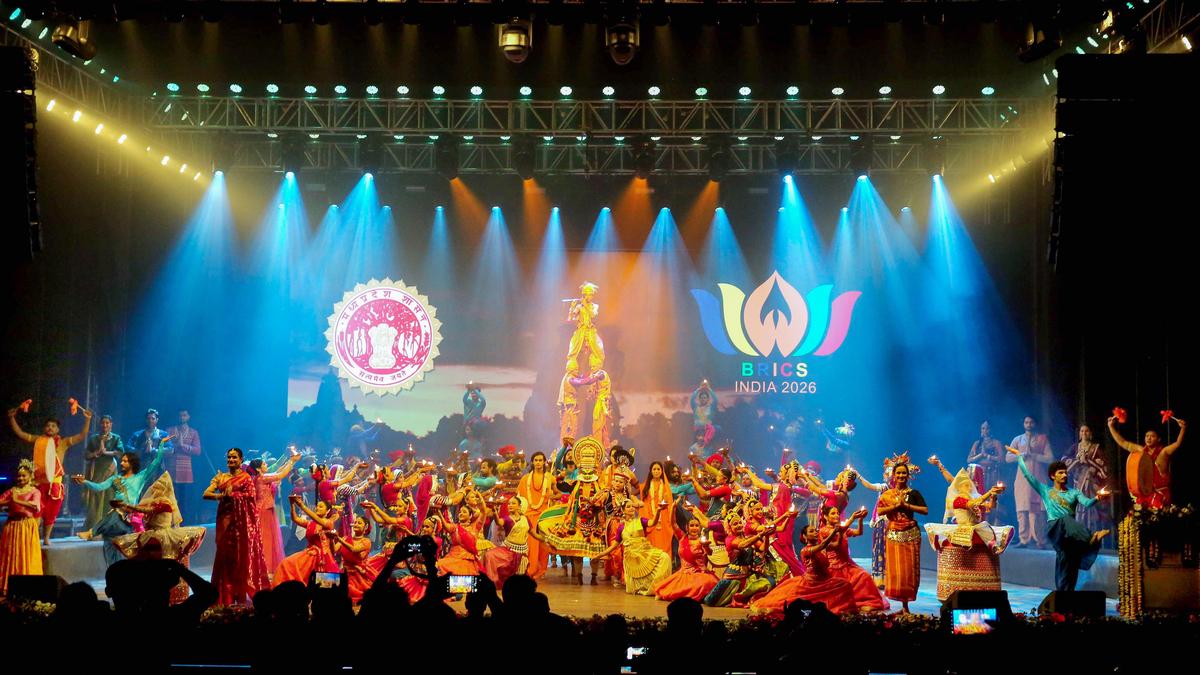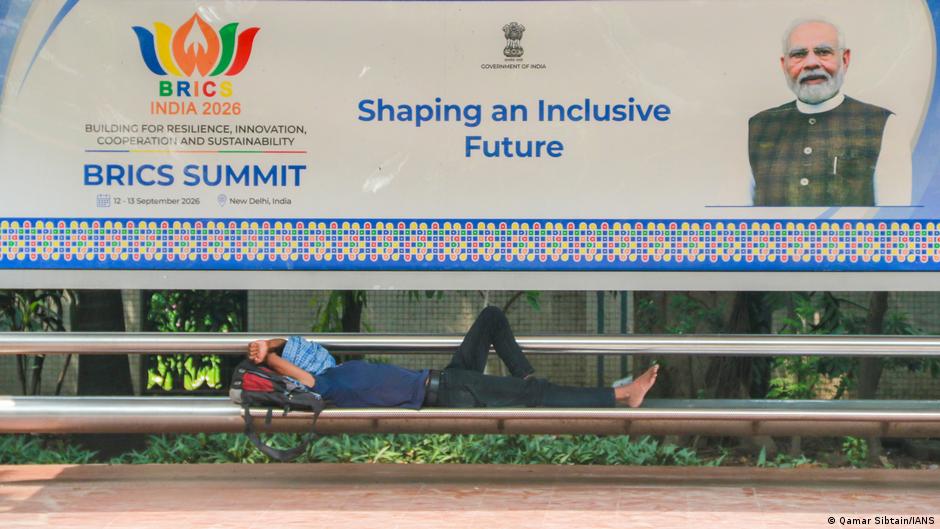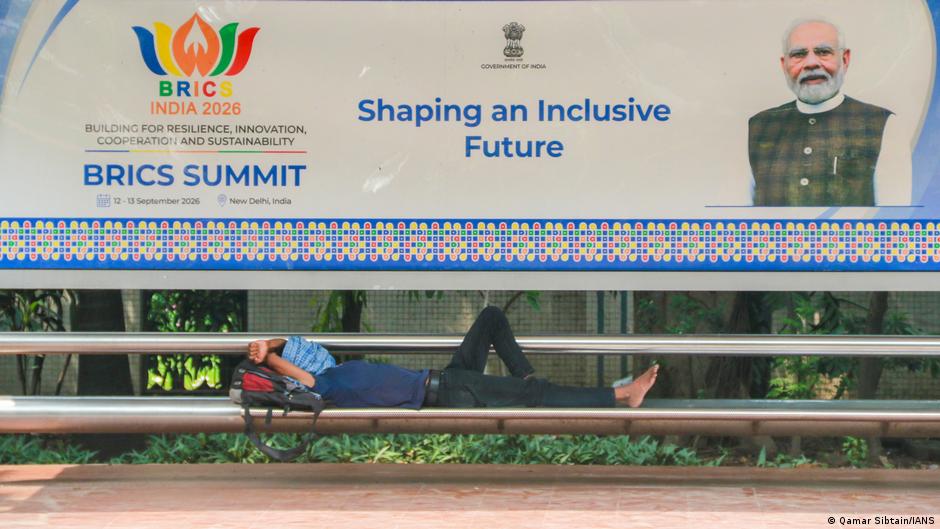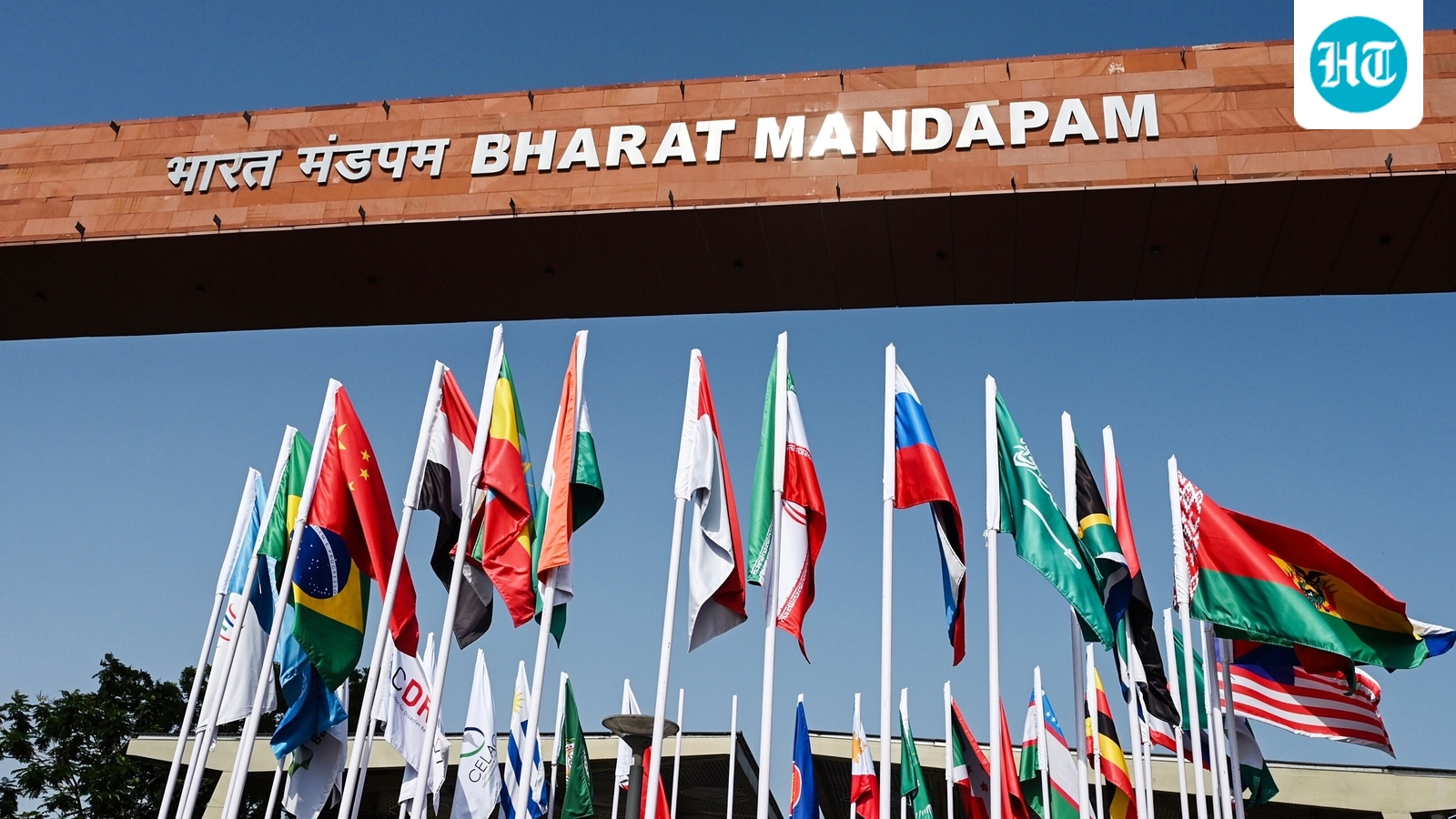
BRICS has grown from a 2001 Goldman Sachs economic idea into an 11-member Global South bloc, with India hosting its 2026 summit in Delhi.Prefer HTon Google The 18th BRICS Summit will be held in New Delhi on September 12 and 13, with India hosting the grouping as its chair in 2026. The summit comes as BRICS has grown from a four-country grouping into an 11-member forum with a wider network of partner countries.A view of the national flags of countries participating in the 18th BRICS Summit hoisted outside the Bharat Mandapam, in New Delhi. (Sathiya/ ANI)India assumed the BRICS chairship on January 1, 2026, for the fourth time. The summit is scheduled at Bharat Mandapam in New Delhi.BRICS today brings together countries with considerable economic and demographic weight, but the grouping was not originally created as a political bloc. Its name came from an economic idea: in 2001, Goldman Sachs economist Jim O’Neill coined the term “BRIC” for Brazil, Russia, India and China, identifying them as emerging economies whose importance in the global economy was expected to increase.So how did BRIC move from a Goldman Sachs research concept to a political forum, then expanded to BRICS? And what does the grouping seek to achieve today?Let's try to address these questions.What is BRICS?A cyclist rides past a hoarding featuring India's Prime Minister Narendra Modi, displayed ahead of the BRICS summit in New Delhi on September 9, 2026. (AFP)BRICS is a political and diplomatic coordination forum for countries of the Global South. According to the official BRICS website, its objectives include strengthening economic, political and social cooperation among members and increasing the influence of Global South countries in international governance. It also seeks greater legitimacy, equity and efficiency in institutions including the United Nations, International Monetary Fund, World Bank and World Trade Organization.It is not a formal multilateral organisation like the United Nations, World Bank or OPEC. Reuters described it in 2023 as an “informal club”, with member governments holding an annual summit and taking up a rotating chairmanship. BRICS decisions are based on consensus.The grouping also has no constitutive treaty, permanent secretariat or common budget, according to the Council on Foreign Relations—an American think tank. Its members instead identify areas where they can cooperate despite differences on bilateral and geopolitical issues.Also read: Xi Jinping to attend BRICS summit in New Delhi, China confirmsHow and why was BRIC formed?A screen displays the the company logo for Goldman Sachs on the floor at the New York Stock Exchange (NYSE) in New York City. (REUTERS)The story of BRICS begins with an economic research paper.In 2001, Jim O’Neill, then a Goldman Sachs economist, coined the acronym “BRIC” for Brazil, Russia, India and China. His research identified the four countries as major emerging economies. Reuters reported the paper highlighted the growth potential of the four economies.The four national governments soon adopted the idea. The official BRICS account separates the term itself from the actual group, noting that the founding countries created BRIC to work together politically. Their main goal at the start was to discuss global issues and present a united front on international affairs.Russia played a key role in turning the concept into a government-led grouping. Reuters reported in 2023 that the creation of the bloc was initiated by Russia. The first formal meeting of BRIC foreign ministers took place in 2006 on the sidelines of the United Nations General Assembly in New York.Brazilian diplomat and former foreign minister Celso Amorim has also described the early discussions behind the grouping. In an interview published on the official BRICS website, Amorim said Russian diplomat Sergei Lavrov had approached him in the early 2000s with the idea of creating a BRICS forum.The 2008 global financial crisis brought the four countries even closer together. Brazil, Russia, India, and China began teaming up at global forums like the G20, the IMF, and the World Bank to push for major changes in how the world’s economy is run.From BRIC to BRICSChinese President Xi Jinping and India Prime Minister Narendra Modi meet on the sidelines of the BRICS summit in Kazan, Russia October 23, 2024. (CHINA DAILY VIA REUTERS)The leaders of the four nations held their very first summit in Yekaterinburg, Russia, on June 16, 2009. During the meeting, they demanded changes to global financial bodies and pushed for developing nations to have a bigger say in world affairs.The group expanded for the first time the following year when South Africa was invited to join in 2010. After attending the 2011 summit in China as an official member, the group added an “S” to become BRICS. According to the official website, South Africa’s entry marked the alliance's first expansion.South Africa’s entry expanded the group's reach into Africa. Because India, Brazil, and South Africa were already partners in the IBSA forum, joining forces under BRICS built on an existing relationship.The alliance soon started building its own financial bodies. After initial talks in New Delhi in 2012 and Durban in 2013, members signed agreements in 2014 to launch the New Development Bank and an emergency cash reserve. The New Development Bank officially opened for business in 2015.Beyond establishing its own institutions, the grouping soon set its sights on larger global influence.Also read: BRICS Summit 2026: Full list of leaders attending PM Modi’s mega meet in New DelhiFurther expansionIn this image received on Sept. 10, 2026, Ethiopia Foreign Affairs Minister Gedion Timothewos Hessebon, left, being received upon his arrival at Indira Gandhi International Airport, ahead of the 18th BRICS Summit, in New Delhi. (PIB via PTI Photo)To protect themselves from economic instability, member nations created the Contingent Reserve Arrangement in 2014 as a financial safety net for countries facing sudden payment crises. At the same time, the bloc began actively looking for ways to reduce its dependence on the US dollar.This move away from the US dollar became relevant amid growing global tensions. In response to the war in Ukraine, Western nations locked Russia's banks out of international payment networks and froze its money stored abroad. For many developing nations, these events showed how geopolitical conflicts could directly impact access to global banking networks. At the same time, rising US interest rates made the dollar more expensive, making basic imports like fuel and food far too costly for developing nations.BRICS aimed to protect its member economies by promoting local currencies for trade and exploring alternatives to Western banks. The possibility of a common BRICS currency has also been discussed, although progress towards such a currency has been slow.The next major transformation came in 2023.At the August 2023 summit in Johannesburg, BRICS invited six new nations to join: Argentina, Egypt, Ethiopia, Iran, Saudi Arabia, and the UAE. Argentina later chose not to join. Egypt, Ethiopia, Iran, and the UAE officially became members in January 2024, alongside Saudi Arabia, which was added to official membership lists.Following the 2024 expansion, the enlarged grouping was also informally referred to as “BRICS+”, though BRICS remained its official name. Indonesia became the 11th full member in January 2025.At the 2024 summit in Kazan, Russia, the bloc created a new "partner country" category to deepen ties without full membership. Nations including Belarus, Bolivia, Cuba, Kazakhstan, Malaysia, Nigeria, Thailand, Uganda, and Uzbekistan were among the first to receive this status, with Vietnam joining as a partner country soon after.The expansion vastly increased the group's reach. The 11 BRICS countries account for more than a quarter of the global economy and almost half of the world’s population. according to The Council on Foreign Relations. However, bringing together a larger, more diverse group of nations also means managing a wider variety of competing national interests.Minister of Foreign Affairs of Burundi, Edouard Bizimana arrives to participate in the 18th BRICS Summit hosted by India at Terminal 3, Indira Gandhi International Airport, in New Delhi. (PIB Photo Gallery/ ANI Photo)Members have differing views on major global issues, including the war in Ukraine, while regional rivalries exist between countries like Iran and Saudi Arabia, or Egypt and Ethiopia. There are also distinct approaches to the West: while China and Russia often frame BRICS as a counterweight to Western power, members like India and Brazil view the bloc primarily as a tool for economic growth and developing-world cooperation.Despite this rapid expansion, BRICS still operates on a basic rule: every decision requires total agreement from all members.Also read: Schools, offices, banks: What is open and what is closed from Sept 11-13 during BRICS Summit in Delhi?Why does BRICS matter now?For years, member nations have argued that world trade and political systems created after World War II don't give developing countries enough of a say. By building its own financial institutions and boosting direct economic cooperation, BRICS aims to give emerging economies a stronger collective voice in shaping global affairs.Its expanded membership has also given the grouping a larger role in discussions involving trade, development, finance, energy, global governance and the Global South. At the same time, BRICS’ ambitions face practical constraints. The US dollar remains central to world trade and banking, making a sudden shift away from it very difficult. Moving forward also requires balancing the needs of members with vastly different economic sizes and political goals.New Delhi, India - Sept. 9, 2026: PWD workers carry out preparations and beautification work near Bharat Mandapam ahead of the upcoming BRICS Summit, in New Delhi, September 9, 2026. (Sanjeev Verma/ Hindustan Times)The Delhi summit takes place as BRICS operates with its largest, most diverse membership yet. For India, the alliance supports its policy of strategic independence. As former ambassador Prabhu Dayal explained in an HT Opinion article this month, this approach lets India maintain partnerships across competing global blocs “without formally aligning with any single power centre.”Dayal contrasted India’s involvement in BRICS and the Shanghai Cooperation Organisation with its membership in the Quad alongside the US, Japan, and Australia. Hosting the BRICS summit reinforces New Delhi’s stance that it “does not need to choose between the East and the West.” Instead, India uses BRICS to foster practical economic cooperation while also also pushing for reforms in global institutions.India’s relationship with China is another important dimension. BRICS provides a multilateral forum in which the two countries can cooperate despite their bilateral differences. Dayal wrote that India seeks to work with China on issues such as local-currency trade and climate finance while resisting attempts to turn BRICS into an explicitly anti-Western vehicle.What started as a financial acronym in 2001 has transformed into an 11-member global alliance hosting its summit in Delhi in 2026. Today, the bloc’s central challenge is maintaining unity and finding common ground among a larger, far more diverse group of nations.Prakriti Deb is a journalist at Hindustan Times Digital, where she is part of the US Desk. She works on stories related to American politics, crime, sports, entertainment and weather. She particularly enjoys covering political developments that have global ripples. Through her work, she aims to break down complex events in a way that feels simple and understandable. Before joining the Hindustan Times, she worked with The Indian Express Digital, where she covered world affairs. She holds a postgraduate degree in Mass Communication with a specialisation in Journalism, along with a bachelor’s degree in English Literature. Outside the newsroom, Prakriti enjoys travelling and stepping out of her comfort zone. She finds her sense of being through storytelling in all its forms, including conversations, painting, theatre, dance and photography. She appreciates discussions that challenge her perspective and help her see the world a little differently.Read More
What is BRICS and why does it matter? The story of how a Goldman Sachs acronym became an 11-member bloc
BRICS has grown from a 2001 Goldman Sachs economic idea into an 11-member Global South bloc, with India hosting its 2026 summit in Delhi.
1,915 words~9 min read