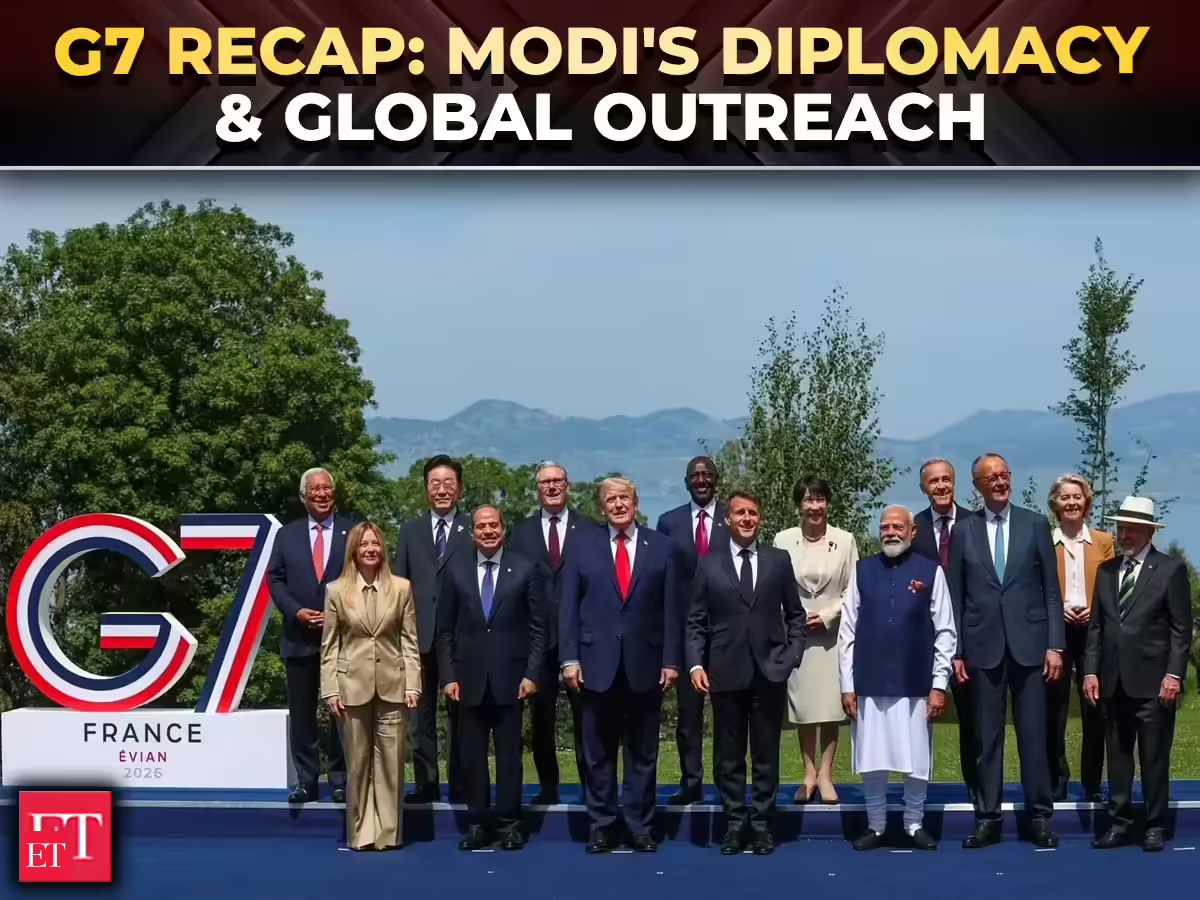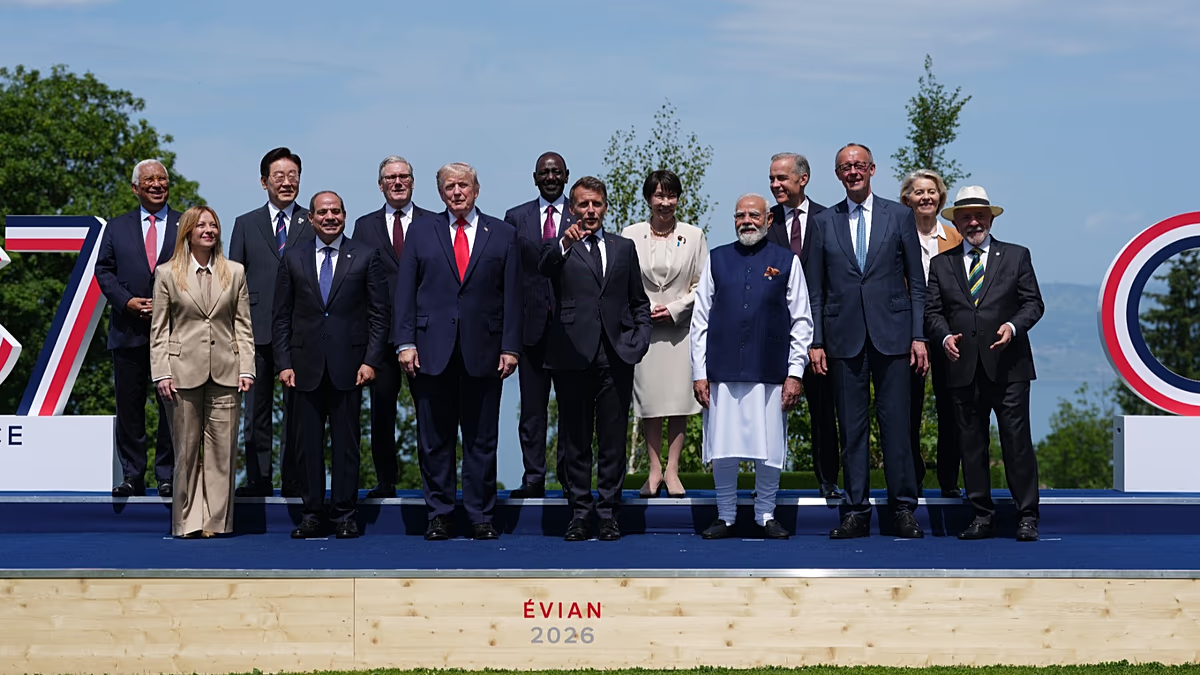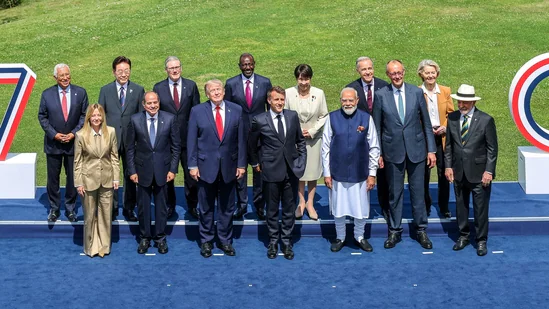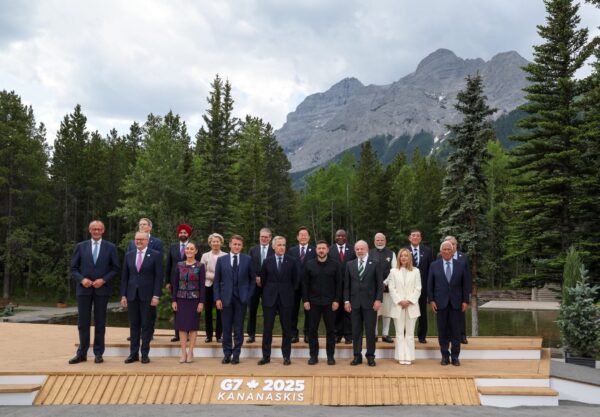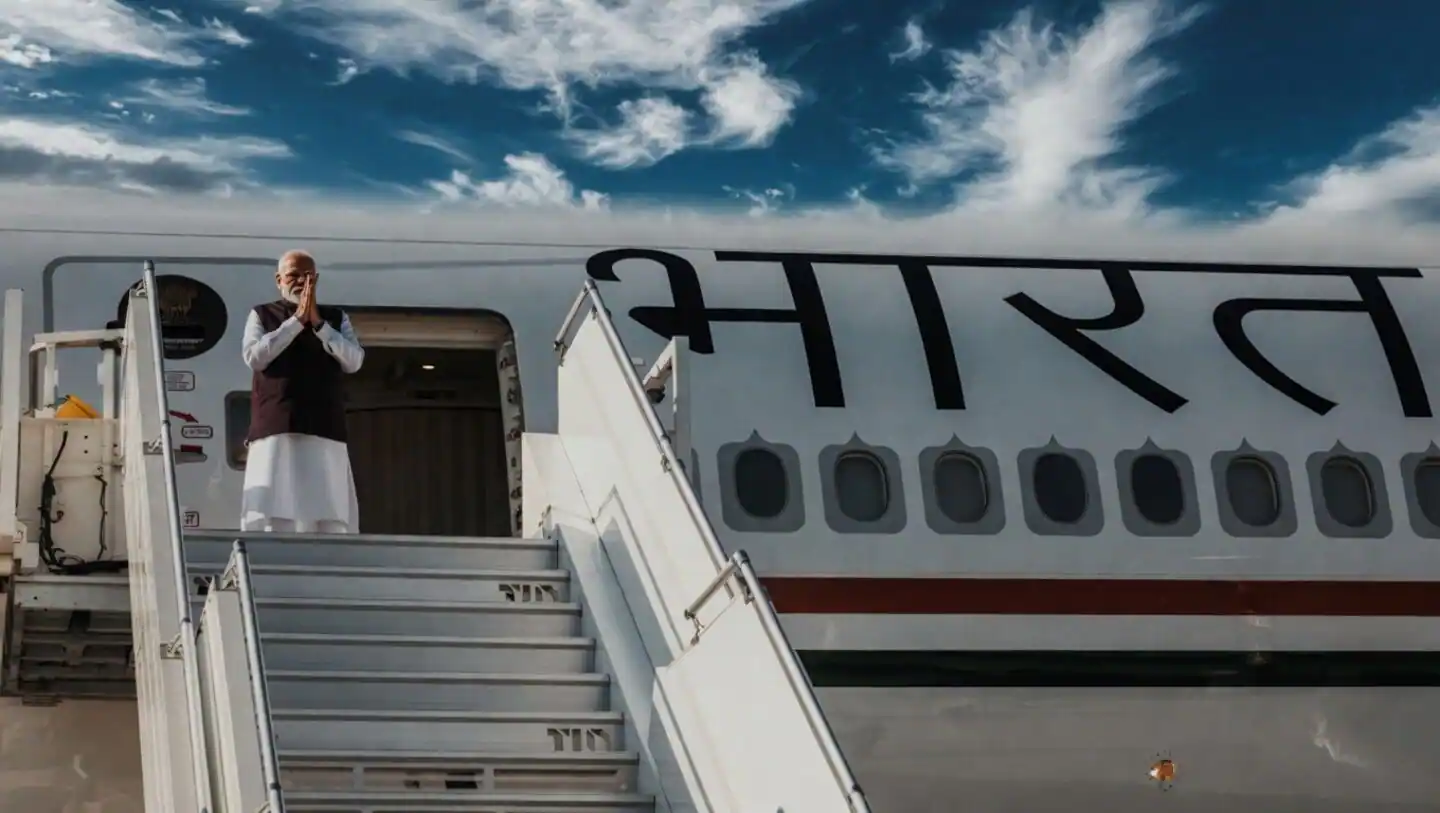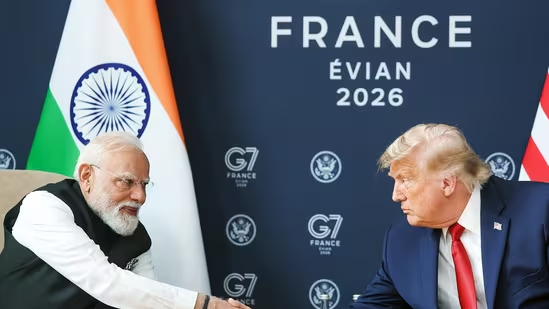
G7 is a prestigious, 50-year-old plurilateral institution of the West, or the Global North, whereas BRICS is viewed as a grouping of the Global South. With some of the world's most advanced economies as its members, the G7 annual summit, usually held in May or June, is billed as a major event on the international calendar.Prime Minister Narendra Modi and US President Donald Trump hold a bilateral meeting on the sidelines of the G7 Summit 2026. (DPR PMO)Dispersal of economic power is a reality. From the mid-1970s, when the G7 accounted for about 65% of the global GDP, its share declined to 43% in 2025. The G7 has lost some of its salience, but it is hard to ignore it. Its members – the US, Canada, Japan, the UK, Germany, France, Italy, and the European Union (EU) – still matter greatly in terms of economic, military, and technological achievements. The list of the 10 largest economies today features six from the G7.The 52nd G7 summit was held in Evian-les-Bains, France, from June 15-17. The ‘partner’ countries present were Brazil, Egypt, India, Kenya, and South Korea. Besides, Ukraine, the UAE, and Qatar were invited to take part in specified discussions.The latest summit produced better outcomes than the previous year’s summit in Canada, which the US president, the most important participant, left a day earlier. That summit’s host, Canadian Prime Minister (PM) Mark Carney, fully aware of the internal divisions and rifts, abandoned the traditional leaders’ communiqué in favour of a short Chair’s summary to reflect its less ambitious outcomes. Against this backdrop, the Evian summit under the French presidency produced nine negotiated statements on specific themes, based on consensus among the G7 members and agreement from a few partner countries on several of the G7 documents.The central challenge for G7 members was to articulate and project a common view on major global issues at a time when US-Europe relations have been fractured on a host of issues since the commencement of Trump 2.0. They managed to do quite well. In this task, the US-Iran deal announced just hours before the summit’s opening helped. Yet it is worth noting that the public spat between President Trump and Italian PM Giorgia Meloni soon after the summit’s end showed that the G7’s solidarity stands on fragile foundations at present. President Trump blamed Italy and “the so-called” NATO allies for not helping the US in the war against Iran, while the US had spent billions of dollars on Europe’s defence.Taking the long-term view, it is difficult to disagree with the assertion in last year's G7 Chair’s summary. It stated: “Five decades after its founding in 1975, the G7 continues to demonstrate its value as a platform for advanced economies to coordinate financial and economic policy, address issues of peace and security, and cooperate with international partners in response to global challenges.”In this light, a critical examination of the Evian summit’s outcome documents shows that, on vital issues, the G7 remains united and determined to make a difference. Of the nine documents, three were more significant than the others.One, the leader's statement on a balanced, durable, and resilient growth outlines the needs and risks facing the global economy and stresses the imperative to strengthen engagement with international partners. Noting that global economic uncertainty has heightened risks to growth, it calls on all countries to avoid arbitrary export restrictions, strengthen the resilience of economies through a diversified, reliable supply chain, and efficient energy systems. It expects G7 finance ministers, international financial institutions, and other mechanisms to work toward durable global growth by reducing global imbalances.Two partner countries – Egypt and South Korea – agreed to this statement, but India and the other partners did not.Two, the declaration on mutually beneficial international partnerships seeks “to update” or modify the international development system by shifting from concessional finance to partner countries’ ability to mobilise domestic resources and attract private capital. Self-finance is the name of the new game, though it was added that concessional resources will be used “strategically” for the least developed and most vulnerable countries and their specific needs. Ending fragmentation in the development system and improving its efficiency and effectiveness through better coordination and collaboration will also be implemented. Again, Kenya and South Korea agreed to this declaration, but India and other partners did not.Three, the leaders’ statement on geopolitical issues dealt with only three subjects: Ukraine, West Asa, and the Indo-Pacific. The largest section dealing with Ukraine spoke of the G7’s united stand and unwavering support for defending Ukraine’s freedom, sovereignty, and territorial integrity. G7 plans to increase the delivery of air defense systems and enhance the pressure on the Russian war economy. Concerning West Asia, the grouping welcomed the US-Israel deal, “secured under the strong leadership of President Trump,” while affirming the right of passage “without restrictions or tolls” through the Strait of Hormuz. The para on the Indo-Pacific was routine, reiterating opposition to China's unilateral attempts to alter the status quo--without naming it.PM Carney got it exactly right when he observed that the G7, if it ever ran the world, did not do so now. He underlined that the role of India and other emerging economies has become much more important than before.India and other partner countries participated in more than half of the summit's sessions. PM Narendra Modi's remarks at the session on forging new partnerships and rebuilding international solidarity received notice, but many commentators missed his observation of fundamental importance. He stated that the lack of respect for international law was “the biggest hurdle to building international solidarity.” He also frankly conveyed that in an uncertain world, “trade and technology were being used for narrow interests.” While agreeing with the G7 on many points, India did not hesitate to state its differences and decided not to sign several joint statements with it. Consequently, it became a signatory to only two of the documents, which related to the fight against cancer and ebola.At the Evian summit, India’s participation received considerable attention. China is not invited to G7 summits. India was welcomed as a major representative of the Global South. Now, the critical issue is whether, as the BRICS Chair, India will invite France as a special guest to the BRICS summit in September 2026. If so, India and France, working closely together, can serve as a bridge between the G7 and BRICS.(The views are expressed are personal)This article is authored by Rajiv Bhatia, Distinguished Fellow, Gateway House and former ambassador.
Why the G7 Evian summit matters
This article is authored by Rajiv Bhatia, Distinguished Fellow, Gateway House and former ambassador.
1,078 words~5 min read